Affordable Gynecology Treatment in Mohali | Expert Women's Healthcare
- July 10,2026
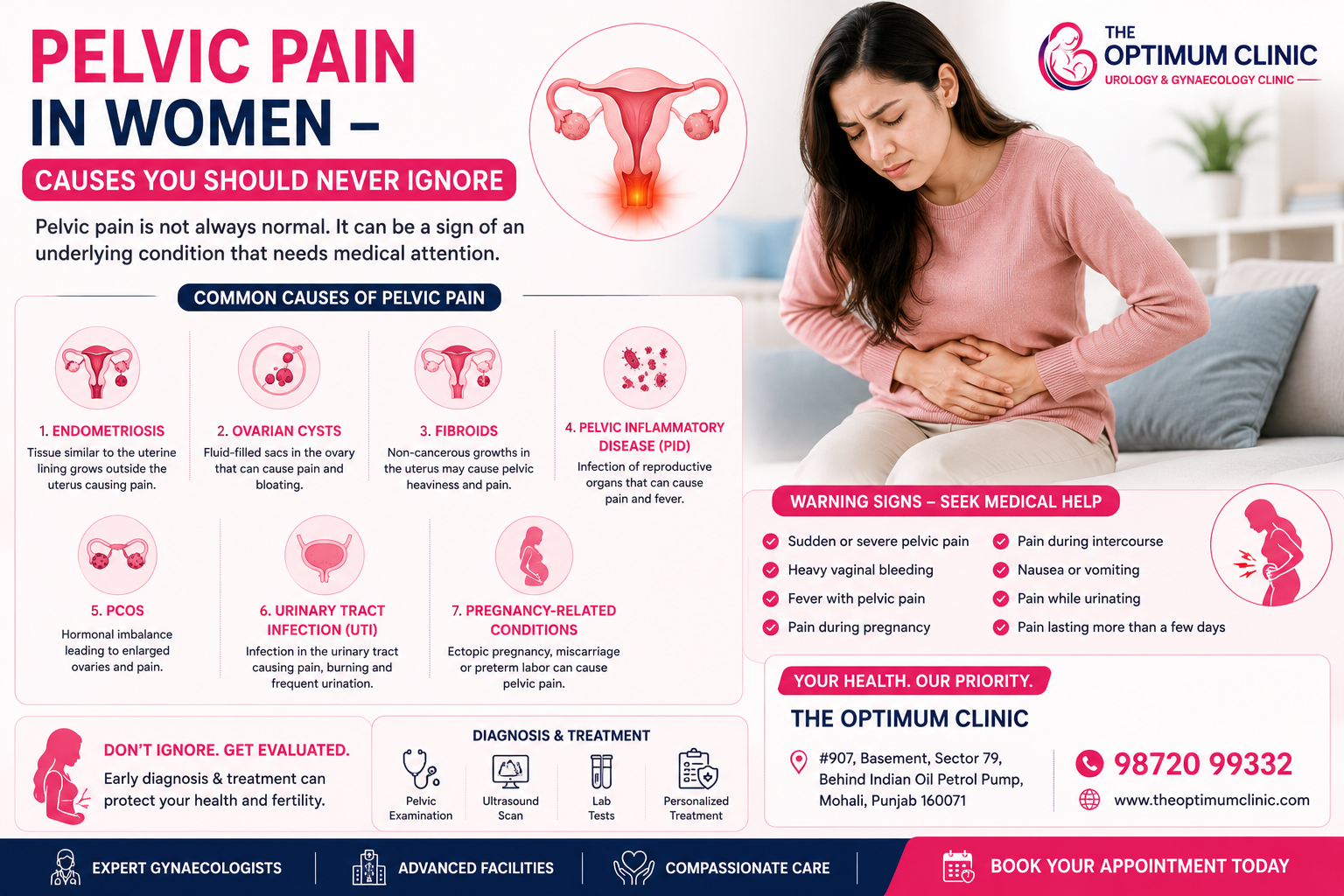
Pelvic pain is one of the most common reasons women visit a gynecologist. While occasional discomfort during menstruation may be normal, persistent or severe pelvic pain should never be ignored. It can be a warning sign of an underlying gynecological condition that requires timely diagnosis and treatment.
As a gynecologist, I often meet women who ignore pelvic pain for months because they assume it's "just period pain." Unfortunately, delaying medical attention can allow certain conditions to worsen, affecting fertility, pregnancy, and overall health.
In this guide, I'll explain the common causes of pelvic pain in women, symptoms to watch for, available treatment options, and when you should seek medical care.
Pelvic pain refers to discomfort in the lower abdomen, below the belly button and between the hips. It may be:
Some women experience pain only during periods, while others have chronic pelvic pain that lasts for several months.
Endometriosis occurs when tissue similar to the uterine lining grows outside the uterus. It is one of the leading causes of chronic pelvic pain and infertility.
Symptoms include:
Read More: Endometriosis Treatment – Symptoms Every Woman Should Know
Ovarian cysts are fluid-filled sacs that develop on the ovaries. While many cysts disappear on their own, larger cysts can cause:
Persistent pain should always be evaluated by a gynecologist.
Fibroids are non-cancerous growths in the uterus. Large fibroids may cause:
Learn More About Fibroid Treatment
PID is an infection of the female reproductive organs that requires prompt treatment.
Symptoms include:
Untreated PID may increase the risk of infertility.
Women with PCOS may experience pelvic discomfort due to enlarged ovaries or irregular ovulation.
Other symptoms include:
A urinary tract infection may cause pelvic discomfort along with:
Pelvic pain during pregnancy should never be ignored.
Possible causes include:
Always seek immediate medical attention if severe pain occurs during pregnancy.
To identify the cause, your gynecologist may recommend:
Learn About Gynecology Ultrasound
Treatment depends entirely on the underlying cause.
Your doctor may recommend:
Yes.
Conditions such as endometriosis, pelvic inflammatory disease, and ovarian disorders may affect fertility if left untreated.
Early diagnosis significantly improves treatment outcomes.
Pelvic pain is your body's way of signaling that something may not be right. While not every case is serious, persistent or severe pain should never be ignored. Early evaluation allows us to diagnose conditions like endometriosis, ovarian cysts, fibroids, or infections before they affect your long-term health and fertility.
No. Pelvic pain can result from gynecological, urinary, digestive, or pregnancy-related conditions.
Yes. Some underlying causes, such as endometriosis or PID, can impact fertility if not treated.
If pelvic pain is severe, persistent, associated with fever, heavy bleeding, or pregnancy, seek medical attention immediately.
The Optimum Clinic
#907 Basement, Sector 79,
Behind Indian Oil Petrol Pump,
Mohali, Punjab
98720 99332