Affordable Gynecology Treatment in Mohali | Expert Women's Healthcare
- July 10,2026
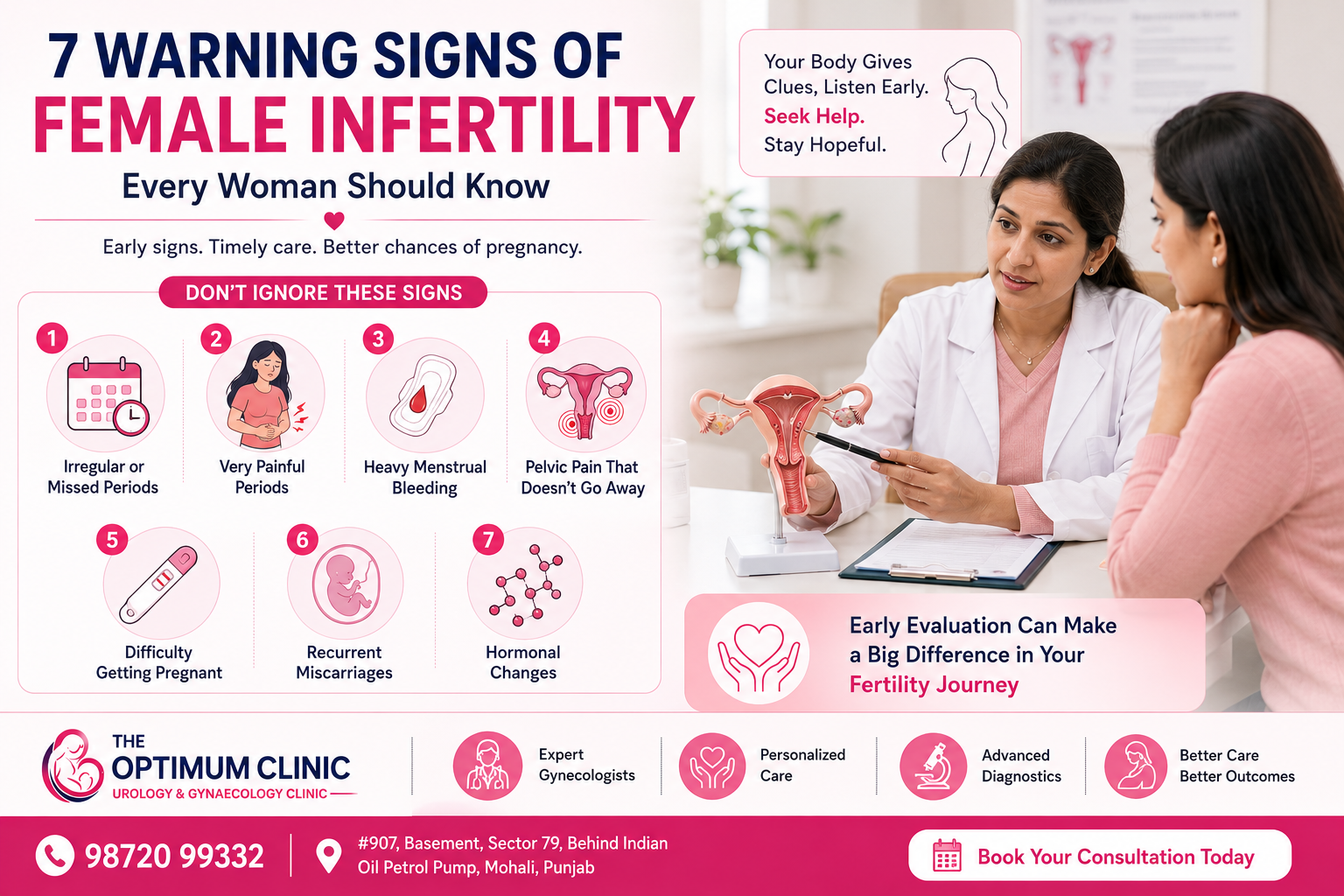
Many women assume that infertility means they will never become pregnant. In reality, infertility simply means that pregnancy is taking longer than expected. In many cases, the underlying cause can be identified and treated successfully.
As a gynecologist, I often meet women who ignored early symptoms because they believed they were "normal." Unfortunately, delaying medical evaluation can sometimes make treatment more challenging.
Your body often gives early warning signs when something isn't right. Recognizing these symptoms early and consulting a fertility specialist can significantly improve your chances of achieving a healthy pregnancy.
In this article, I'll explain the seven most important warning signs of female infertility, what they may indicate, and when you should seek professional medical advice.
Female infertility refers to difficulty becoming pregnant despite having regular, unprotected intercourse.
Early diagnosis allows us to identify problems before they become more serious.
One of the biggest warning signs of infertility is an irregular menstrual cycle.
Healthy ovulation usually produces regular monthly periods. If your periods are:
it may indicate that ovulation is not happening regularly.
Common causes include:
Related Article: PCOS Treatment in Mohali
Mild menstrual cramps are common, but severe pain that interferes with daily activities is not normal.
Painful periods may be caused by:
Endometriosis is one of the leading causes of infertility and should never be ignored.
Excessively heavy periods may indicate underlying reproductive conditions.
Possible causes include:
If you frequently soak sanitary pads every hour or pass large blood clots, you should consult a gynecologist.
Persistent pelvic pain should never be considered normal.
Chronic pelvic pain may be associated with:
Early diagnosis often prevents complications affecting fertility.
If you've been trying to conceive:
without success, it's time for a fertility evaluation.
Both partners should undergo assessment because infertility may involve male, female, or combined factors.
Experiencing two or more miscarriages may indicate an underlying fertility issue.
Possible causes include:
A fertility specialist can recommend appropriate investigations and treatment.
Certain hormonal symptoms may indicate ovulation problems.
Watch for:
These symptoms are commonly associated with PCOS, one of the most common causes of female infertility.
Your fertility specialist may recommend:
Learn About Gynecology Ultrasound
Yes.
Many women successfully conceive after receiving appropriate treatment.
Treatment options may include:
One of the biggest mistakes I see in my practice is women waiting too long before seeking help. Many fertility problems can be treated successfully when diagnosed early. If you notice any of these warning signs, don't ignore them. A timely consultation can make a significant difference in your fertility journey.
Yes. Irregular periods often indicate irregular ovulation, which can make pregnancy more difficult.
No. Many women with PCOS conceive naturally or with medical treatment.
If you've been trying to conceive for one year (or six months if over 35), you should seek evaluation.
Many causes of infertility can be treated successfully, improving the chances of pregnancy.
The Optimum Clinic
#907 Basement, Sector 79,
Behind Indian Oil Petrol Pump,
Mohali, Punjab
98720 99332