
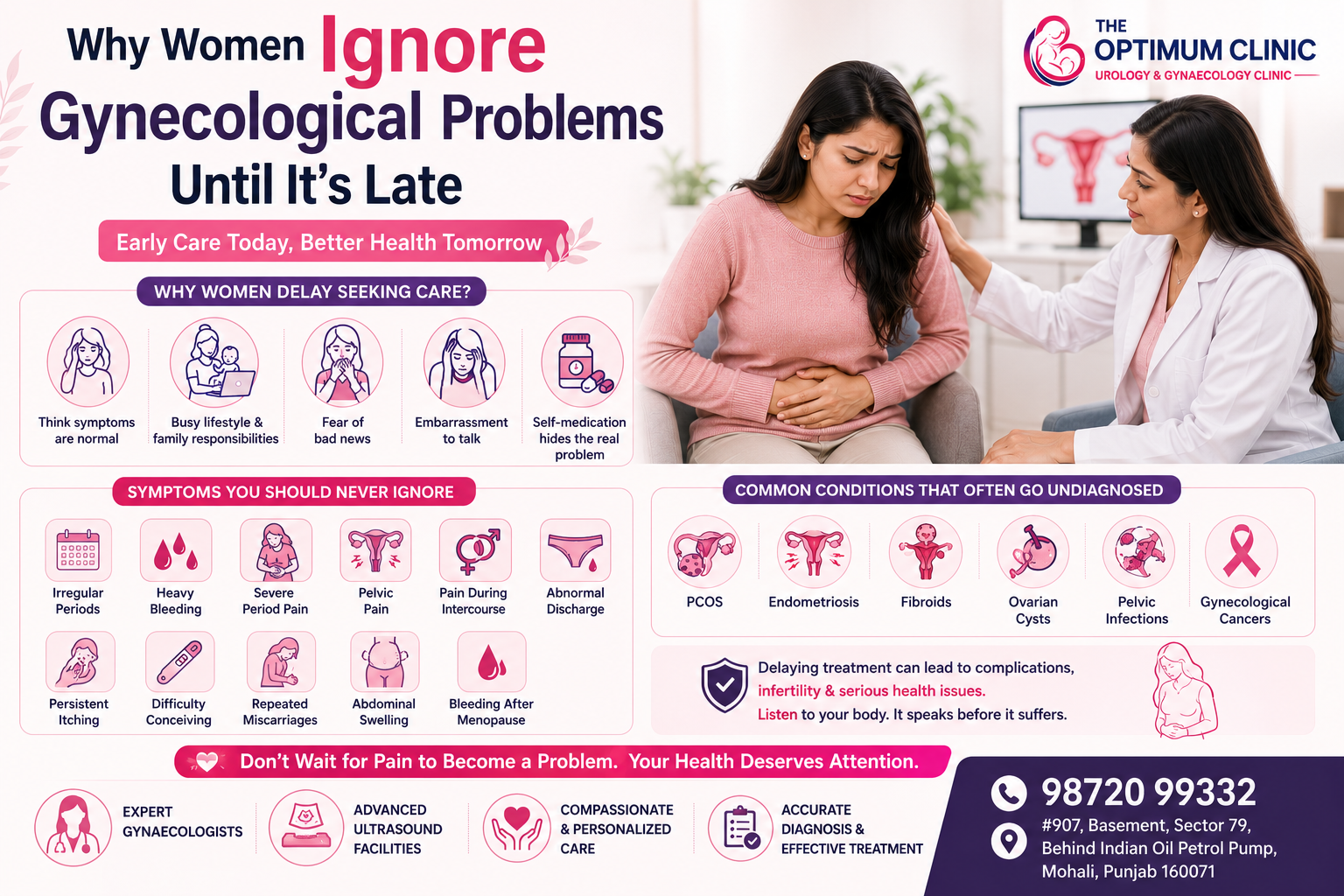
Why Women Ignore Gynecological Problems Until It’s Late
As a gynecologist, I often hear patients say, "Doctor, I thought it would get better on its own." Unfortunately, many women delay seeking medical care even when they experience symptoms that clearly indicate something is wrong.
Busy schedules, family responsibilities, fear of diagnosis, embarrassment, or simply believing that pain is "normal" often prevent women from visiting a gynecologist. By the time they finally seek medical attention, conditions such as PCOS, fibroids, ovarian cysts, endometriosis, pelvic infections, or even early cancers may have progressed significantly.
The truth is that your body gives warning signs long before a condition becomes serious. Listening to those signs and seeking timely medical care can prevent complications, preserve fertility, and improve your overall quality of life.
Why Do Women Delay Visiting a Gynecologist?
There isn't just one reason. In my clinical experience, several factors contribute to delayed diagnosis.
1. They Think the Symptoms Are Normal
Many women believe painful periods, heavy bleeding, irregular cycles, or pelvic pain are simply part of being a woman.
While mild discomfort during menstruation is common, severe pain or ongoing symptoms should never be ignored.
2. Busy Lifestyle and Family Responsibilities
Women often prioritize everyone else's health before their own. Between work, children, and household responsibilities, their own symptoms are placed at the bottom of the list.
Unfortunately, diseases don't wait until life becomes less busy.
3. Fear of Bad News
Some women avoid seeing a doctor because they worry they might be diagnosed with a serious illness or require surgery.
In reality, early diagnosis often means simpler treatments and better outcomes.
4. Embarrassment
Many women feel uncomfortable discussing menstrual problems, vaginal infections, fertility issues, or sexual health.
Remember, gynecologists discuss these concerns every day. There is nothing to feel embarrassed about.
5. Self-Medication
Instead of seeking professional advice, many women rely on painkillers or internet remedies that only mask symptoms without treating the underlying problem.
Gynecological Symptoms You Should Never Ignore
- Irregular periods
- Very heavy menstrual bleeding
- Missed periods
- Severe period pain
- Pelvic pain
- Pain during intercourse
- Abnormal vaginal discharge
- Persistent itching
- Bleeding after menopause
- Difficulty getting pregnant
- Repeated miscarriages
- Large abdominal swelling
Common Gynecological Conditions That Often Go Undiagnosed
Polycystic Ovary Syndrome (PCOS)
PCOS is one of the leading causes of irregular periods and infertility.
Endometriosis
Many women suffer from endometriosis for years before receiving a diagnosis because severe menstrual pain is often dismissed as normal.
Fibroids
Fibroids may cause heavy bleeding, pelvic pressure, frequent urination, and fertility problems if left untreated.
Ovarian Cysts
Most ovarian cysts are harmless, but some require monitoring or treatment to prevent complications.
Pelvic Inflammatory Disease (PID)
Untreated infections may damage the reproductive organs and increase the risk of infertility.
Gynecological Cancers
Cancers affecting the cervix, uterus, ovaries, or other reproductive organs often produce subtle symptoms in the early stages. Regular checkups help detect these conditions sooner.
How Delayed Diagnosis Can Affect Your Health
- Reduced fertility
- Chronic pelvic pain
- Repeated infections
- Anemia from heavy bleeding
- Need for more extensive treatment
- Pregnancy complications
- Reduced quality of life
When Should You Book a Gynecology Checkup?
I recommend scheduling a consultation if you experience:
- Changes in your menstrual cycle.
- Persistent pelvic pain.
- Pain during intercourse.
- Difficulty conceiving.
- Abnormal bleeding.
- Vaginal infections that keep returning.
- Any new or unusual reproductive symptoms.
How Are Gynecological Problems Diagnosed?
Depending on your symptoms, your gynecologist may recommend:
- Detailed medical history
- Pelvic examination
- Gynecology ultrasound
- Blood tests
- Hormonal evaluation
- Pap smear
- Additional investigations if needed
What Happens During a Gynecology Ultrasound?
Tips to Protect Your Reproductive Health
- Don't ignore persistent symptoms.
- Schedule regular gynecology checkups.
- Maintain a healthy body weight.
- Exercise regularly.
- Eat a balanced diet.
- Practice safe hygiene.
- Track your menstrual cycle.
- Seek medical advice early.
Helpful Resources
- Gynecology Services
- Best Gynecology Clinic in Mohali
- Pelvic Pain in Women
- 7 Warning Signs of Female Infertility
- Why Are My Periods Delayed?
- Heavy Period Bleeding
Trusted Medical Resources
- American College of Obstetricians and Gynecologists (ACOG)
- World Health Organization (WHO)
- MedlinePlus
Doctor's Advice
One of the most rewarding parts of my work is helping women regain their health through early diagnosis and appropriate treatment. Most gynecological conditions can be managed effectively when identified in their early stages. Ignoring symptoms may lead to unnecessary suffering and more complex treatment later.
Your reproductive health is just as important as your heart, lungs, or any other part of your body. Don't wait until symptoms become unbearable. A routine consultation today could prevent serious health problems tomorrow.
Frequently Asked Questions
How often should women visit a gynecologist?
Most women should have a routine gynecological examination once a year or sooner if they develop symptoms.
Is severe period pain normal?
No. Severe pain that interferes with daily life should always be evaluated.
Can delayed treatment affect fertility?
Yes. Conditions such as PCOS, endometriosis, PID, and fibroids may reduce fertility if left untreated.
Can gynecological problems be prevented?
Not all conditions can be prevented, but regular checkups and early diagnosis greatly reduce the risk of complications.
Book Your Consultation Today
The Optimum Clinic
#907 Basement, Sector 79,
Behind Indian Oil Petrol Pump,
Mohali, Punjab
98720 99332