Affordable Gynecology Treatment in Mohali | Expert Women's Healthcare
- July 10,2026
Have you been experiencing heavy periods, pelvic pain, frequent urination, or unexplained bloating? Many women ignore these symptoms for months or even years, assuming they are a normal part of aging or menstruation. However, these signs could indicate the presence of uterine fibroids, one of the most common gynecological conditions affecting women during their reproductive years.
As a gynecologist, I often meet women who are surprised to learn that their heavy bleeding, anemia, or fertility problems are related to fibroids. The good news is that most fibroids are treatable, and modern medical advancements offer several effective treatment options, including minimally invasive surgeries.
This comprehensive guide explains everything you need to know about fibroids, including symptoms, causes, diagnosis, treatment options, surgery choices, recovery, and when to seek expert care in Mohali.
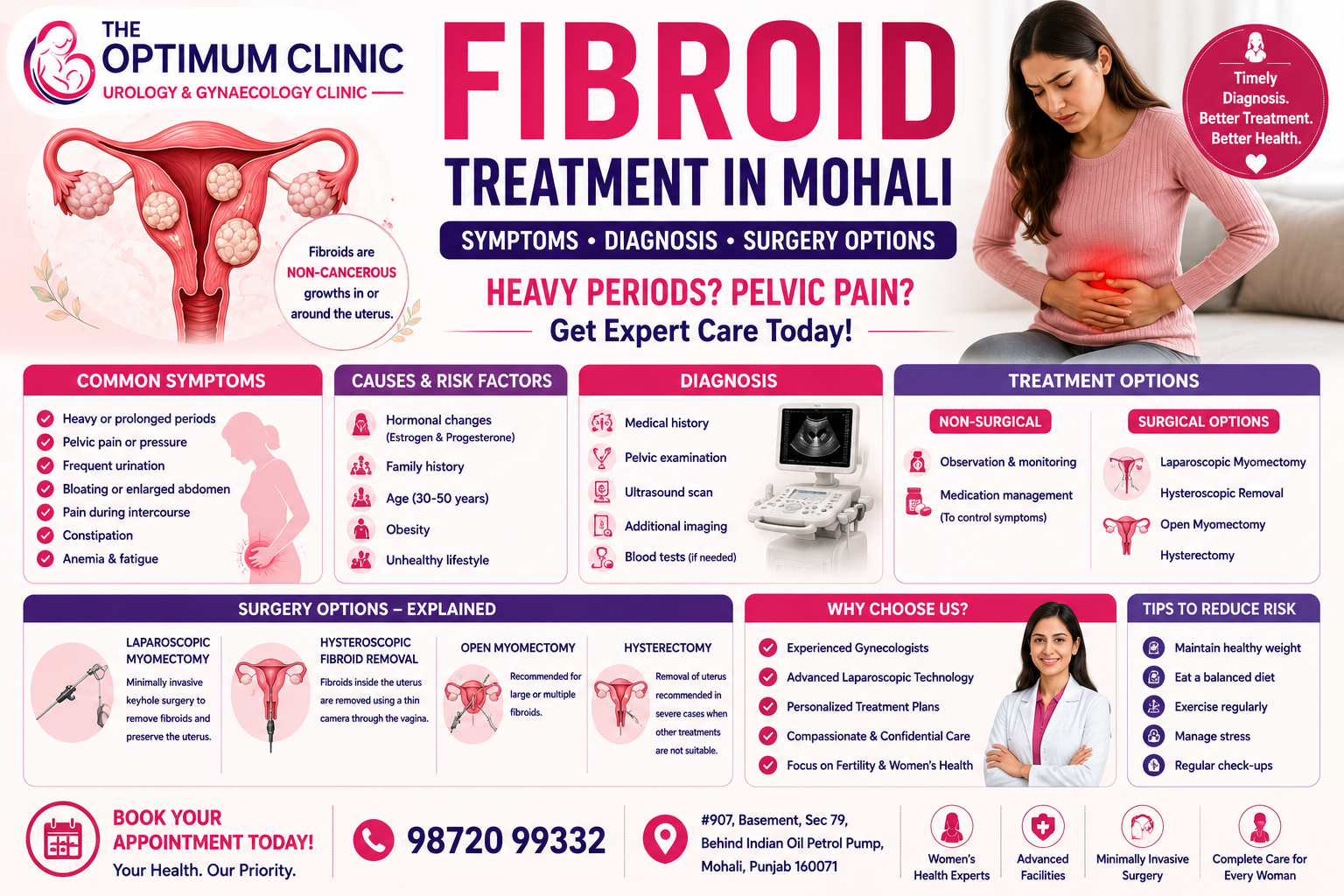
Uterine fibroids are non-cancerous growths that develop in or around the uterus. They are also called:
Fibroids vary in size. Some are as small as a seed, while others can grow large enough to enlarge the uterus significantly.
Importantly, fibroids are almost always benign (non-cancerous) and are not the same as uterine cancer.
Fibroids are extremely common among women between the ages of 30 and 50.
Many women may have fibroids without realizing it because small fibroids often cause no symptoms.
However, larger fibroids can significantly affect daily life and reproductive health.
These develop within the muscular wall of the uterus and are the most common type.
These grow on the outer surface of the uterus and may cause pressure symptoms.
These develop inside the uterine cavity and are often associated with heavy bleeding and fertility problems.
These fibroids grow on a stalk either inside or outside the uterus.
The exact cause of fibroids is not completely understood, but several factors may contribute.
Estrogen and progesterone appear to play a significant role in fibroid growth.
Women with a family history of fibroids may have a higher risk.
Fibroids are more common during reproductive years.
may increase risk in some women.
Many women discover fibroids only after symptoms begin affecting their daily lives.
One of the most common symptoms is unusually heavy periods.
Women may experience:
Large fibroids may create a feeling of pressure in the lower abdomen.
Fibroids pressing on the bladder may increase the urge to urinate.
Fibroids can sometimes press on the bowel, leading to constipation.
Some women describe looking several months pregnant due to large fibroids.
Depending on location, fibroids may contribute to discomfort during intimacy.
Yes, some fibroids can affect fertility, especially those that distort the uterine cavity.
Potential fertility-related issues include:
Not all fibroids affect fertility, which is why individualized assessment is important.
Many women with fibroids have healthy pregnancies.
However, larger fibroids may increase risks such as:
Your gynecologist will discuss symptoms, menstrual history, and reproductive goals.
An enlarged uterus may sometimes be detected during examination.
Ultrasound is the most common and effective tool for diagnosing fibroids.
In certain cases, further imaging may be recommended for treatment planning.
Not every fibroid requires treatment.
Treatment is usually recommended when fibroids cause:
Small fibroids without symptoms may only require regular monitoring.
Certain medications may help manage symptoms such as heavy bleeding and pain.
Your gynecologist will determine whether medical treatment is appropriate.
This minimally invasive procedure removes fibroids while preserving the uterus.
Benefits include:
This technique is often used for submucosal fibroids located inside the uterus.
Large or multiple fibroids may occasionally require traditional surgery.
For women who have completed their families and have severe symptoms, removal of the uterus may be considered.
Recovery depends on the type of procedure performed.
Most women can:
Many women continue suffering from heavy periods and pelvic discomfort because they assume these symptoms are normal. In reality, persistent symptoms deserve proper evaluation.
The earlier fibroids are diagnosed, the more treatment options are available. Modern minimally invasive techniques allow many women to receive effective treatment while preserving fertility and returning to normal life quickly.
No. Fibroids are usually benign growths and are not cancer.
Some fibroids may shrink after menopause, but many require monitoring or treatment.
Yes. Many women with fibroids have successful pregnancies, although some cases require treatment.
No. Many women can be managed with observation or medical treatment depending on symptoms and fibroid size.
Fibroids are a common women's health condition that can range from completely symptom-free to significantly disruptive. Understanding the symptoms and seeking timely medical evaluation can help prevent complications and improve quality of life.
Whether you require monitoring, medical treatment, or advanced laparoscopic surgery, early diagnosis remains the key to successful management.
Looking for expert fibroid treatment in Mohali?
The Optimum Clinic
#907 Basement, Sec 79, Behind Indian Oil Petrol Pump, Mohali
Call: 9872099332