Affordable Gynecology Treatment in Mohali | Expert Women's Healthcare
- July 10,2026
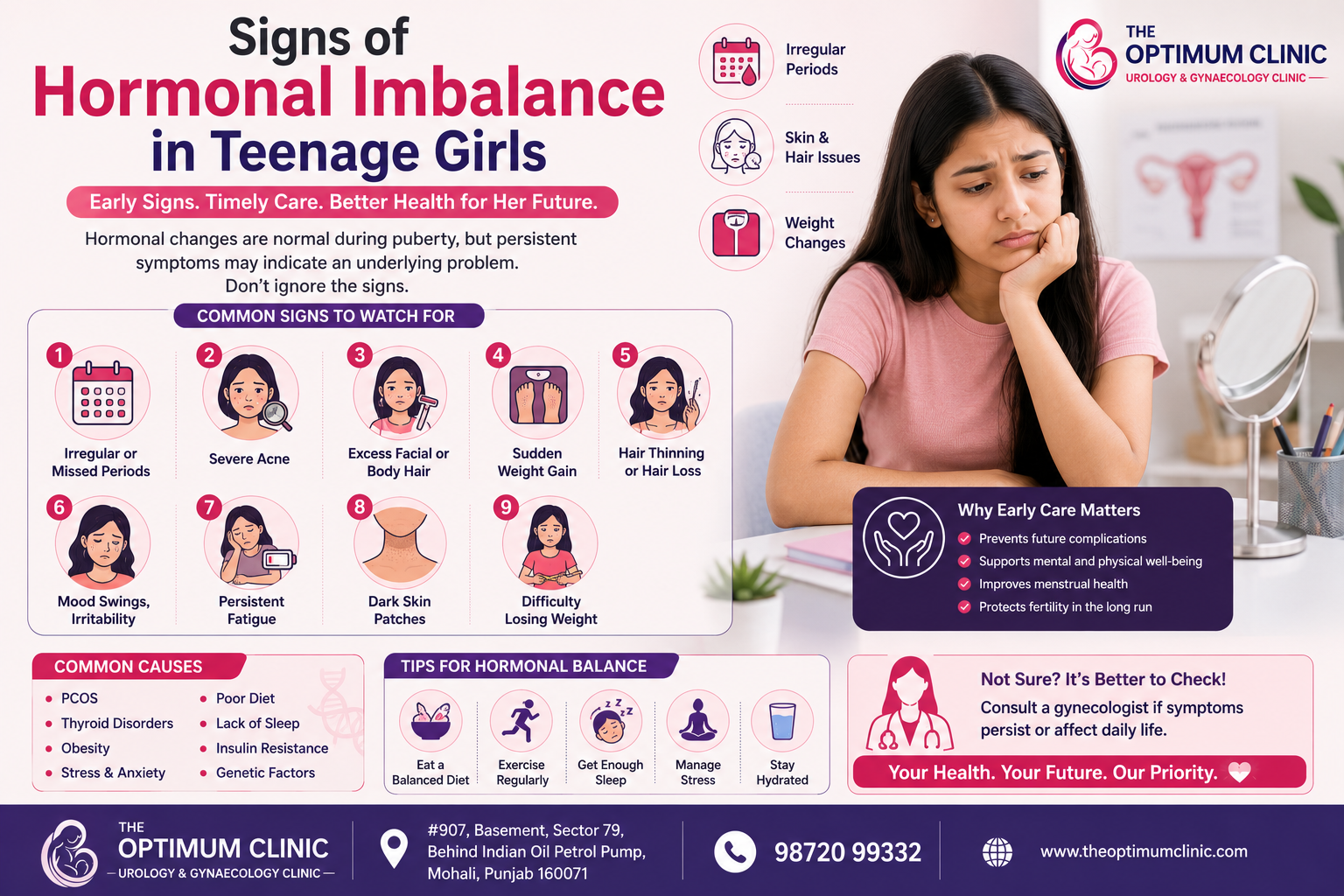
Puberty is an exciting yet challenging phase in every girl's life. During these years, the body undergoes rapid physical and emotional changes due to fluctuating hormones. While some changes are completely normal, persistent hormonal imbalance can affect menstrual health, skin, weight, mood, and future fertility if left untreated.
As a gynecologist, I often meet parents who are unsure whether their daughter's symptoms are simply part of growing up or signs of an underlying hormonal disorder. Understanding the early warning signs allows timely diagnosis and appropriate treatment.
In this guide, I'll explain the common signs of hormonal imbalance in teenage girls, possible causes, available treatments, and when you should seek medical advice.
Hormones are chemical messengers produced by glands in the body. They regulate important functions such as growth, menstruation, metabolism, mood, sleep, and reproductive health.
During puberty, hormone levels naturally fluctuate. However, when hormone production becomes significantly unbalanced, it may lead to noticeable health problems.
It's normal for periods to be irregular during the first couple of years after menstruation begins. However, if periods remain highly irregular, absent for several months, or occur very frequently, medical evaluation is recommended.
Read: Why Are My Periods Delayed?
Persistent acne that does not improve with skincare may indicate increased androgen (male hormone) levels, especially in girls with PCOS.
Unusual hair growth on the face, chest, abdomen, or chin may suggest hormonal imbalance and should be assessed by a gynecologist.
Rapid or unexplained weight gain, especially around the abdomen, can be associated with hormonal disorders such as PCOS or thyroid problems.
Noticeable hair fall or thinning of scalp hair may also indicate hormonal imbalance.
Hormonal changes can affect emotional well-being, causing:
Feeling tired despite getting enough sleep may indicate hormonal or thyroid-related issues.
Dark patches around the neck, underarms, or groin (acanthosis nigricans) may be linked to insulin resistance, commonly seen in PCOS.
If a teenager follows a healthy diet and exercises regularly but still struggles with weight management, hormonal imbalance should be considered.
PCOS is one of the most common hormonal disorders affecting teenage girls.
Common symptoms include:
Your gynecologist may recommend:
Learn About Gynecology Ultrasound
Treatment depends on the underlying cause and severity of symptoms.
You should schedule an appointment if your daughter has:
Hormonal changes are a natural part of adolescence, but persistent symptoms should never be ignored. Early evaluation helps identify conditions like PCOS, thyroid disorders, or hormonal imbalances before they affect long-term reproductive health. Parents should encourage open communication so teenage girls feel comfortable discussing menstrual and hormonal concerns without embarrassment.
Yes, mild irregularity is common in the first few years, but persistent or severe irregularity should be evaluated.
Yes. Many girls develop PCOS during adolescence, and early diagnosis helps manage symptoms effectively.
If left untreated, some hormonal conditions may affect fertility later in life. Early treatment can reduce this risk.
Yes. A healthy diet, regular exercise, proper sleep, and stress management can significantly improve hormonal health.
The Optimum Clinic
#907 Basement, Sector 79,
Behind Indian Oil Petrol Pump,
Mohali, Punjab
98720 99332