


Affordable Gynecology Treatment in Mohali | Expert Women's Healthcare
- July 10,2026
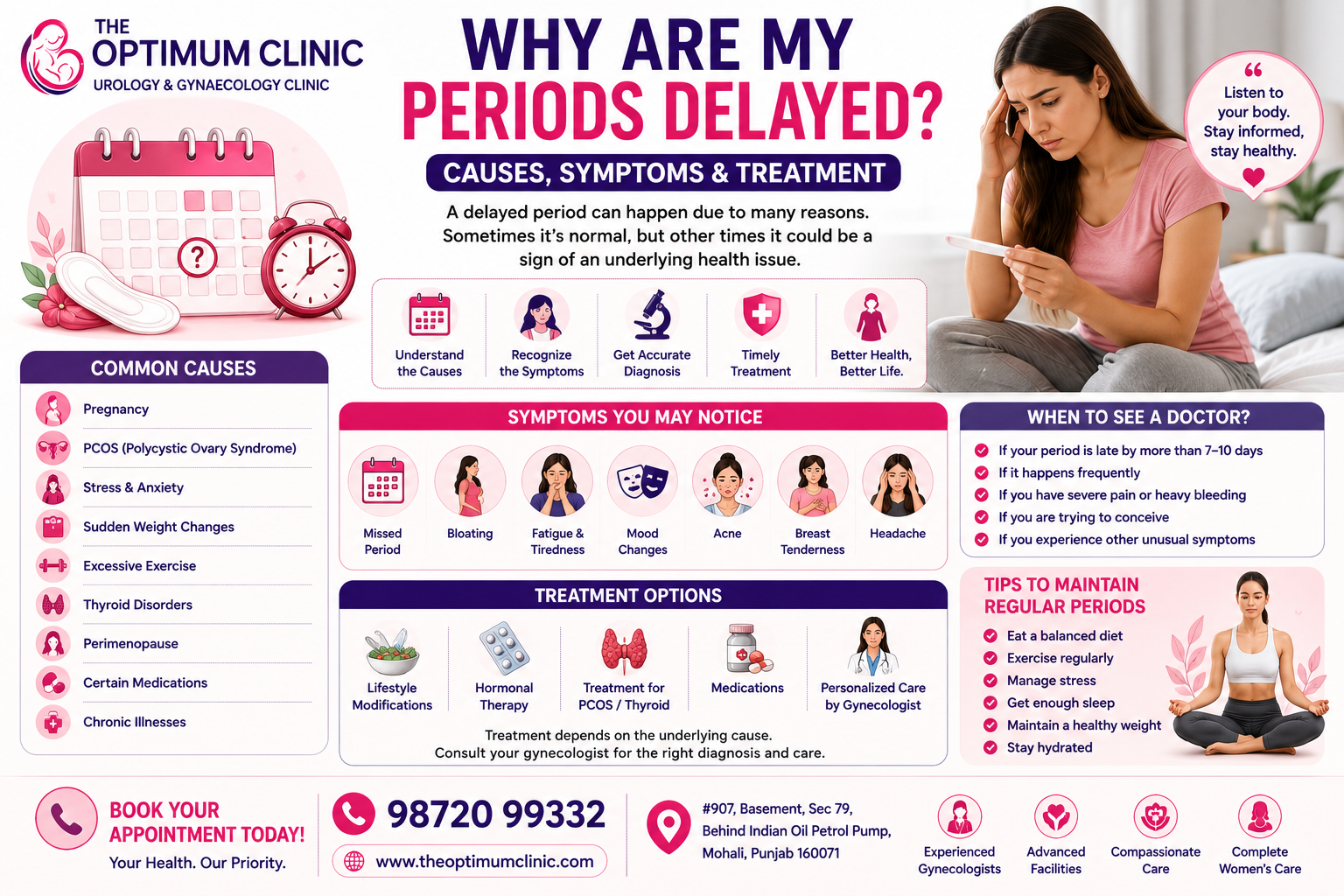
One of the most common concerns women have is a delayed period. Whether you're expecting your period every month or actively tracking your cycle, a missed or late period can cause stress and confusion. The first thought many women have is pregnancy, but the reality is that there are several reasons why periods may be delayed.
As a gynecologist, I often meet women who become anxious after their period is late by a few days. While occasional delays are common and may not indicate a serious problem, frequent or prolonged delays should not be ignored. Understanding the possible causes can help you take the right steps toward maintaining your reproductive health.
In this comprehensive guide, we'll discuss why periods get delayed, the most common causes, warning signs, treatment options, and when you should consult a gynecologist.
A normal menstrual cycle typically ranges between 21 and 35 days. If your period does not arrive within your expected cycle window, it may be considered delayed.
Occasional variations of a few days are generally normal. However, if your period is consistently late or absent for weeks or months, it may indicate an underlying issue.
Pregnancy is one of the most common reasons for a missed period among sexually active women.
Early pregnancy symptoms may include:
If pregnancy is possible, taking a pregnancy test is usually the first step.
PCOS is one of the leading causes of irregular and delayed periods.
Women with PCOS often experience:
Because PCOS affects ovulation, periods may become delayed or even stop for several months.
Stress can significantly impact your hormones and menstrual cycle.
When the body is under emotional or physical stress, hormone production may change, leading to delayed ovulation and late periods.
Common stress-related triggers include:
Both weight gain and weight loss can affect menstrual cycles.
Rapid weight loss, extreme dieting, or obesity may disrupt hormone levels and cause delayed periods.
Intense physical activity can sometimes affect hormone production and ovulation.
This is commonly seen in:
The thyroid gland plays an important role in regulating metabolism and hormones.
Both hypothyroidism and hyperthyroidism may cause:
Women approaching menopause may notice changes in their menstrual cycles.
Periods may become:
This transition usually begins in the 40s but may start earlier for some women.
Some medications can affect menstrual cycles, including:
Depending on the underlying cause, women may experience:
You should consult a gynecologist if:
Early diagnosis helps identify the underlying cause and prevents future complications.
In some cases, yes.
Conditions such as PCOS, thyroid disorders, and hormonal imbalances can affect ovulation, making conception more difficult.
However, timely treatment often improves fertility outcomes significantly.
Your gynecologist may recommend:
For many women, lifestyle improvements can help regulate menstrual cycles.
Women with PCOS often benefit from a combination of lifestyle changes and medical management.
If thyroid disorders, hormonal imbalances, or other medical conditions are responsible, appropriate treatment can help restore regular cycles.
A delayed period is not always a cause for panic. However, your menstrual cycle is an important indicator of overall health. If your periods are frequently delayed, irregular, or absent, your body may be signaling that something needs attention.
The earlier the underlying cause is identified, the easier it is to manage. Whether the issue is PCOS, stress, thyroid imbalance, or another condition, proper medical guidance can help restore regular menstrual health.
A variation of a few days is usually normal, but persistent delays should be evaluated.
Yes. Stress can affect hormones and delay ovulation, leading to late periods.
Yes. PCOS is one of the most common causes of irregular or absent periods.
If your period is late and pregnancy is possible, taking a pregnancy test is generally recommended.
Delayed periods are common and can occur for various reasons, including pregnancy, PCOS, stress, thyroid disorders, weight changes, and hormonal imbalances. While occasional delays are usually harmless, frequent irregularities should never be ignored.
Regular gynecological evaluations, healthy lifestyle habits, and timely treatment can help maintain hormonal balance and reproductive health.
Looking for expert treatment for irregular or delayed periods in Mohali?
The Optimum Clinic
#907 Basement, Sec 79, Behind Indian Oil Petrol Pump, Mohali
Call: 9872099332