


Affordable Gynecology Treatment in Mohali | Expert Women's Healthcare
- July 10,2026
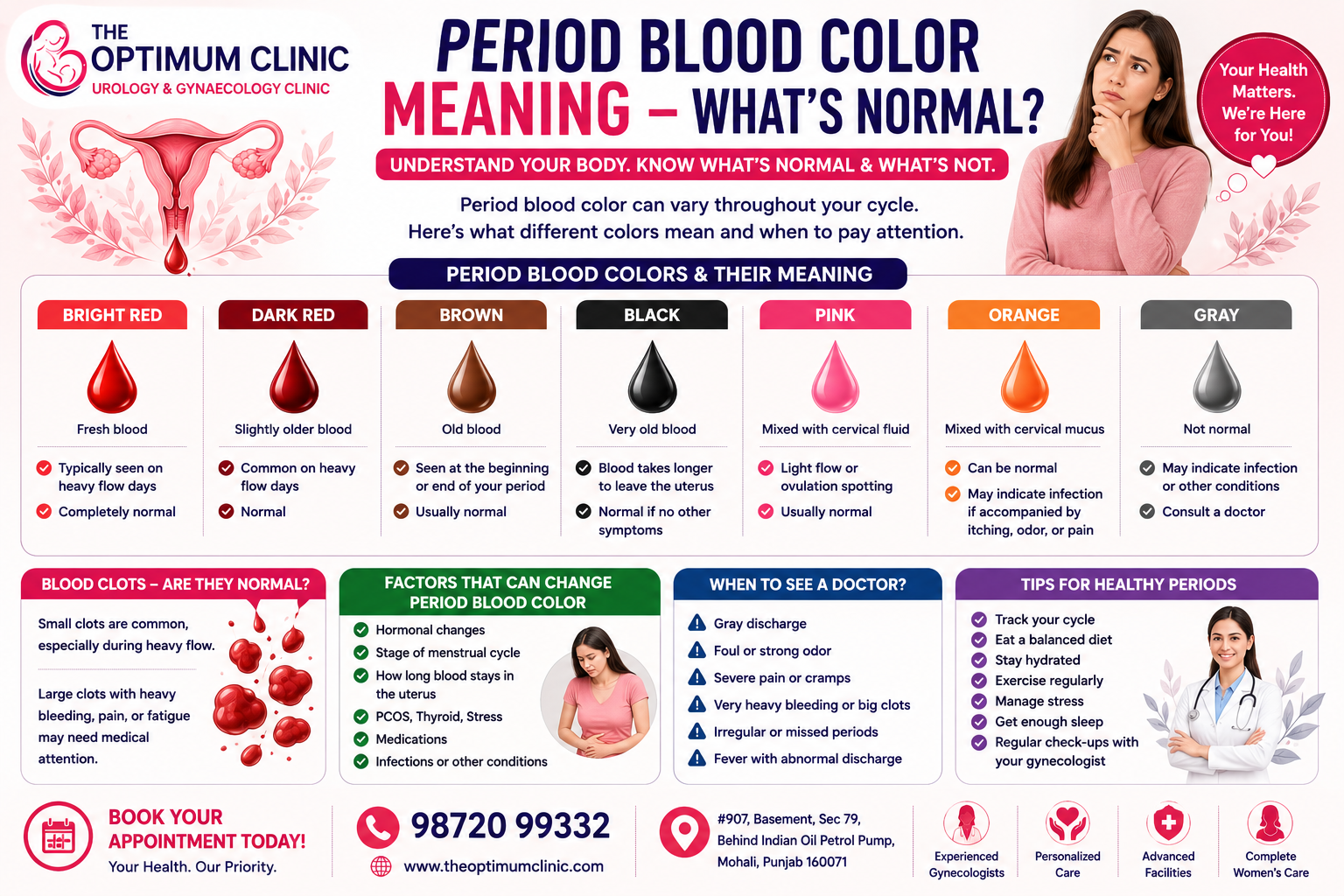
Many women become concerned when they notice that their period blood is not always bright red. One month it may appear dark brown, another month it may look pink, and sometimes it can even appear almost black. Naturally, this raises questions like:
"Is my period blood color normal?"
"Does dark blood mean something is wrong?"
"Should I see a gynecologist?"
As a gynecologist, I often reassure women that period blood can vary in color throughout the menstrual cycle, and in many cases, these changes are completely normal. However, certain colors combined with unusual symptoms may indicate an underlying health condition that requires medical attention.
Understanding what different period blood colors mean can help you better understand your reproductive health and know when it's time to seek professional advice.
In this complete guide, we'll explain the meaning behind different period blood colors, what's considered normal, warning signs to watch for, and when you should consult a gynecologist.
The color of menstrual blood depends on several factors, including:
Fresh blood is usually bright red because it contains more oxygen. As blood remains in the uterus longer, it becomes oxidized and may appear darker.
Bright red blood is often seen during the heaviest days of menstruation.
This color generally indicates:
For most women, bright red blood is considered a healthy and normal part of the menstrual cycle.
Dark red blood is also usually normal.
It commonly appears:
In most cases, dark red blood is not a cause for concern.
Brown blood is often noticed:
Brown blood typically means older blood has taken longer to leave the uterus.
As the blood oxidizes, it changes from red to brown.
This is usually completely normal.
Black blood can look alarming, but it often represents very old blood that has remained in the uterus longer before being expelled.
Common causes include:
However, if black discharge is accompanied by:
you should seek medical evaluation.
Pink blood often occurs when menstrual blood mixes with cervical fluid.
Possible reasons include:
Occasional pink spotting is usually harmless, but persistent changes should be discussed with a gynecologist.
Orange-colored blood may occur when menstrual blood mixes with cervical mucus.
While it may sometimes be normal, orange discharge accompanied by:
could indicate an infection and should be evaluated.
Gray discharge is not considered normal.
It may sometimes be associated with:
Gray discharge should always be discussed with a healthcare professional.
Many women notice small blood clots during their period.
Small clots can be normal, especially during heavy flow days.
However, large clots combined with:
may require further evaluation.
Yes.
Women with PCOS often experience:
Hormonal imbalance can influence both the timing and appearance of menstrual blood.
You should seek medical advice if you experience:
Early diagnosis can help identify hormonal, reproductive, or gynecological conditions before they become more serious.
Many women worry unnecessarily when they notice a change in period blood color. In most cases, colors such as bright red, dark red, brown, and even black are simply related to how long blood remains in the uterus before leaving the body.
The key is not just the color itself but the symptoms that accompany it. If unusual blood color occurs alongside pain, odor, irregular periods, or heavy bleeding, professional evaluation is recommended.
Your menstrual cycle provides valuable information about your overall reproductive health. Paying attention to changes can help identify potential issues early.
Yes. Brown blood is often older blood and is commonly seen at the beginning or end of a period.
Black blood usually indicates older blood that has remained in the uterus longer before leaving the body.
Occasional pink blood may occur due to light flow or hormonal changes and is often harmless.
Gray discharge, foul-smelling discharge, or unusual colors combined with pain or other symptoms should be evaluated by a gynecologist.
Period blood color can vary from bright red to dark red, brown, pink, and even black. In many cases, these color changes are completely normal and simply reflect how quickly blood leaves the uterus.
However, unusual colors accompanied by symptoms such as pain, odor, heavy bleeding, or irregular cycles should never be ignored. Understanding your menstrual cycle and seeking timely medical care can help maintain long-term reproductive health.
Looking for expert women's healthcare and menstrual health treatment in Mohali?
The Optimum Clinic
#907 Basement, Sec 79, Behind Indian Oil Petrol Pump, Mohali
Call: 9872099332