Affordable Gynecology Treatment in Mohali | Expert Women's Healthcare
- July 10,2026
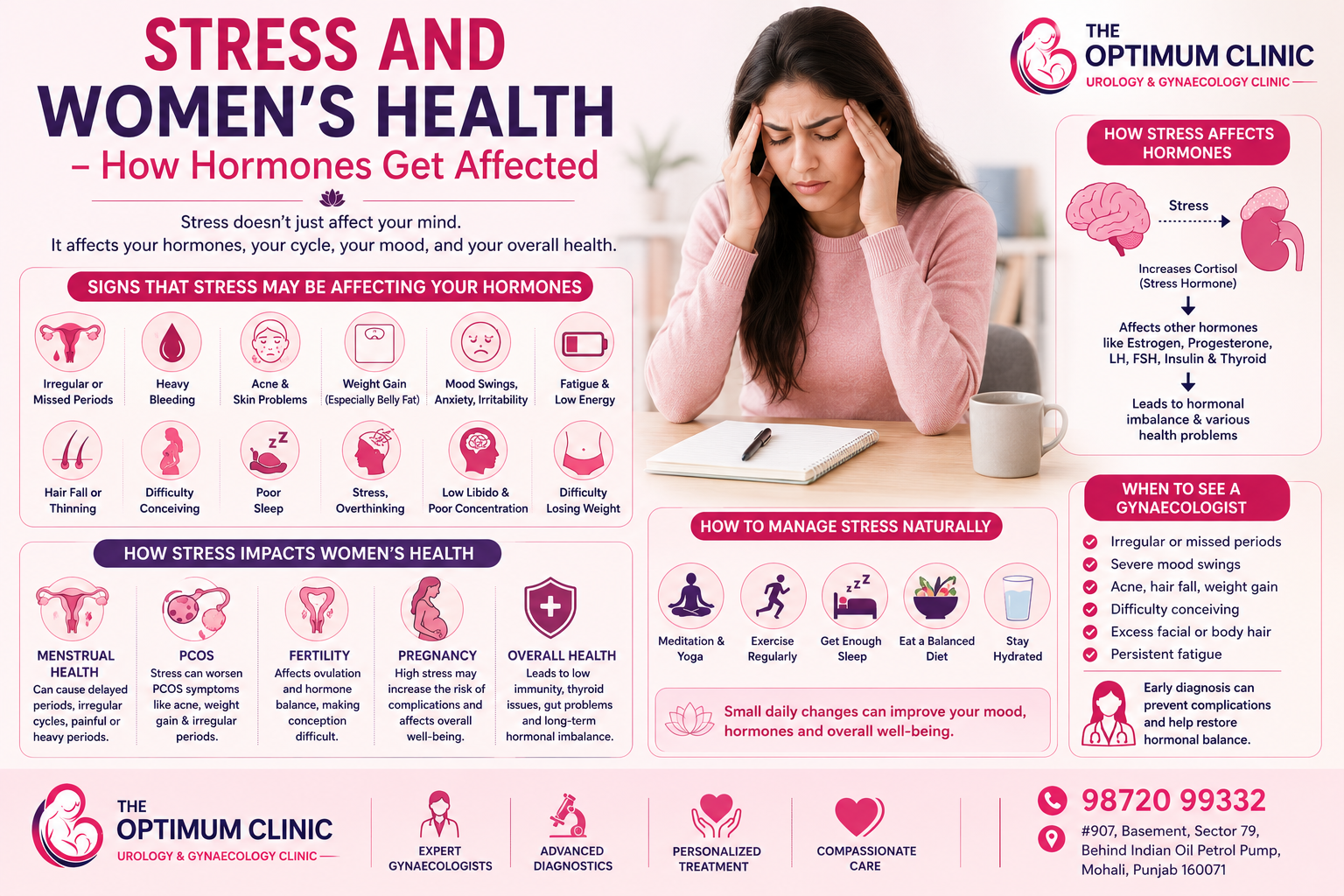
Modern life is fast-paced, and many women juggle work, family responsibilities, parenting, and personal commitments every day. While occasional stress is a normal part of life, ongoing stress can silently affect your physical and emotional health—especially your hormones.
As a gynecologist, I often see women who come to the clinic with irregular periods, difficulty conceiving, unexplained weight gain, fatigue, acne, or mood swings. After evaluation, one common factor frequently emerges: chronic stress.
Stress doesn't just affect your mind—it influences the hormones that regulate your menstrual cycle, fertility, metabolism, sleep, and overall reproductive health.
In this article, I'll explain how stress affects women's hormones, the warning signs you should watch for, and practical ways to restore hormonal balance.
When you experience stress, your body releases hormones such as cortisol and adrenaline. These hormones help your body respond to challenging situations.
Short-term stress is normal. However, when stress becomes chronic, consistently elevated cortisol levels can interfere with the balance of other important hormones, including:
This hormonal imbalance can lead to a variety of gynecological and general health problems.
The menstrual cycle depends on a delicate balance of reproductive hormones. Chronic stress may disrupt communication between the brain and ovaries, affecting ovulation.
As a result, women may experience:
Related Article: Why Are My Periods Delayed?
Yes.
Long-term stress can contribute to hormonal imbalance by increasing cortisol levels and interfering with reproductive hormone production.
Although stress alone may not be the only cause, it often worsens existing conditions such as PCOS, thyroid disorders, and irregular ovulation.
Women with Polycystic Ovary Syndrome (PCOS) often notice worsening symptoms during periods of high stress.
Stress may increase:
Stress does not always directly cause infertility, but it can make conception more difficult by affecting ovulation and hormone regulation.
Women experiencing high stress may notice:
Best Infertility Specialist in Mohali
Managing stress during pregnancy is important for both mother and baby.
Persistent stress may contribute to:
Pregnant women should discuss significant emotional stress with their healthcare provider.
Yes.
High cortisol levels can increase appetite and encourage fat storage, particularly around the abdomen.
Stress may also lead to:
If symptoms persist, your gynecologist may recommend:
What Happens During a Gynecology Ultrasound?
Stress is a part of life, but it shouldn't become a permanent state. If you're noticing changes in your menstrual cycle, mood, weight, or fertility, don't ignore them. Your hormones often respond to both physical and emotional health. Early evaluation allows us to identify underlying problems and create a treatment plan that supports your overall well-being.
Yes. Chronic stress can disrupt ovulation and lead to delayed or missed periods.
Yes. High stress levels may worsen PCOS symptoms, including irregular periods and weight gain.
In many cases, healthy lifestyle changes and stress management can support better hormonal balance.
If hormonal symptoms persist for more than a few months or interfere with daily life, schedule a medical evaluation.
The Optimum Clinic
#907 Basement, Sector 79,
Behind Indian Oil Petrol Pump,
Mohali, Punjab
98720 99332