Affordable Gynecology Treatment in Mohali | Expert Women's Healthcare
- July 10,2026
Hearing the word "Hysterectomy" can be overwhelming for many women. One of the first questions patients ask in my clinic is:
"Doctor, do I really need my uterus removed?"
The answer depends entirely on the underlying condition, symptoms, age, future pregnancy plans, and overall health.
A hysterectomy is one of the most commonly performed gynecological surgeries worldwide. While it can be life-changing and symptom-relieving for many women, it is usually recommended only when other treatment options are not effective or appropriate.
As a gynecologist, my goal is always to help patients understand all available options before making a decision. In many cases, modern treatments can manage symptoms without surgery. However, certain conditions may make hysterectomy the safest and most effective solution.
In this complete guide, we'll discuss what hysterectomy surgery is, when it is needed, different types of hysterectomy, benefits, risks, recovery, and what women should know before making a treatment decision.
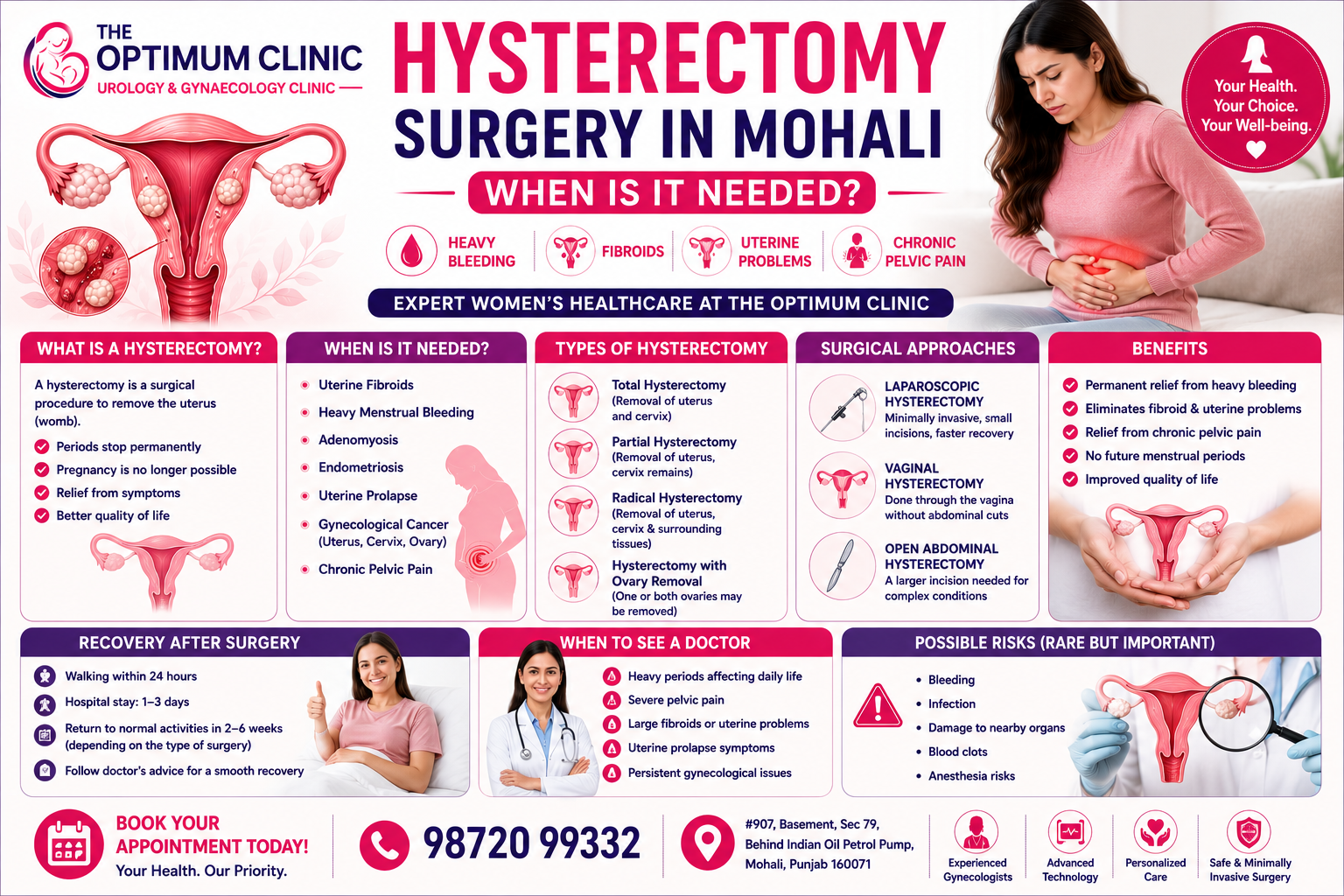
A hysterectomy is a surgical procedure in which the uterus (womb) is removed.
After a hysterectomy:
The procedure may involve removal of only the uterus or additional reproductive organs depending on the medical condition.
A hysterectomy is generally considered when symptoms significantly affect a woman's quality of life or when serious gynecological conditions are present.
Fibroids are one of the most common reasons for hysterectomy.
Large fibroids may cause:
Some women experience severe bleeding that does not improve despite medication or other treatments.
When bleeding affects daily life and causes chronic anemia, hysterectomy may be recommended.
Adenomyosis occurs when the uterine lining grows into the muscular wall of the uterus.
Symptoms often include:
Women with severe endometriosis may sometimes require hysterectomy when symptoms remain uncontrolled despite other treatments.
A prolapsed uterus occurs when pelvic floor muscles weaken and the uterus descends into the vaginal canal.
Symptoms may include:
Hysterectomy may be necessary for:
In these situations, surgery can be a crucial part of treatment.
Removal of:
This is the most commonly performed type.
The uterus is removed while the cervix remains in place.
Usually performed for cancer treatment and involves removal of surrounding tissues.
Depending on age and medical condition, one or both ovaries may also be removed.
This minimally invasive technique is becoming increasingly popular because of:
Sometimes necessary for larger uterine conditions or complex surgical situations.
Performed through the vagina without abdominal incisions.
Recovery varies depending on the surgical method used.
Most women can expect:
A hysterectomy should never be viewed as a first option for every gynecological problem. However, when medically indicated, it can dramatically improve a woman's health, comfort, and quality of life.
The key is choosing the right treatment at the right time after a proper evaluation by an experienced gynecologist.
Hysterectomy surgery can provide lasting relief for women suffering from severe fibroids, heavy bleeding, uterine prolapse, adenomyosis, endometriosis, or certain cancers. Modern minimally invasive surgical techniques have made recovery faster and safer than ever before.
If you are experiencing persistent gynecological symptoms, consult an experienced gynecologist to understand your options and receive personalized care.
The Optimum Clinic
#907 Basement, Sec 79, Behind Indian Oil Petrol Pump, Mohali
???? 9872099332