


Affordable Gynecology Treatment in Mohali | Expert Women's Healthcare
- July 10,2026
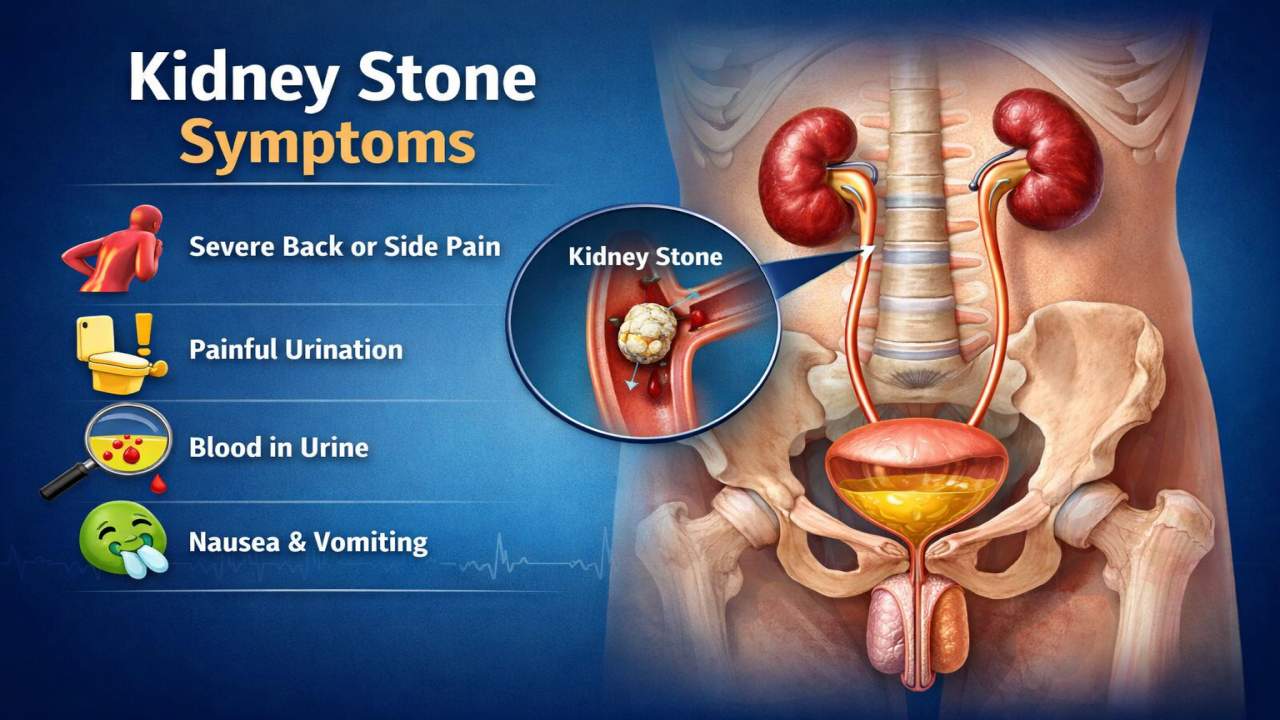
Kidney stones are a painful and increasingly common health problem affecting men and women across all age groups. Many people live with kidney stones for weeks or even months without realizing it, because the symptoms often begin slowly. Understanding kidney stones symptoms at an early stage can help prevent severe pain, infections, and long-term kidney damage.
This detailed guide explains early symptoms of kidney stones, important kidney stone signs, and common symptoms of kidney stones in adults, so you know exactly when to seek medical help.
Kidney stones are hard, stone-like deposits formed when minerals and salts in the urine stick together. Normally, urine carries waste materials out of the body. But when the body is dehydrated or urine becomes too concentrated, these minerals start forming crystals.
Over time, these crystals grow and turn into stones. Some stones stay inside the kidney without causing symptoms, while others move into the urinary tract and cause intense pain. Kidney stones can affect anyone, but lifestyle habits, diet, dehydration, and medical conditions increase the risk.
In the early stage, kidney stones often show mild symptoms that many people overlook. These early symptoms of kidney stones are warning signs that something is wrong.
Mild pain or heaviness in the lower back or side
Burning or discomfort while urinating
Cloudy, dark, or foul-smelling urine
Frequent urge to urinate with little output
These kidney stone signs may appear and disappear, which is why people delay consulting a doctor. Ignoring them can allow the stone to grow bigger.
As the stone grows or starts moving from the kidney into the ureter, symptoms become more noticeable and painful. These are the most common symptoms of kidney stones in adults.
The most prominent symptom is severe pain, often described as sharp or cramping. This pain usually begins in the side or lower back and may spread to the lower abdomen or groin. It often comes in waves and varies in intensity.
Another common sign is blood in the urine. Urine may appear pink, red, or brown due to irritation caused by the stone scraping the urinary tract. Nausea and vomiting are also frequent because kidney pain affects nerves connected to the stomach.
In some cases, patients may develop fever and chills. This is a serious sign and may indicate a urinary tract infection along with kidney stones, which requires immediate medical treatment.
Men are more prone to kidney stones, and the symptoms can be sudden and intense. Pain usually starts in the lower back or side and may travel to the groin or testicles as the stone moves through the urinary tract.
Common kidney stone signs in men include:
Sharp pain radiating to the groin or testicles
Pain or difficulty during urination
Blood in the urine
Frequent urge to urinate

In women, kidney stone symptoms are often confused with gynecological problems or urinary tract infections, which can delay diagnosis. The pain may appear in the lower abdomen, pelvis, or lower back and can increase as the stone moves through the urinary tract.
Women may experience:
Lower abdominal or pelvic pain
Pain or burning while urinating
Nausea and vomiting
Frequent urge to urinate
Because these symptoms closely resemble UTIs or menstrual cramps, women should consult a doctor if the pain is persistent, worsening, or accompanied by changes in urine.
Kidney stone pain changes location as the stone moves through the urinary tract. Understanding this helps patients recognize the condition earlier.
In the kidney: Upper back or side pain
In the ureter: Severe side pain moving toward the abdomen
Near the bladder: Lower abdominal pain and urinary urgency
Tracking pain location helps doctors identify the stone’s movement.
Medical help should be sought if kidney stone symptoms become severe or start interfering with daily life. Immediate consultation is necessary if pain becomes unbearable, urine flow is blocked, blood appears in the urine, vomiting continues, or fever develops.
Early medical care helps prevent infection, kidney damage, and emergency situations.
Seek medical attention immediately if:
Pain is severe or persistent
Fever or chills develop
Urine flow is blocked
Doctors diagnose kidney stones using urine tests, blood tests, and imaging methods such as ultrasound or CT scans. These tests help identify the size, type, and location of the stone, which determines the best treatment approach.
While not all kidney stones can be prevented, many can be avoided with simple lifestyle changes. Drinking enough water daily helps flush out minerals before they form stones. Reducing salt intake, avoiding excessive junk food, and following medical advice are key steps in prevention.
If you are experiencing kidney stones symptoms, timely diagnosis and expert care are essential. At The Optimum Clinic, Mohali, experienced urologists provide advanced diagnosis and minimally invasive treatments to ensure faster recovery and long-term kidney health.
Book an appointment today for reliable and compassionate kidney stone care.
Recognizing the early symptoms of kidney stones and understanding common kidney stone signs can help prevent severe pain and complications. Persistent back pain, urinary discomfort, or changes in urine should never be ignored. Early medical consultation ensures safer and faster treatment.
1. What are the early symptoms of kidney stones?
Early symptoms of kidney stones include mild back or side pain, burning during urination, cloudy urine, and a frequent urge to urinate. These signs may appear before severe pain begins.
2. Can kidney stones cause blood in urine?
Yes, kidney stones can cause blood in the urine. The stone may scratch the urinary tract lining, making urine appear pink, red, or brown.
3. Are kidney stone symptoms different in men and women?
The symptoms are mostly similar, but men often experience pain radiating to the groin or testicles, while women may feel pain in the lower abdomen or pelvis.
4. Is fever a sign of kidney stones?
Fever along with kidney stone pain may indicate an infection. This is a serious condition and requires immediate medical attention.
5. Can kidney stones go away on their own?
Small kidney stones may pass naturally with adequate hydration and medication. Larger stones often require medical treatment or minimally invasive procedures.
6. When should I consult a doctor for kidney stones?
You should see a doctor if pain is severe, urine flow is blocked, blood appears in urine, vomiting continues, or fever develops.