
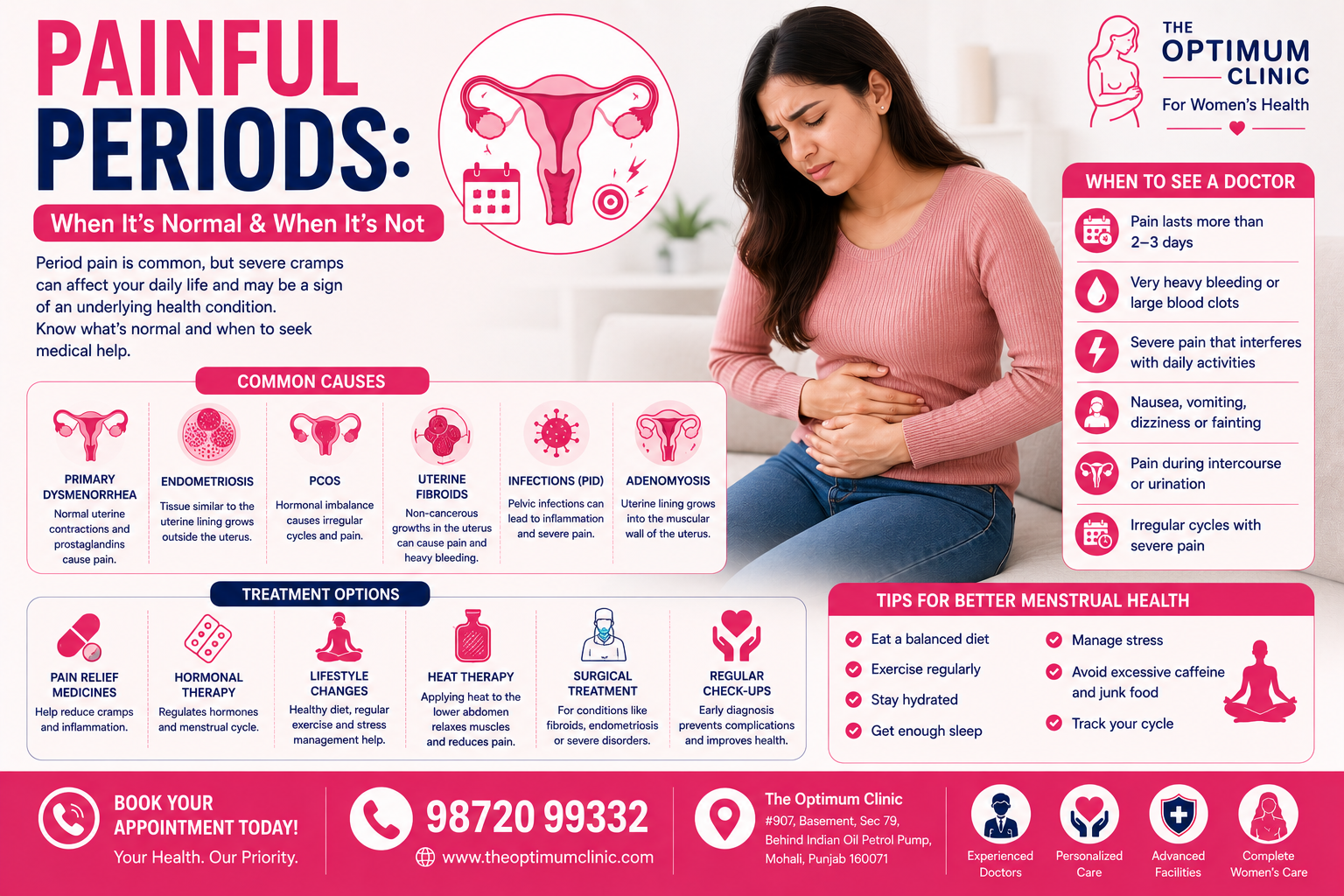
Painful Periods: When It’s Normal & When It’s Not
Menstrual cramps are one of the most common health concerns experienced by women of all ages. For many women, mild discomfort during periods is considered normal. However, severe pain that affects daily life, causes excessive discomfort, or continues worsening over time should never be ignored.
Painful periods can impact physical health, emotional well-being, work productivity, sleep, and overall quality of life. Unfortunately, many women silently tolerate severe menstrual pain without realizing that it may indicate an underlying gynecological condition.
If you are searching for expert guidance on painful periods treatment in Mohali, this complete guide will help you understand what causes menstrual cramps, when period pain is normal, warning signs that require medical attention, and the best treatment options available.
What Are Painful Periods?
Painful periods, medically known as dysmenorrhea, refer to cramping pain in the lower abdomen before or during menstruation.
Menstrual cramps occur because the uterus contracts to shed its lining during periods.
For many women, cramps are mild and manageable. However, severe pain may interfere with:
- Daily activities
- Work or school
- Sleep
- Physical movement
When Period Pain Is Considered Normal
Mild to moderate cramping during periods is usually considered normal, especially:
- During the first 1–2 days of periods
- In teenage years
- When pain improves with rest or mild medication
Normal menstrual cramps may include:
- Mild lower abdominal pain
- Back discomfort
- Temporary tiredness
These symptoms usually improve naturally after a short time.
When Painful Periods Are NOT Normal
Severe menstrual pain should never be ignored if it:
- Prevents normal activities
- Causes vomiting or dizziness
- Worsens over time
- Does not improve with medication
- Occurs with very heavy bleeding
Persistent severe cramps may indicate an underlying reproductive health condition that requires medical attention.
Common Symptoms Associated with Painful Periods
Women experiencing severe menstrual pain may also notice:
- Lower abdominal cramps
- Back pain
- Nausea
- Vomiting
- Headaches
- Fatigue
- Diarrhea
- Dizziness
The severity of symptoms can vary from woman to woman.
Main Causes of Painful Periods
1. Primary Dysmenorrhea
Primary dysmenorrhea refers to common menstrual cramps without any underlying disease.
It is usually caused by:
- Natural uterine contractions
- Hormone-like substances called prostaglandins
This type of pain often improves with age or after childbirth.
2. Endometriosis
Endometriosis occurs when tissue similar to the uterine lining grows outside the uterus.
Symptoms may include:
- Severe period pain
- Pain during intercourse
- Heavy bleeding
- Infertility issues
Endometriosis is one of the leading causes of chronic menstrual pain in women.
3. PCOS (Polycystic Ovary Syndrome)
PCOS is a hormonal disorder that may cause:
- Irregular periods
- Painful periods
- Weight gain
- Hormonal imbalance
Early diagnosis helps manage symptoms effectively.
4. Uterine Fibroids
Fibroids are non-cancerous growths in the uterus that may cause:
- Heavy bleeding
- Pelvic pressure
- Severe cramps
5. Pelvic Inflammatory Disease (PID)
PID is an infection of the reproductive organs that may cause:
- Pelvic pain
- Fever
- Painful periods
- Abnormal discharge
Immediate medical treatment is important for preventing complications.
6. Adenomyosis
This condition occurs when uterine lining tissue grows into the muscular wall of the uterus.
It can lead to:
- Heavy bleeding
- Severe menstrual cramps
- Pelvic pain
Risk Factors for Severe Menstrual Pain
Certain factors may increase the risk of painful periods:
- Early menstruation age
- Heavy menstrual bleeding
- Smoking
- Stress
- Family history of painful periods
How Painful Periods Affect Daily Life
Severe menstrual cramps can affect:
- Work performance
- School attendance
- Mental health
- Sleep quality
- Relationships
Ignoring symptoms may reduce quality of life and delay diagnosis of serious conditions.
When Should You See a Gynecologist?
You should consult a gynecologist in Mohali if:
- Pain becomes severe suddenly
- Cramps worsen every month
- Periods become extremely heavy
- Bleeding occurs between periods
- Pain affects daily activities
- You experience fertility concerns
Early medical evaluation helps identify underlying causes before complications develop.
Diagnosis of Painful Periods
Doctors may use different methods to diagnose the cause of menstrual pain.
Medical History Review
The doctor may ask about:
- Menstrual cycle history
- Pain severity
- Family history
- Associated symptoms
Physical Examination
A pelvic examination may help identify abnormalities.
Ultrasound Scan
Ultrasound imaging may detect:
- Fibroids
- Ovarian cysts
- Endometriosis-related changes
Blood Tests
Blood tests may help evaluate infections or hormonal imbalance.
Treatment Options for Painful Periods
Treatment depends on the underlying cause and symptom severity.
1. Pain Relief Medicines
Doctors may prescribe medicines to reduce inflammation and menstrual cramps.
2. Hormonal Treatment
Hormonal therapy may help regulate periods and reduce pain.
3. Lifestyle Changes
Healthy Diet
- Eat anti-inflammatory foods
- Reduce processed foods
- Increase fruits and vegetables
Exercise Regularly
Physical activity helps improve blood circulation and reduce cramps.
Stress Management
Yoga, meditation, and breathing exercises may reduce stress-related symptoms.
4. Heat Therapy
Applying a heating pad to the lower abdomen may help relax muscles and reduce cramps.
5. Surgical Treatment
In severe cases involving fibroids or endometriosis, minimally invasive surgery may be recommended.
Home Remedies for Mild Period Pain
Women with mild cramps may benefit from:
- Warm baths
- Herbal tea
- Light exercise
- Proper hydration
- Adequate rest
However, home remedies should not replace medical care for severe symptoms.
Importance of Early Diagnosis
Many women normalize severe period pain and delay treatment for years.
Early diagnosis helps:
- Prevent complications
- Improve fertility health
- Reduce chronic pain
- Improve quality of life
Painful Periods During Teenage Years
Teenage girls commonly experience cramps during early menstruation years because hormone levels are still stabilizing.
However, severe pain causing fainting, vomiting, or school absence should still be medically evaluated.
Can Painful Periods Affect Fertility?
Some conditions causing severe period pain, such as endometriosis or PCOS, may affect fertility if untreated.
Early treatment improves reproductive health outcomes significantly.
Healthy Lifestyle Tips for Better Menstrual Health
Eat Nutritious Foods
- Iron-rich foods
- Healthy fats
- Fresh vegetables
- Whole grains
Stay Active
Regular exercise supports hormone balance and reduces stress.
Sleep Properly
Good sleep helps regulate hormones and reduce inflammation.
Stay Hydrated
Drinking enough water helps reduce bloating and improve circulation.
Why Women in Mohali Are Prioritizing Women’s Health
Women in Mohali are becoming more aware of the importance of menstrual health and preventive gynecological care.
Modern clinics now provide:
- Hormonal evaluation
- PCOS treatment
- Ultrasound diagnostics
- Fertility guidance
- Advanced gynecological care
Access to quality healthcare helps women manage reproductive health conditions more effectively.
Why Choose The Optimum Clinic, Mohali?
At The Optimum Clinic, we focus on advanced and compassionate women’s healthcare services for menstrual health, hormonal balance, and fertility support.
Our services include:
- Diagnosis of menstrual disorders
- PCOS management
- Hormonal evaluation
- Pelvic pain treatment
- Women’s wellness consultation
Women across Mohali trust our clinic for personalized gynecological care and advanced treatment solutions.
Learn more about our services:
Explore our gynecology services:
Frequently Asked Questions (FAQ)
Are painful periods normal?
Mild cramps are normal, but severe pain affecting daily life should be medically evaluated.
Can PCOS cause painful periods?
Yes, hormonal imbalance related to PCOS may contribute to menstrual pain.
When should I see a doctor for period pain?
If pain becomes severe, worsens over time, or occurs with heavy bleeding.
Can painful periods affect fertility?
Certain conditions causing painful periods may affect fertility if untreated.
Conclusion
Mild menstrual cramps are common, but severe painful periods should never be ignored. Conditions such as endometriosis, PCOS, fibroids, and hormonal imbalance can all contribute to excessive menstrual pain and affect long-term reproductive health.
Early diagnosis, proper treatment, and healthy lifestyle habits help improve menstrual health and overall quality of life.
If you are experiencing severe cramps or unusual menstrual symptoms, consult an experienced gynecologist in Mohali for proper evaluation and personalized care.
Book Your Consultation Today
Looking for expert treatment for painful periods and women’s healthcare in Mohali?
Visit The Optimum Clinic for advanced gynecological care and compassionate women’s health support.
???? Book your appointment today and prioritize your reproductive health.