When to Visit a Gynecologist During Pregnancy – Complete Guide
Pregnancy is one of the most beautiful experiences in a woman’s life, but it also comes with many physical and emotional changes. Proper medical guidance throughout pregnancy is essential for the health of both the mother and the baby. One of the most common questions asked by expecting mothers is: “When should I visit a gynecologist during pregnancy?”
Regular prenatal checkups are extremely important because they help monitor baby growth, identify complications early, and ensure a safe and healthy pregnancy journey. Whether you are planning your first pregnancy or already expecting, timely visits to a trusted gynecologist in Mohali can make a huge difference in pregnancy outcomes.
In this complete guide, we will explain when to visit a gynecologist during pregnancy, why regular prenatal care matters, and what happens during each stage of pregnancy.
Why Prenatal Care is Important
Prenatal care refers to the medical attention and guidance women receive during pregnancy. Regular checkups help doctors monitor both maternal and fetal health.
Benefits of prenatal care include:
- Monitoring baby development
- Reducing pregnancy complications
- Managing nutritional needs
- Detecting health issues early
- Preparing for safe delivery
Women who attend regular prenatal checkups generally experience healthier pregnancies and better delivery outcomes.
When Should You First Visit a Gynecologist During Pregnancy?
Women should ideally visit a gynecologist as soon as pregnancy is confirmed or when periods are missed.
The first prenatal appointment usually happens between:
- 6 to 8 weeks of pregnancy
During the first visit, the doctor may:
- Confirm pregnancy
- Calculate due date
- Review medical history
- Recommend blood tests and ultrasound
- Prescribe prenatal vitamins
Early consultation with a pregnancy doctor in Mohali helps identify potential risks at the beginning itself.
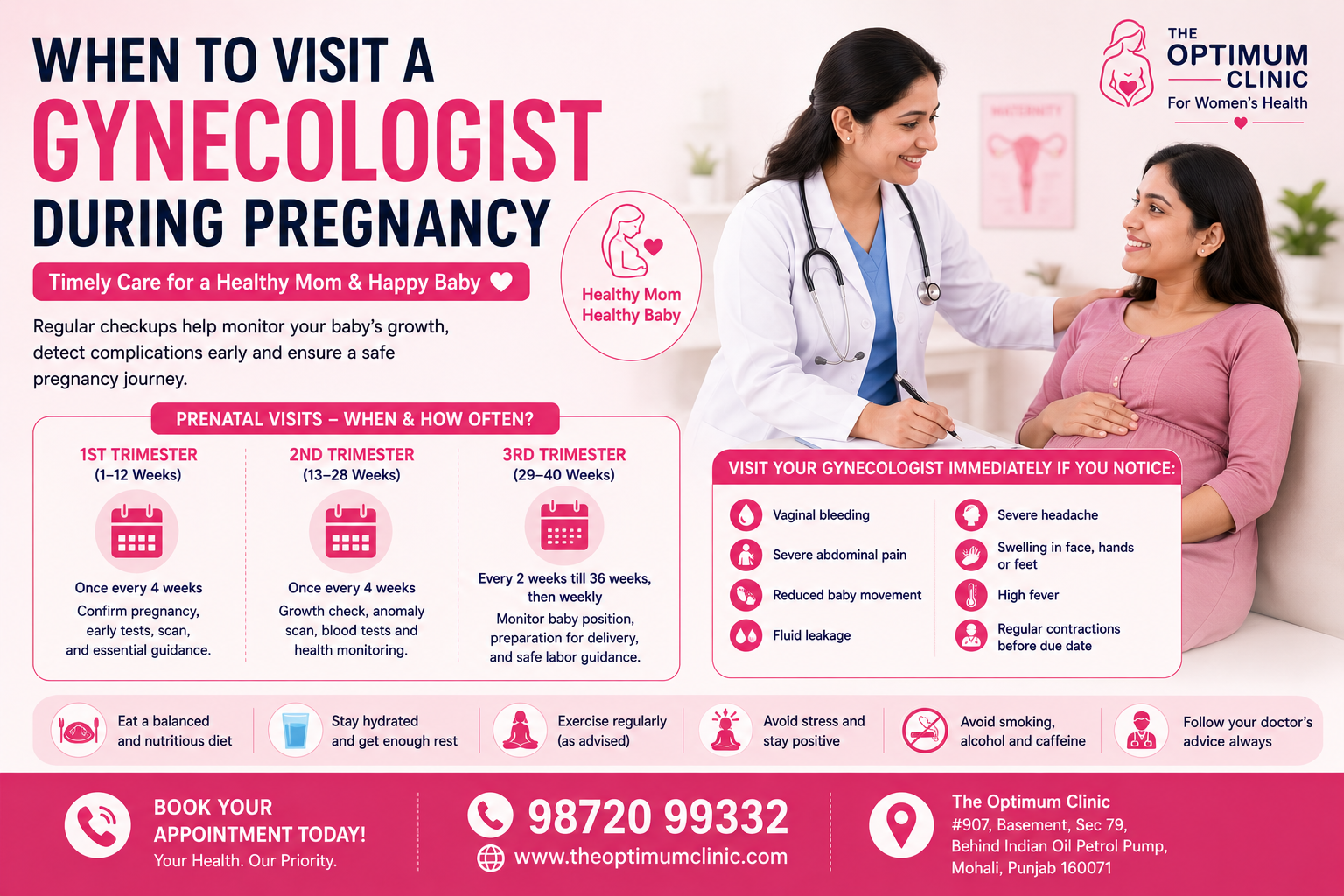
First Trimester Visits (Weeks 1–12)
The first trimester is one of the most important stages of pregnancy because the baby’s organs begin developing rapidly.
How Often Should You Visit?
Most women visit their gynecologist:
- Once every 4 weeks during the first trimester
Common Symptoms During First Trimester
- Morning sickness
- Nausea
- Fatigue
- Mood swings
- Breast tenderness
Important Tests During First Trimester
- Blood tests
- Urine tests
- Early pregnancy ultrasound
- Blood pressure monitoring
This stage is also important for discussing nutrition, lifestyle changes, and pregnancy precautions.
Second Trimester Visits (Weeks 13–28)
The second trimester is often called the “comfortable phase” of pregnancy because symptoms like nausea usually improve.
Visit Frequency
- Once every 4 weeks
What Happens During These Visits?
- Baby heartbeat monitoring
- Weight gain tracking
- Ultrasound scans
- Blood pressure checks
- Blood sugar testing
Women may also start feeling baby movements during this phase.
Important Pregnancy Scan
A detailed anomaly scan is usually performed around 18–22 weeks to check baby development and identify abnormalities.
Third Trimester Visits (Weeks 29–40)
The third trimester requires closer monitoring because labor and delivery preparation begin during this phase.
Visit Frequency
- Every 2 weeks until 36 weeks
- Weekly visits after 36 weeks
Doctors Monitor:
- Baby position
- Fetal heartbeat
- Mother’s blood pressure
- Signs of labor
- Baby growth
Regular visits during the third trimester help ensure safer delivery planning.
Symptoms That Need Immediate Medical Attention
Some pregnancy symptoms should never be ignored.
Visit Your Gynecologist Immediately If You Experience:
- Heavy bleeding
- Severe abdominal pain
- High fever
- Severe headaches
- Swelling in hands or face
- Reduced baby movement
- Water leakage
Prompt medical attention can prevent serious complications.
Importance of Ultrasound During Pregnancy
Ultrasound scans are important for monitoring baby development and pregnancy progress.
Common Pregnancy Scans Include:
- Dating scan
- NT scan
- Anomaly scan
- Growth scan
These scans help doctors assess fetal health and growth at different stages.
Common Pregnancy Complications
Some pregnancies may require extra monitoring due to medical complications.
High-Risk Pregnancy Conditions Include:
- Gestational diabetes
- High blood pressure
- Anemia
- Twin pregnancy
- Previous pregnancy complications
Regular visits to an experienced gynecologist in Mohali help manage these conditions safely.
Healthy Lifestyle Tips During Pregnancy
1. Eat a Balanced Diet
Nutrition is extremely important during pregnancy.
Include:
- Protein-rich foods
- Iron-rich vegetables
- Fresh fruits
- Dairy products
Avoid:
- Alcohol
- Smoking
- Excess caffeine
- Raw foods
2. Stay Hydrated
Drink enough water to maintain healthy circulation and reduce dehydration risks.
3. Exercise Safely
Light exercise supports healthy pregnancy and may improve chances of normal delivery.
Safe exercises include:
- Walking
- Prenatal yoga
- Stretching exercises
4. Get Proper Rest
Pregnancy causes physical stress, so adequate sleep and relaxation are important.
Emotional Health During Pregnancy
Hormonal changes during pregnancy can affect emotional health significantly.
Common emotional symptoms include:
- Anxiety
- Mood swings
- Stress
- Fear about childbirth
Support from family and healthcare providers helps improve emotional well-being.
How to Prepare for Your Prenatal Visits
To make the most of your appointments:
- Carry previous medical reports
- Track symptoms carefully
- Write down questions for your doctor
- Discuss concerns openly
Good communication improves pregnancy care and treatment.
Signs Labor May Be Near
Toward the end of pregnancy, women should watch for:
- Regular contractions
- Water breaking
- Pelvic pressure
- Lower back pain
- Mucus discharge
Immediate medical support is important when labor begins.
Why Women in Mohali Prioritize Prenatal Care
Women in Mohali are becoming increasingly aware of the importance of preventive and maternity healthcare.
Modern clinics now provide:
- Advanced diagnostic facilities
- Pregnancy monitoring
- High-risk pregnancy care
- Normal delivery guidance
- Postnatal care
Access to quality healthcare improves pregnancy outcomes significantly.
Why Choose The Optimum Clinic, Mohali?
At The Optimum Clinic, we provide compassionate and advanced pregnancy care for women across Mohali and nearby areas.
Our services include:
- Pregnancy consultation
- Routine prenatal checkups
- Ultrasound monitoring
- High-risk pregnancy management
- Normal delivery guidance
Our goal is to ensure safe and healthy motherhood journeys through personalized care and expert support.
Learn more about our services:
Explore our gynecology services:
Frequently Asked Questions (FAQ)
How soon should I visit a gynecologist after pregnancy confirmation?
Ideally within the first 6–8 weeks of pregnancy.
How often are prenatal visits needed?
Usually every 4 weeks initially, then more frequently during the final trimester.
Are ultrasounds safe during pregnancy?
Yes, pregnancy ultrasounds are considered safe and important for monitoring baby growth.
Can pregnancy complications be prevented?
Regular prenatal care helps detect and manage complications early.
Conclusion
Regular visits to a gynecologist during pregnancy are essential for ensuring the health and safety of both mother and baby. From confirming pregnancy and monitoring baby growth to preparing for delivery, prenatal care supports every stage of the journey.
If you are pregnant or planning pregnancy, consult an experienced pregnancy doctor in Mohali for proper guidance and personalized care.
Early medical attention and regular monitoring can make pregnancy safer, healthier, and less stressful.
Book Your Consultation Today
Looking for expert pregnancy care and prenatal support in Mohali?
Visit The Optimum Clinic for compassionate maternity care and advanced women’s healthcare services.
Book your appointment today for a healthier pregnancy journey.