


Affordable Gynecology Treatment in Mohali | Expert Women's Healthcare
- July 10,2026
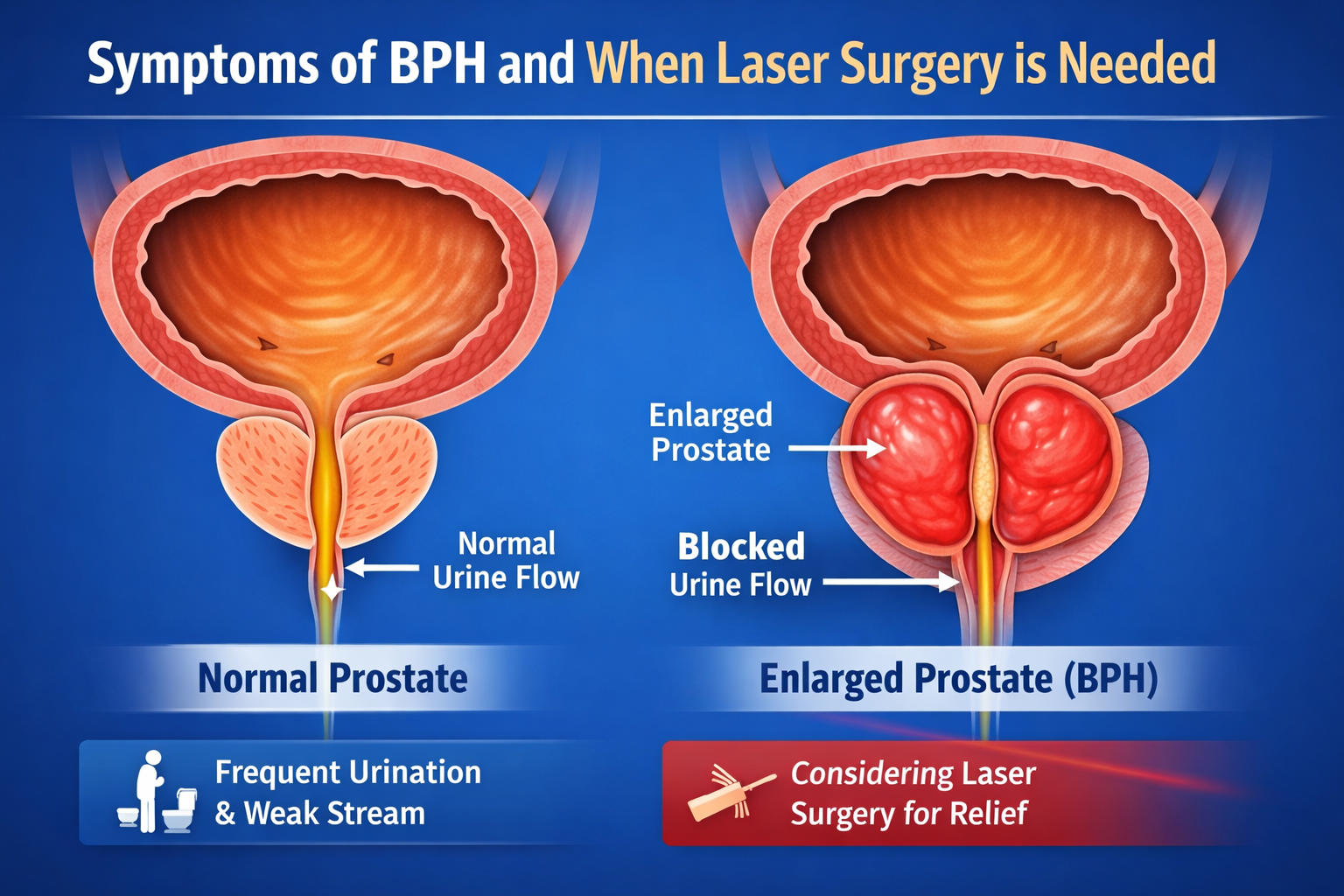
Benign Prostatic Hyperplasia (BPH), also known as prostate enlargement, is a condition that affects many men as they grow older. The prostate gland is located below the bladder and surrounds the urethra, which carries urine out of the body. When the prostate increases in size, it can press against the urethra and create problems with urination. Although BPH is not cancer, it can significantly affect daily comfort and urinary function if left untreated.
What is BPH (Prostate Enlargement)?
BPH is a non-cancerous enlargement of the prostate gland that usually develops in men over the age of 50. As the prostate grows, it gradually narrows the urethra and restricts the normal flow of urine. This condition develops slowly, and symptoms may become more noticeable over time. Proper diagnosis and timely treatment help prevent complications related to the urinary system.
Symptoms of BPH
Men experiencing prostate enlargement may notice several urinary changes. Frequent urination, especially during nighttime, is one of the early signs. Some men may find it difficult to start urinating even when they feel the urge to empty the bladder.
Another symptom includes a weak or slow urine stream. Instead of a steady flow, urine may pass slowly or stop and start during urination. Many patients also experience a feeling that the bladder is not completely empty after urinating. In some cases, there may be a sudden urge to urinate that is difficult to control.
When BPH Symptoms Become Severe
In the early stages, BPH symptoms may be mild and manageable with medications or lifestyle adjustments. However, as the prostate continues to enlarge, the blockage in the urinary passage can become more serious.
Men may start experiencing greater difficulty while urinating, increased nighttime urination, or persistent bladder pressure. If the bladder is unable to empty properly, it may lead to urinary tract infections, bladder stones, or other complications.
When Laser Surgery is Needed for BPH
Laser surgery for BPH is usually recommended when medications do not provide sufficient relief from urinary symptoms. Doctors may advise laser treatment when the enlarged prostate causes significant obstruction in the urinary tract.
This procedure may also be suggested for patients who experience repeated urinary infections, severe urinary retention, or bladder damage due to prolonged blockage. Laser technology helps remove or shrink the extra prostate tissue that is blocking the urethra, allowing urine to flow more easily.
Benefits of Laser Surgery for BPH
Laser surgery is considered a minimally invasive treatment option for prostate enlargement. The procedure uses advanced laser energy to remove excess prostate tissue with high precision. This approach reduces bleeding, minimizes hospital stay, and allows faster recovery compared to traditional surgical methods.
Many patients notice a significant improvement in urinary flow and relief from symptoms after the procedure.
Conclusion
BPH is a condition that can lead to urinary discomfort and affect daily life as men age. Recognizing the symptoms early and seeking proper medical care is important for effective treatment. When medications are not enough to manage the condition, laser surgery provides an advanced and safe solution to remove prostate blockage and restore normal urinary function.