


Affordable Gynecology Treatment in Mohali | Expert Women's Healthcare
- July 10,2026
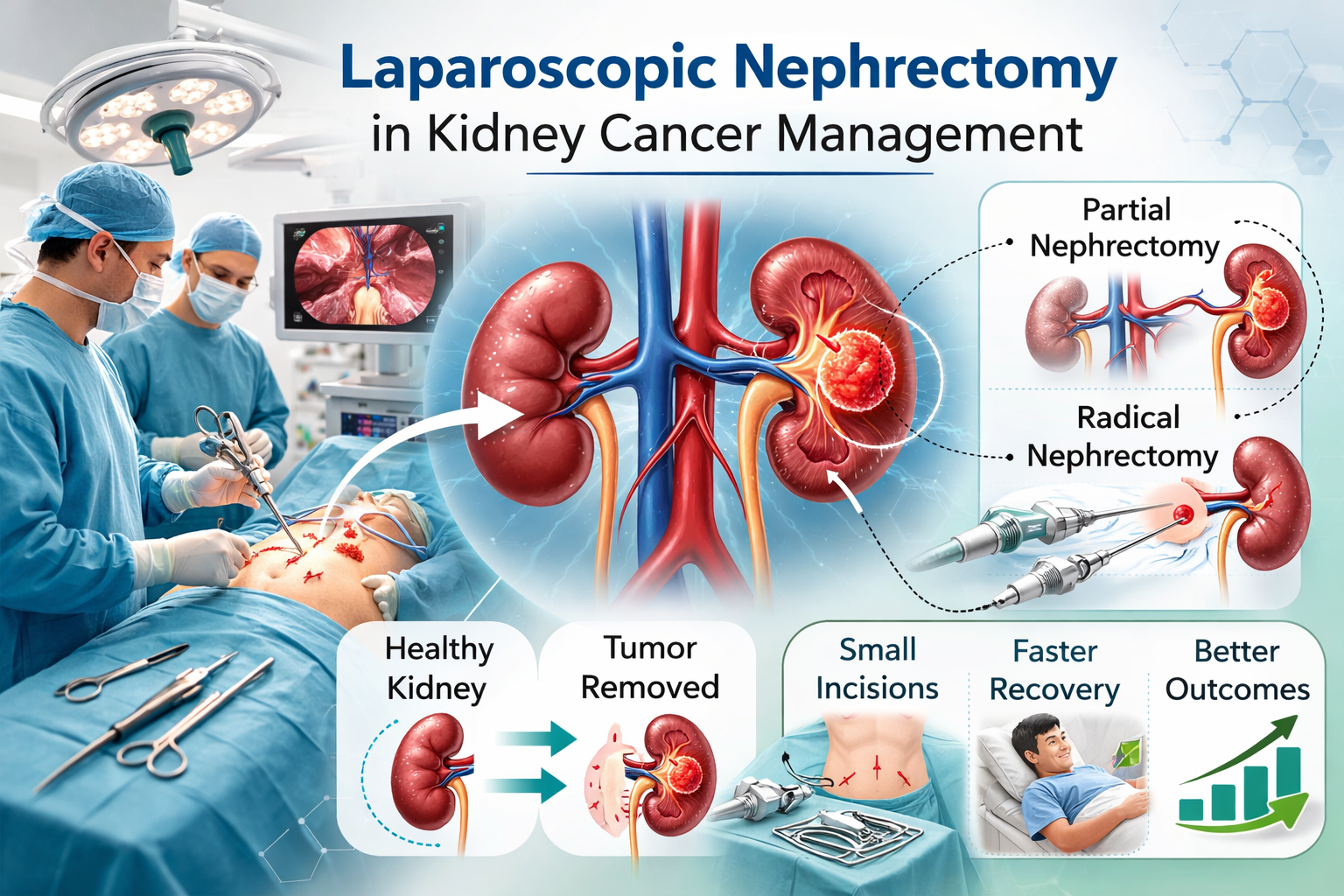
Kidney cancer is one of the most commonly diagnosed urological malignancies, and timely, effective treatment plays a crucial role in improving patient outcomes. Over the years, surgical techniques have evolved significantly, with laparoscopic nephrectomy emerging as a preferred approach for managing many cases of kidney cancer. This minimally invasive procedure has transformed how surgeons remove cancerous kidneys while ensuring faster recovery and fewer complications.
Laparoscopic nephrectomy is a surgical procedure used to remove all or part of the kidney through small incisions using specialized instruments and a camera. Unlike traditional open surgery, this technique avoids large cuts, making it less invasive and more patient-friendly.
Depending on the stage and location of the tumor, the procedure can be classified into:
Radical nephrectomy, where the entire kidney is removed
Partial nephrectomy, where only the tumor and a small margin of healthy tissue are removed
Both approaches are commonly used in kidney cancer management, with the choice depending on tumor size, location, and overall kidney function.
Importance in Kidney Cancer Treatment
Laparoscopic nephrectomy plays a vital role in treating localized kidney cancer. It allows surgeons to remove tumors effectively while preserving as much healthy tissue as possible. For early-stage cancers, partial nephrectomy is often preferred because it maintains kidney function without compromising cancer control.
For larger or more complex tumors, radical nephrectomy may be necessary. Even in such cases, the laparoscopic approach provides excellent oncological outcomes comparable to open surgery.
One of the biggest reasons for the growing popularity of this technique is its multiple patient benefits. Smaller incisions result in reduced postoperative pain and minimal scarring. Patients also experience shorter hospital stays and quicker return to daily activities.
Blood loss during surgery is generally lower, and the risk of infection is reduced. Additionally, the magnified view provided by the laparoscopic camera helps surgeons perform the procedure with high precision.
Recovery after laparoscopic nephrectomy is usually smooth and faster compared to open surgery. Most patients can resume light activities within a few weeks. Proper hydration, balanced nutrition, and regular follow-ups are essential for optimal recovery.
Patients are also advised to monitor kidney function, especially if one kidney has been removed. Regular imaging and medical check-ups help ensure that the cancer has not recurred.
Not every patient is an ideal candidate for laparoscopic nephrectomy. Factors such as tumor size, spread of cancer, prior abdominal surgeries, and overall health condition influence the decision. However, with advancements in surgical expertise and technology, more patients are now eligible for this minimally invasive option.
The field of minimally invasive urology continues to advance with the integration of robotic-assisted surgery. These innovations further enhance precision, flexibility, and outcomes in kidney cancer treatment. As technology evolves, laparoscopic nephrectomy is expected to become even more effective and widely accessible.
Laparoscopic nephrectomy has become a cornerstone in modern kidney cancer management. Its ability to combine effective tumor removal with faster recovery and fewer complications makes it a preferred choice for both patients and surgeons. With ongoing advancements, this technique continues to improve the quality of care and outcomes for individuals battling kidney cancer.