


Affordable Gynecology Treatment in Mohali | Expert Women's Healthcare
- July 10,2026
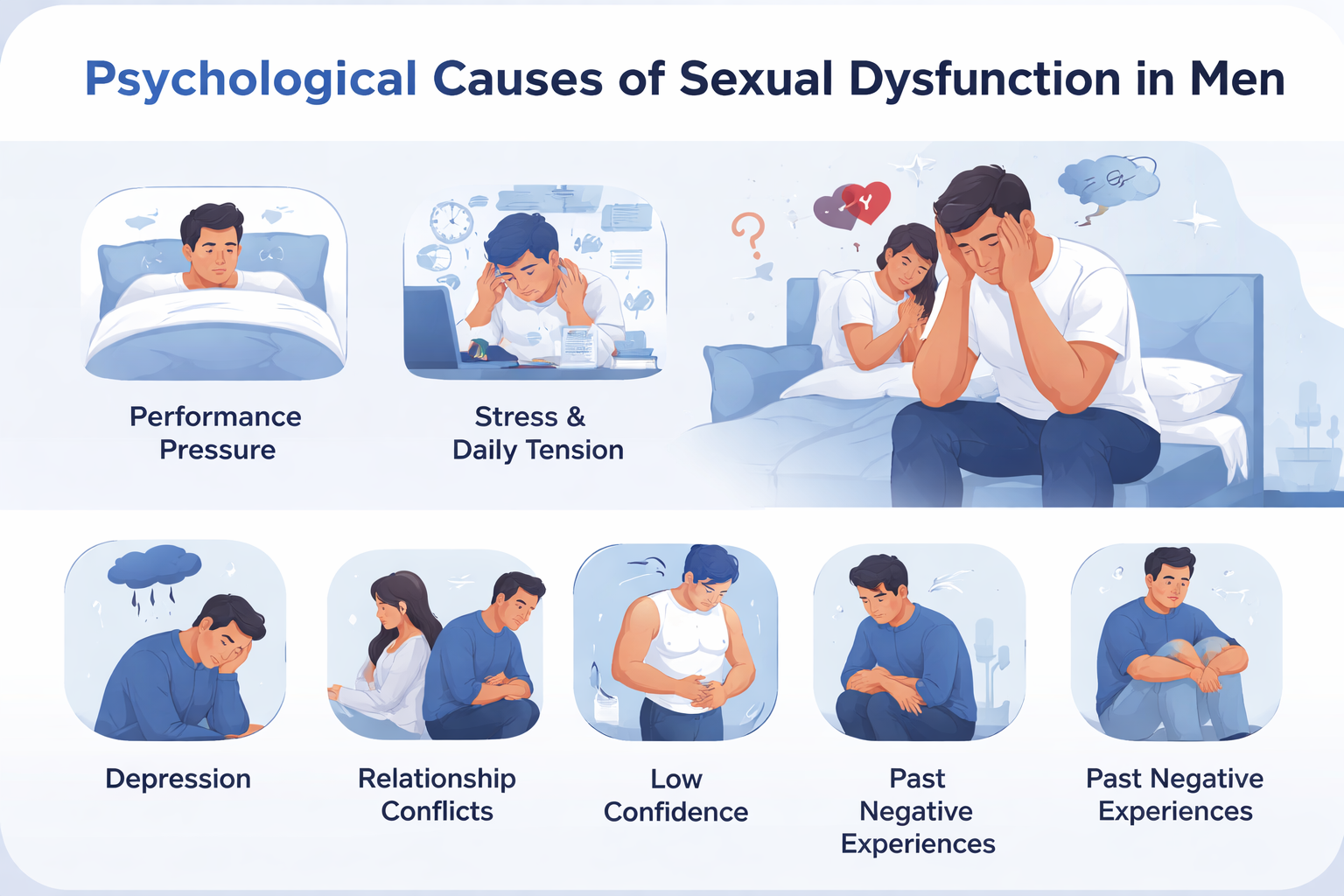
Sexual dysfunction in men is not always caused by physical health issues. In many cases, mental and emotional factors play a major role in affecting sexual desire, performance, and satisfaction. These psychological influences can disrupt the natural balance between the mind and body, leading to ongoing concerns if not addressed properly.
Sexual dysfunction refers to difficulties that prevent a man from enjoying or completing sexual activity. This may include erectile issues, reduced libido, or problems with ejaculation. While physical conditions can contribute, emotional and mental health often have a strong impact on these problems.
The brain is deeply connected to sexual response. Thoughts, stress levels, and emotional stability directly influence arousal and performance. When the mind is overwhelmed or distracted, it becomes difficult for the body to respond naturally, leading to sexual difficulties.
Fear of not meeting expectations during intimacy can create anxiety. This pressure interferes with relaxation, which is essential for proper sexual function.
Ongoing stress from work, finances, or personal life reduces focus and energy. High stress levels can lower sexual desire and make it harder to maintain performance.
Depression affects mood, confidence, and interest in daily activities, including sex. It can lead to a noticeable decline in libido and overall satisfaction.
Emotional distance, lack of communication, or unresolved disagreements between partners can reduce intimacy. A strained relationship often leads to reduced interest in sexual activity.
Negative thoughts about body image or sexual ability can create hesitation and discomfort. Confidence plays a key role in maintaining a healthy sexual life.
Unpleasant or traumatic experiences related to intimacy can create fear or anxiety, which may continue to affect sexual behavior over time.
Sexual dysfunction caused by psychological factors can affect more than just intimacy. It may lead to frustration, embarrassment, and reduced self-esteem. Over time, these feelings can impact mental health and relationships, making the issue more complex.
Therapy can help identify and address mental and emotional triggers. Techniques like cognitive behavioral therapy are effective in changing negative thought patterns.
Activities such as meditation, yoga, and regular relaxation can improve mental clarity and reduce anxiety, supporting better sexual health.
Open discussions with a partner can reduce pressure and strengthen emotional connection, which improves intimacy.
Regular exercise, proper sleep, and a balanced diet support both mental and physical well-being, contributing to improved sexual performance.
If the problem continues for a long time or starts affecting daily life and relationships, seeking medical advice is important. A specialist can help identify the root cause and suggest the most suitable treatment.
Mental and emotional health plays a significant role in male sexual function. Factors like stress, anxiety, depression, and relationship challenges can strongly influence performance and desire. With the right guidance and support, these issues can be managed effectively, leading to better confidence and overall quality of life.