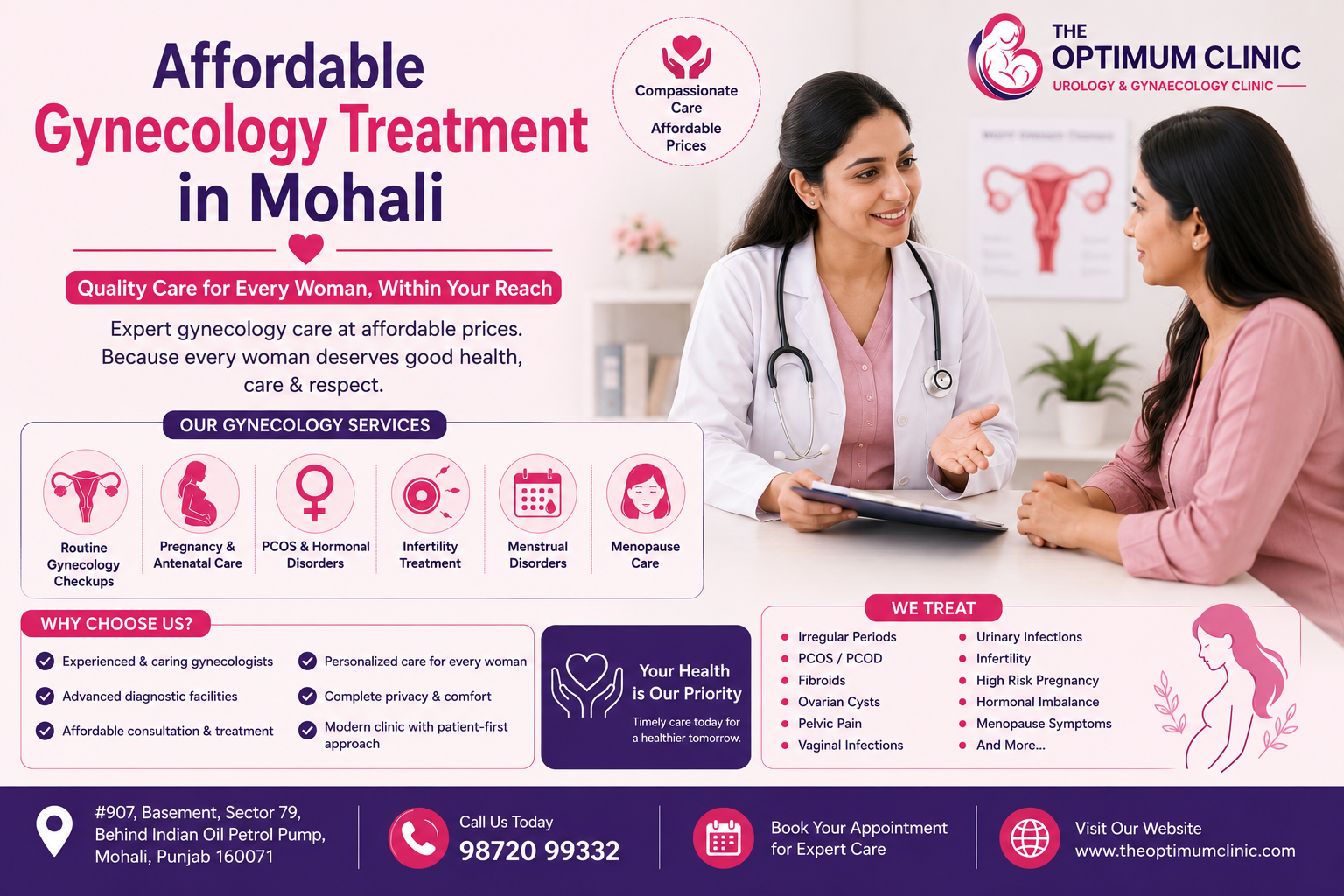
Affordable Gynecology Treatment in Mohali | Expert Women's Healthcare
- July 10,2026
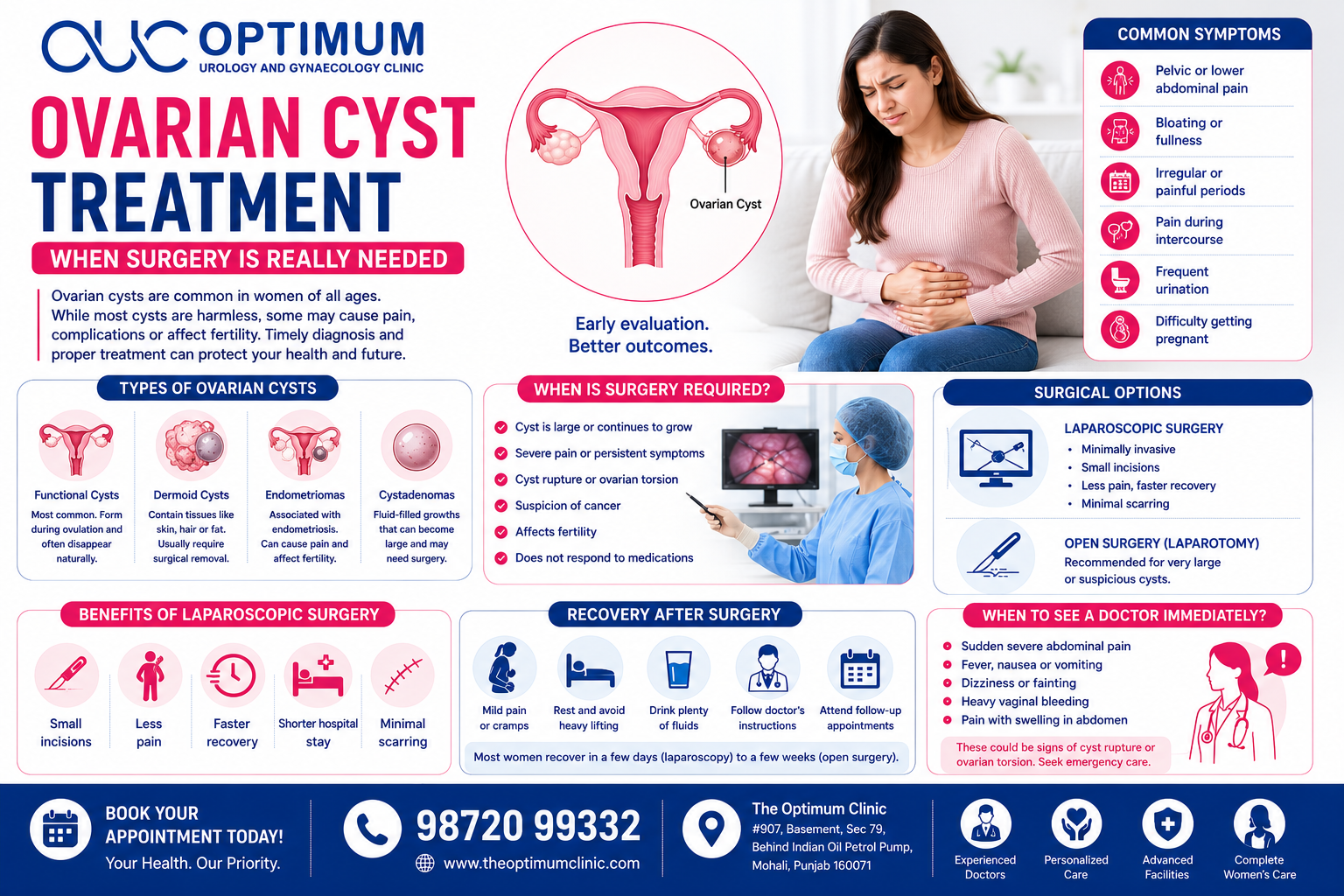
Ovarian cysts are one of the most common gynecological conditions affecting women of all ages. In many cases, ovarian cysts are harmless and disappear naturally without treatment. However, some cysts may grow larger, cause severe pain, affect fertility, or lead to complications that require medical treatment or surgery.
Many women discover ovarian cysts during routine gynecological checkups or while undergoing ultrasound scans for pelvic pain, irregular periods, or fertility concerns. While hearing the word “cyst” may sound alarming, it is important to understand that most ovarian cysts are non-cancerous and manageable with proper medical care.
If you are searching for expert ovarian cyst treatment in Mohali, this complete guide will help you understand ovarian cyst symptoms, causes, treatment options, and when surgery becomes necessary.
An ovarian cyst is a fluid-filled sac that develops on or inside the ovaries.
The ovaries are important reproductive organs responsible for producing eggs and female hormones.
Many ovarian cysts form naturally during the menstrual cycle and disappear on their own within a few weeks or months.
However, some cysts may continue growing and require medical monitoring or treatment.
Functional cysts are the most common type and usually form during ovulation.
They are generally harmless and disappear naturally.
These cysts may contain tissues such as hair, skin, or fat.
They usually require surgical removal if large or symptomatic.
These cysts are associated with endometriosis and may cause:
These are fluid-filled growths that develop on the ovary surface and may become large.
Many ovarian cysts do not cause symptoms initially. However, larger cysts or complicated cysts may lead to noticeable symptoms.
Symptoms may vary depending on the cyst type and size.
Several factors can contribute to ovarian cyst formation.
Hormonal changes during ovulation may lead to functional cyst development.
Women with endometriosis are at higher risk of developing endometriomas.
Some cysts may form during early pregnancy and disappear later naturally.
Women with PCOS may develop multiple small ovarian cysts due to hormonal imbalance.
Severe infections may spread to the ovaries and contribute to cyst formation.
Most ovarian cysts are harmless, but some situations require immediate medical attention.
Emergency care may be required if complications occur.
Consult a gynecologist in Mohali immediately if you experience:
These symptoms may indicate cyst rupture or ovarian torsion.
Doctors use several methods to diagnose ovarian cysts.
A gynecological examination may help detect swelling or tenderness.
Ultrasound imaging is the most common method used to:
Blood tests may help rule out infections or other health conditions.
Advanced imaging may sometimes be recommended for detailed evaluation.
Treatment depends on:
Small harmless cysts may only require regular monitoring through ultrasound scans.
Many cysts disappear naturally without treatment.
Doctors may prescribe hormonal medicines to:
Healthy lifestyle habits support hormonal balance and reproductive health.
Surgery may be recommended when:
Doctors carefully evaluate each case before recommending surgery.
Laparoscopy is a minimally invasive surgical procedure commonly used for ovarian cyst removal.
Many women prefer laparoscopy surgery in Mohali because of its faster healing process.
In some cases involving very large or suspicious cysts, traditional open surgery may be necessary.
Recovery time depends on the type of surgery performed.
Most women recover faster after laparoscopic surgery compared to open surgery.
Some ovarian cysts may affect fertility depending on their type and severity.
Conditions such as:
may impact ovulation or reproductive health.
Early treatment improves fertility outcomes significantly.
While not all cysts can be prevented, healthy habits may reduce risks.
Routine gynecological care helps detect ovarian cysts and hormonal issues early.
Regular checkups support:
Awareness about women’s reproductive health is increasing rapidly in Mohali and nearby areas.
Women are now seeking:
Modern healthcare facilities have improved access to advanced gynecological care significantly.
At The Optimum Clinic, we provide advanced and compassionate women’s healthcare services focused on reproductive health and minimally invasive treatment.
Our services include:
Women across Mohali trust our clinic for personalized care and expert medical support.
Learn more about our services:
Explore our gynecology services:
Yes, many small functional cysts disappear without treatment.
Laparoscopic surgery usually involves less pain and faster recovery.
Some large or complicated cysts may affect fertility or pregnancy health.
Surgery may be required for large, painful, growing, or suspicious cysts.
Ovarian cysts are common among women, and most are harmless. However, some cysts may cause pain, fertility problems, or serious complications if ignored.
Early diagnosis, regular gynecological checkups, and proper treatment help protect reproductive health and improve long-term well-being.
If you are experiencing pelvic pain, irregular periods, bloating, or fertility concerns, consult an experienced gynecologist in Mohali for expert evaluation and personalized care.
Looking for expert ovarian cyst treatment and women’s healthcare in Mohali?
Visit The Optimum Clinic for advanced gynecological care and compassionate medical support.
Book your appointment today and prioritize your reproductive health.