Affordable Gynecology Treatment in Mohali | Expert Women's Healthcare
- July 10,2026
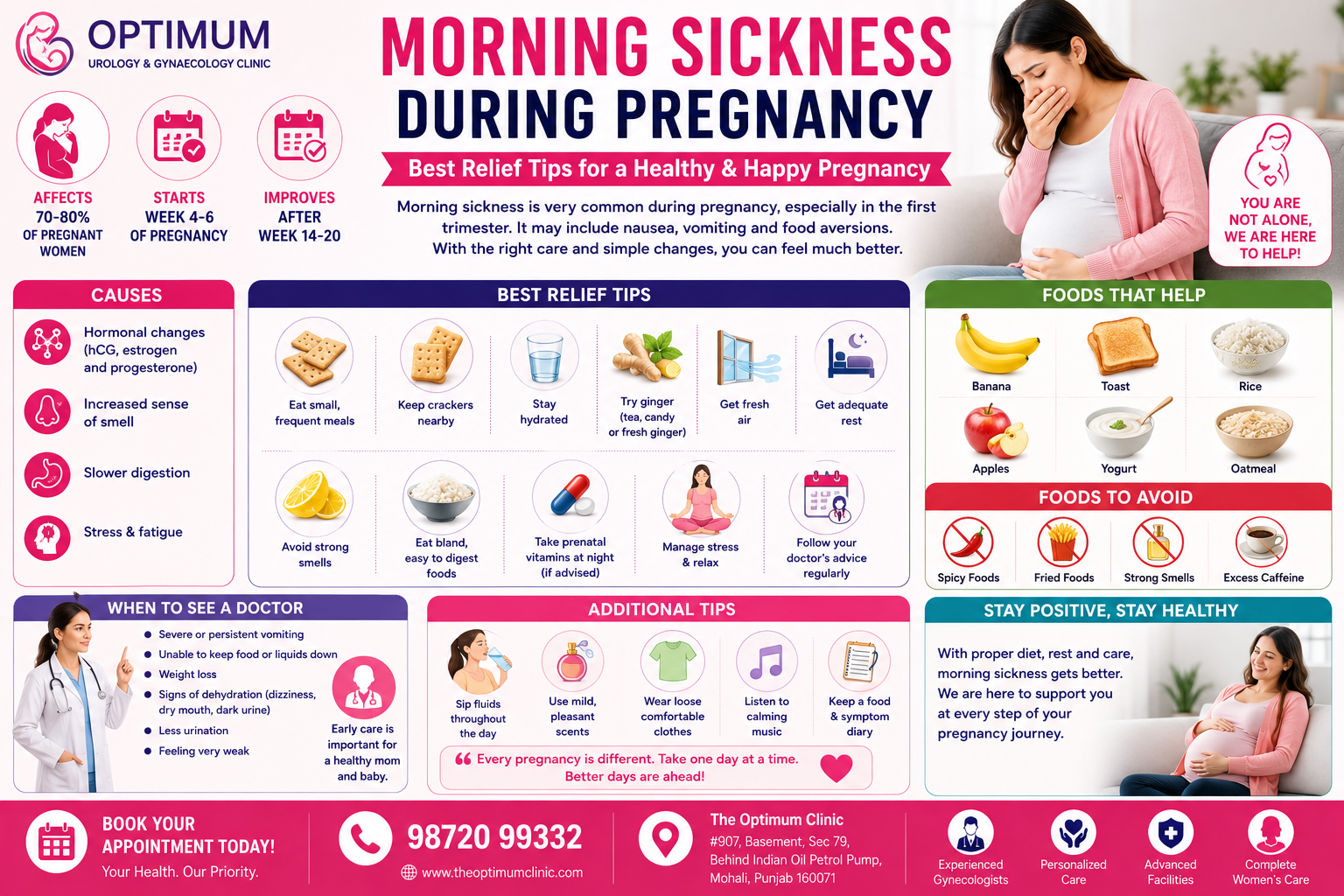
Pregnancy is one of the most exciting phases in a woman's life, but it often comes with several physical and emotional changes. One of the most common early pregnancy symptoms is morning sickness. Despite its name, morning sickness can occur at any time of the day or night and may affect women differently.
For some women, it involves mild nausea that comes and goes, while others may experience frequent vomiting that affects their daily routine. Although morning sickness can be uncomfortable, it is usually a normal part of pregnancy and often indicates that pregnancy hormones are increasing as expected.
Understanding why morning sickness happens, how long it lasts, and what relief strategies work best can help expectant mothers manage symptoms more comfortably.
In this comprehensive guide, we will discuss the causes of morning sickness, symptoms, risk factors, home remedies, dietary changes, medical treatments, warning signs, and expert tips for a healthier pregnancy.
Morning sickness refers to nausea and vomiting that commonly occurs during pregnancy, especially during the first trimester.
Although it is called "morning" sickness, symptoms can occur:
The severity varies from woman to woman.
Most women begin experiencing symptoms between the 4th and 6th week of pregnancy.
Symptoms usually:
However, some women may experience symptoms throughout pregnancy.
The exact cause is not fully understood, but several factors are believed to contribute.
Rapid increases in hormones such as:
are strongly linked to morning sickness.
Many pregnant women become highly sensitive to odors.
Common triggers include:
Hormonal changes may slow the digestive system, increasing feelings of nausea.
Physical and emotional stress may worsen symptoms.
Certain women may have a higher risk:
In most cases, mild to moderate morning sickness does not harm the baby.
Many healthcare providers consider it a normal sign that pregnancy hormones are functioning appropriately.
However, severe vomiting and dehydration require medical attention.
Hyperemesis Gravidarum is a severe form of pregnancy-related nausea and vomiting.
Women experiencing these symptoms should seek immediate medical care.
Instead of eating three large meals, try:
Eating plain crackers before getting out of bed may help reduce morning nausea.
Dehydration can worsen symptoms.
Try:
Ginger is one of the most effective natural remedies for nausea.
Options include:
Certain foods may worsen nausea.
Common triggers include:
Fatigue can make nausea worse.
Prioritize:
Fresh air may reduce nausea caused by strong odors.
Some women find prenatal vitamins easier to tolerate before bedtime.
Always follow your doctor's advice.
Easy to digest and rich in potassium.
A bland food that can help settle the stomach.
Gentle on digestion and often well tolerated.
Provide fiber and hydration.
Supports digestion and provides protein.
Provides slow-release energy and supports digestive health.
If drinking large amounts of water feels difficult:
Symptoms are usually most intense during this stage.
Most women experience noticeable improvement.
Some women may experience occasional nausea due to pressure from the growing uterus.
Seek medical attention if you experience:
There is no guaranteed way to prevent morning sickness, but these habits may help:
Regular prenatal visits help monitor:
Explore expert women's healthcare resources:
At The Optimum Clinic, we provide comprehensive pregnancy care, prenatal monitoring, fertility consultation, PCOS treatment, and advanced women's healthcare services.
Our experienced gynecology team supports women through every stage of pregnancy with personalized medical care and compassionate guidance.
In many cases, morning sickness is a normal response to pregnancy hormones and is considered a common pregnancy symptom.
Yes. Despite its name, symptoms can occur at any time of the day or night.
Bland foods such as crackers, toast, bananas, rice, and oatmeal are often well tolerated.
Many women notice improvement between weeks 14 and 20 of pregnancy.
Morning sickness is a common part of pregnancy and affects millions of women worldwide. Although it can be uncomfortable, understanding triggers, making dietary adjustments, staying hydrated, and following healthy lifestyle habits can significantly improve symptoms.
Women experiencing severe nausea, vomiting, or dehydration should seek medical care promptly to ensure a healthy pregnancy for both mother and baby.
Looking for expert pregnancy care and prenatal guidance in Mohali?
Visit The Optimum Clinic for personalized pregnancy care and advanced women's healthcare services.
???? Call: 9872099332
???? Optimum Clinic, #907 Basement, Sec 79, Behind Indian Oil Petrol Pump, Mohali