Affordable Gynecology Treatment in Mohali | Expert Women's Healthcare
- July 10,2026
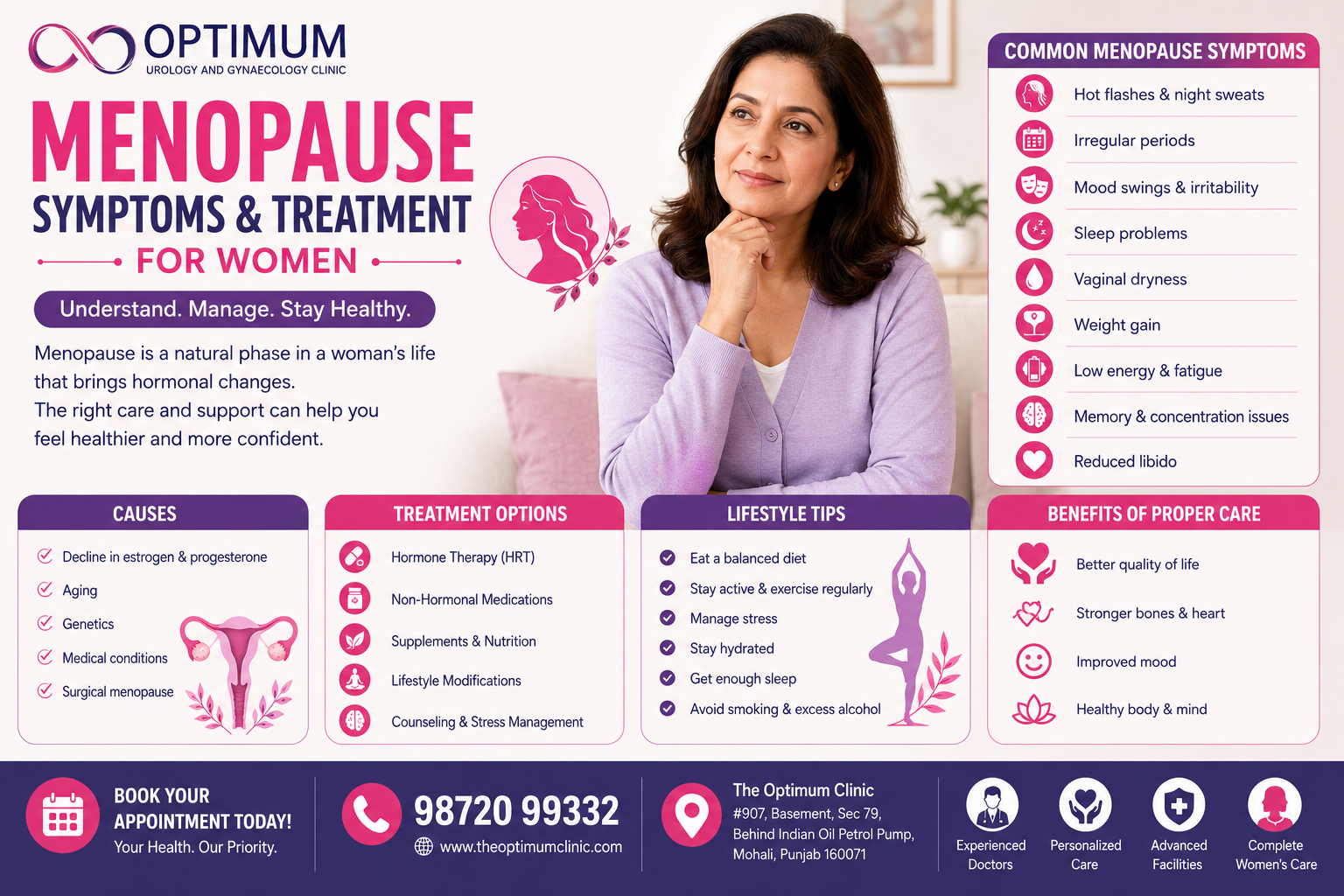
Menopause is a natural stage in every woman's life that marks the end of menstrual cycles and reproductive years. While menopause is not a disease, it brings significant hormonal changes that can affect physical health, emotional well-being, sleep, energy levels, and overall quality of life.
Many women experience symptoms such as hot flashes, night sweats, mood swings, weight gain, sleep disturbances, and hormonal changes during this phase. Some women go through menopause with minimal discomfort, while others experience symptoms severe enough to affect daily life.
Understanding menopause and seeking timely medical guidance can help women manage symptoms effectively and maintain a healthy, active lifestyle.
If you are searching for complete information about menopause symptoms and treatment, this comprehensive guide explains everything you need to know, including causes, symptoms, diagnosis, treatment options, lifestyle changes, and when to consult an experienced gynecologist in Mohali.
Menopause is officially diagnosed when a woman has gone 12 consecutive months without a menstrual period.
It usually occurs between the ages of 45 and 55, although the exact timing varies from woman to woman.
Menopause occurs because the ovaries gradually produce less estrogen and progesterone, the primary female reproductive hormones.
Perimenopause is the transitional period before menopause.
During this phase:
This phase may last several years.
A woman reaches menopause when she has not had a menstrual period for 12 months.
The years following menopause are known as postmenopause.
Although periods stop permanently, women may still require ongoing healthcare support for hormonal and bone health.
The primary cause of menopause is the natural decline of reproductive hormones.
Other factors that may lead to early menopause include:
One of the earliest signs of menopause is irregular menstrual cycles.
Women may experience:
Hot flashes are among the most common menopause symptoms.
Women may suddenly feel:
Night sweats are hot flashes that occur during sleep.
They often cause:
Hormonal fluctuations can affect emotional well-being.
Women may experience:
Many women experience:
Hormonal changes may affect metabolism and body composition.
Weight gain around the abdomen becomes more common during menopause.
Lower estrogen levels may cause:
Some women notice changes in sexual desire during menopause.
Hormonal changes may affect hair growth patterns.
Many women report:
Menopause can increase the risk of certain health conditions.
Reduced estrogen levels may weaken bones and increase fracture risk.
Women may experience increased cardiovascular risks after menopause.
Changes in metabolism can increase obesity and diabetes risks.
Some women may develop:
Doctors evaluate:
Blood tests may help evaluate hormone levels when diagnosis is unclear.
A gynecological examination may be recommended if symptoms require further investigation.
Menopause treatment depends on symptom severity and overall health.
Many women improve symptoms through healthy lifestyle habits.
Exercise helps:
Helpful methods include:
Some women benefit from hormone replacement therapy (HRT) under medical supervision.
HRT may help reduce:
Depending on symptoms, doctors may recommend non-hormonal medications and supportive therapies.
Yes. Hormonal fluctuations can influence emotional well-being.
Women may experience:
Seeking support from healthcare professionals and family members can make the transition easier.
Women should consult a gynecologist if they experience:
Timely medical care helps improve quality of life and prevent complications.
Women in Mohali are increasingly seeking professional healthcare support for menopause management.
Modern women's healthcare services now provide:
At The Optimum Clinic, we provide comprehensive women’s healthcare services for every stage of life, including menopause care and hormonal health management.
Our services include:
Explore our women's healthcare services:
https://theoptimumclinic.com/gynecology
Learn more about our women's healthcare expertise:
Best Gynecology Clinic in Mohali for Expert Women Care
Consult experienced specialists here:
Best Gynecologist in Mohali – PCOS, Pregnancy & Infertility Treatment
Most women experience menopause between 45 and 55 years of age.
Yes. Lifestyle changes, medical treatment, and hormone therapy may help manage symptoms.
Symptoms vary from woman to woman and may last several years.
Yes, hormonal changes may affect metabolism and contribute to weight gain.
Menopause is a natural stage of life, but it can bring significant physical and emotional changes. Understanding menopause symptoms, maintaining healthy lifestyle habits, and seeking professional healthcare support can help women navigate this transition confidently.
Regular gynecology checkups, hormonal health monitoring, and personalized treatment plans help women maintain long-term wellness and quality of life during and after menopause.
Looking for expert menopause care and women's healthcare in Mohali?
Visit The Optimum Clinic for compassionate gynecological care, hormonal health management, and comprehensive women’s wellness services.
Schedule your consultation today and take control of your health with confidence.