Affordable Gynecology Treatment in Mohali | Expert Women's Healthcare
- July 10,2026
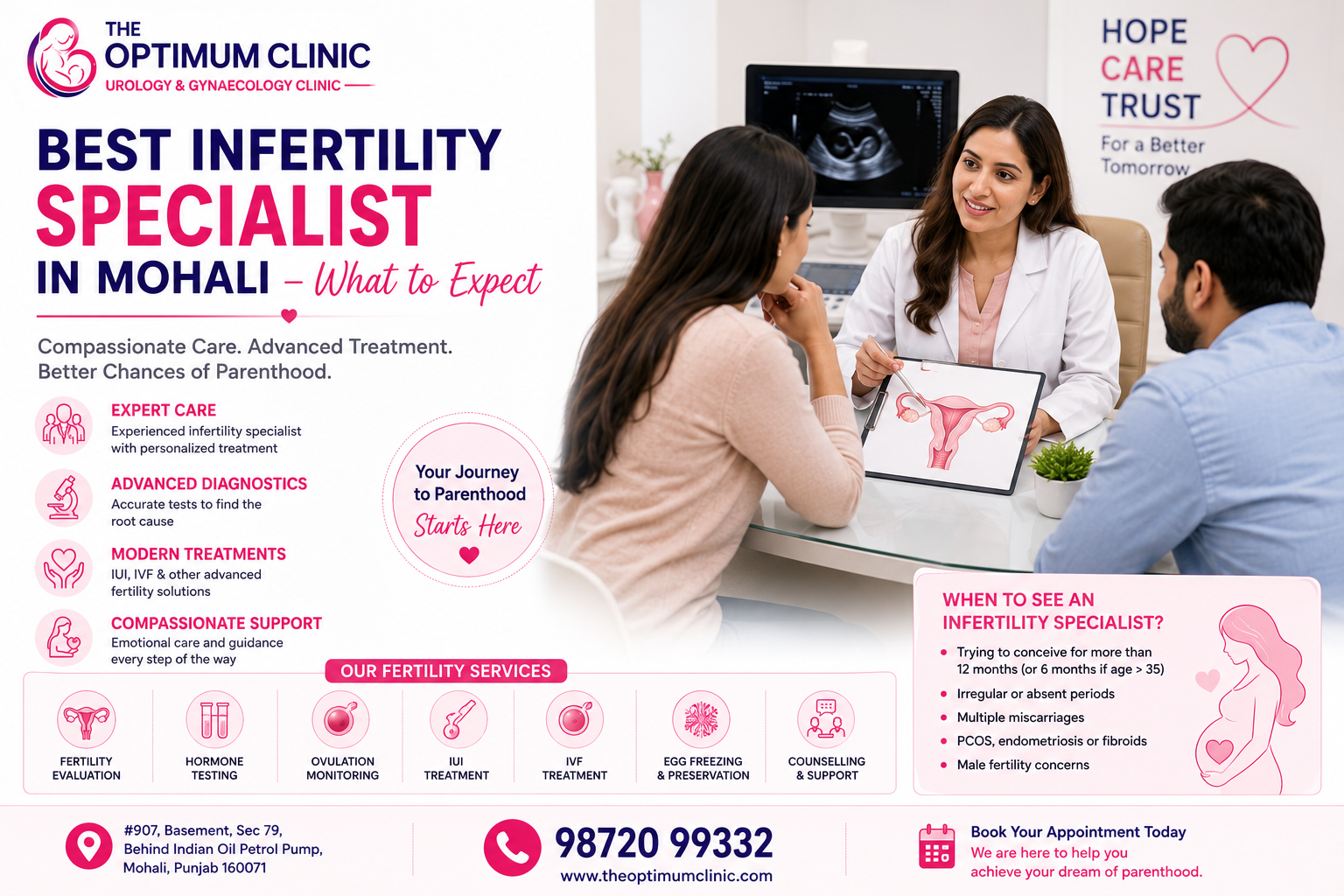
Planning a family is one of the most exciting moments in life. However, for some couples, getting pregnant may take longer than expected. If you have been trying to conceive for several months without success, you may wonder whether it's time to consult an infertility specialist.
As a gynecologist, I meet many couples who feel anxious or confused about fertility treatment. The good news is that infertility is a medical condition, and with the right diagnosis and treatment, many couples successfully achieve pregnancy.
If you are looking for the best infertility specialist in Mohali, understanding what happens during your first consultation can help you feel confident and prepared.
Infertility is generally defined as the inability to achieve pregnancy despite regular, unprotected intercourse.
Infertility can affect both women and men. In many cases, both partners should be evaluated together to identify the underlying cause.
You should consider consulting an infertility specialist if you experience any of the following:
Seeking medical advice early improves the chances of identifying and treating fertility-related issues before they become more complicated.
Many couples worry that the first fertility consultation will involve complicated procedures. In reality, the first visit is mainly focused on understanding your medical history and planning the next steps.
Your doctor will ask questions about:
Several lifestyle factors influence fertility, including:
Small lifestyle changes can significantly improve fertility outcomes.
A routine gynecological examination may be performed to assess your overall reproductive health.
Depending on your symptoms, your infertility specialist may recommend:
Read More: What Happens During a Gynecology Ultrasound?
Male fertility contributes to nearly half of infertility cases.
Common investigations include:
Many of these conditions are treatable when diagnosed early.
PCOS is one of the most common reasons women struggle to conceive. It can interfere with ovulation and make pregnancy more difficult.
Fortunately, with lifestyle changes, medications, and fertility treatment, many women with PCOS successfully become pregnant.
Related Articles:
Yes.
Endometriosis may affect fertility by causing inflammation, scar tissue, and changes in the pelvic organs.
Early diagnosis and appropriate treatment often improve fertility outcomes.
Read More: Endometriosis Treatment – Symptoms Every Woman Should Know
Treatment depends on the underlying cause of infertility.
Your specialist may recommend:
Every couple receives a personalized treatment plan based on their medical history and fertility evaluation.
Infertility is more common than many people realize, and it is nothing to feel embarrassed about. The most important step is seeking help at the right time. Modern fertility treatments have helped millions of couples achieve their dream of becoming parents. With early diagnosis, a personalized treatment plan, and healthy lifestyle changes, many couples can improve their chances of a successful pregnancy.
One year if you're under 35, or six months if you're over 35.
Yes. PCOS can affect ovulation, but many women conceive successfully with treatment.
Yes. Fertility evaluation usually includes both partners.
Yes. Many couples conceive with lifestyle changes, medications, ovulation induction, or IUI before IVF is considered.
The Optimum Clinic
#907 Basement, Sector 79,
Behind Indian Oil Petrol Pump,
Mohali, Punjab
98720 99332