


Affordable Gynecology Treatment in Mohali | Expert Women's Healthcare
- July 10,2026
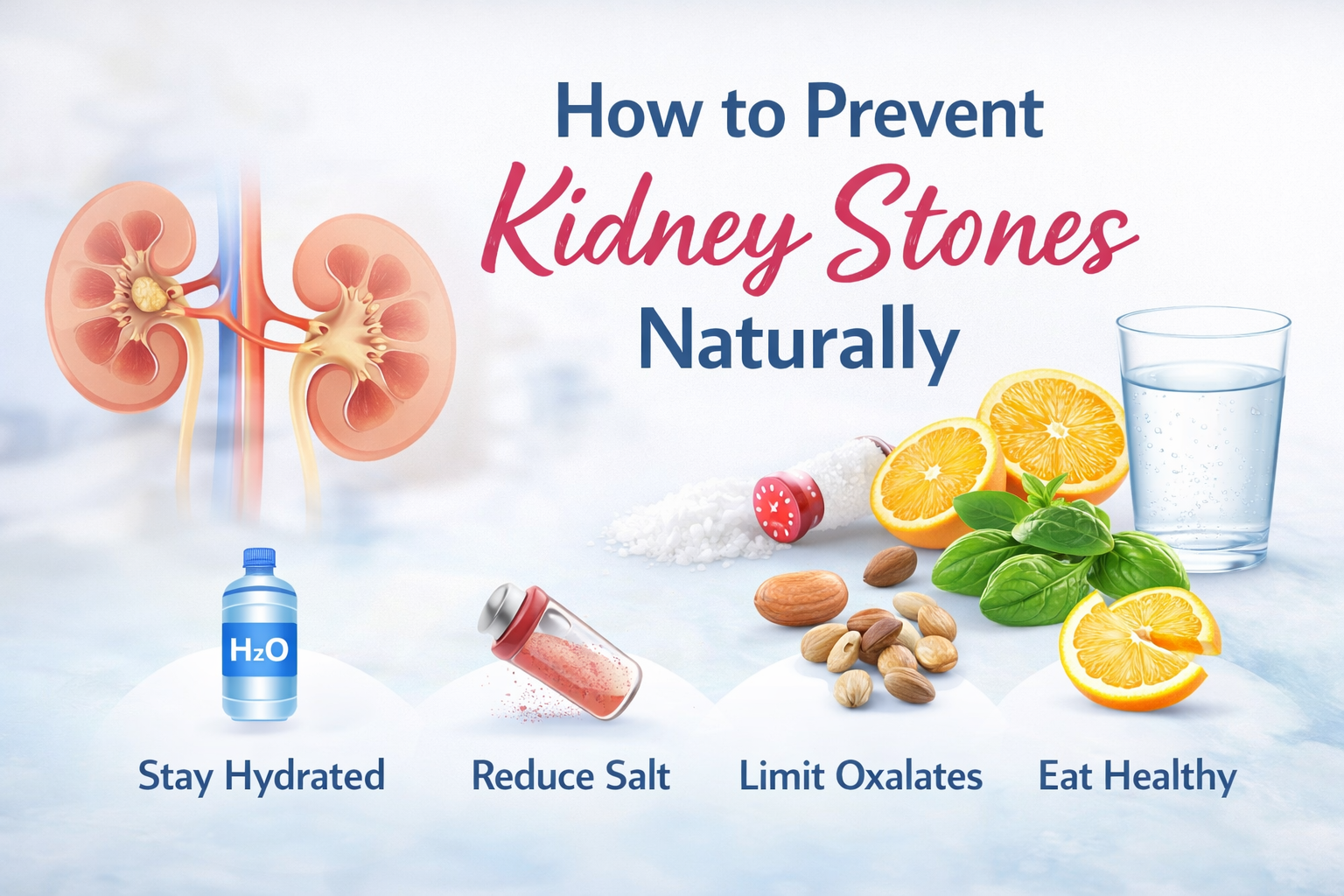
Kidney stones are a common urinary problem that can cause severe pain and discomfort. These small, hard mineral deposits form inside the kidneys when certain substances in urine become highly concentrated. Many people experience this condition at least once in their lifetime.
The good news is that in many cases, kidney stones can be prevented through natural lifestyle and dietary changes. Understanding the causes and adopting healthy habits can significantly reduce the risk of developing Kidney Stones.
In this guide, we will explain how kidney stones form and the best natural ways to prevent them.
Kidney stones are hard crystal-like deposits made of minerals and salts that form inside the kidneys. They can vary in size—from tiny grains to larger stones that may block the urinary tract.
When a stone moves through the urinary tract, it can cause intense pain, nausea, and difficulty urinating. The most common types include:
Several factors can increase the risk of kidney stone formation, including:
Not drinking enough water is one of the main causes of kidney stones. When urine becomes concentrated, minerals can stick together and form crystals.
A diet high in salt increases calcium levels in urine, which can lead to stone formation.
Certain foods such as spinach, chocolate, nuts, and tea contain oxalates that may contribute to calcium oxalate stones.
Eating too much red meat, poultry, and eggs can increase uric acid levels in the body.
People with a family history of kidney stones are more likely to develop them.
Preventing kidney stones naturally mostly involves maintaining a healthy lifestyle and balanced diet.
Staying hydrated is the most effective way to prevent kidney stones. Water dilutes substances in urine that lead to stone formation.
Excess salt increases calcium levels in urine, which raises the risk of kidney stones.
Calcium from natural food sources such as milk, yogurt, and cheese can actually help prevent kidney stones by binding with oxalate in the digestive tract.
However, avoid excessive calcium supplements unless recommended by a doctor.
People prone to kidney stones should moderate foods high in oxalates, such as:
A balanced diet rich in fruits and vegetables supports kidney health.
Foods that may help prevent kidney stones include:
These foods increase citrate levels in urine, which helps prevent stone formation.
Regular physical activity helps maintain a healthy metabolism and supports kidney function. Lack of movement can increase calcium release from bones, contributing to kidney stones.
If a kidney stone develops, symptoms may include:
While small kidney stones may pass naturally, larger stones may require medical treatment. Seek medical help if you experience:
Kidney stones can be extremely painful, but the good news is that many cases are preventable. Drinking enough water, maintaining a balanced diet, reducing salt intake, and staying active are simple yet effective ways to lower your risk.