

Affordable Gynecology Treatment in Mohali | Expert Women's Healthcare
- July 10,2026
Prostate enlargement, also known as Benign Prostatic Hyperplasia (BPH), is a condition that commonly affects men as they grow older. The enlarged prostate presses against the urethra, leading to urinary difficulties that can disrupt everyday life. With advancements in medical technology, laser surgery has emerged as a modern and effective way to manage this condition with minimal discomfort.
The prostate is a small gland located below the bladder, and its growth over time is a natural process. However, when it becomes too large, it can restrict the flow of urine. This often leads to symptoms such as frequent urges to urinate, difficulty in starting urination, and a weak urine stream. In many cases, medications may provide relief initially, but when symptoms become severe or persistent, a more advanced treatment like laser surgery is recommended.
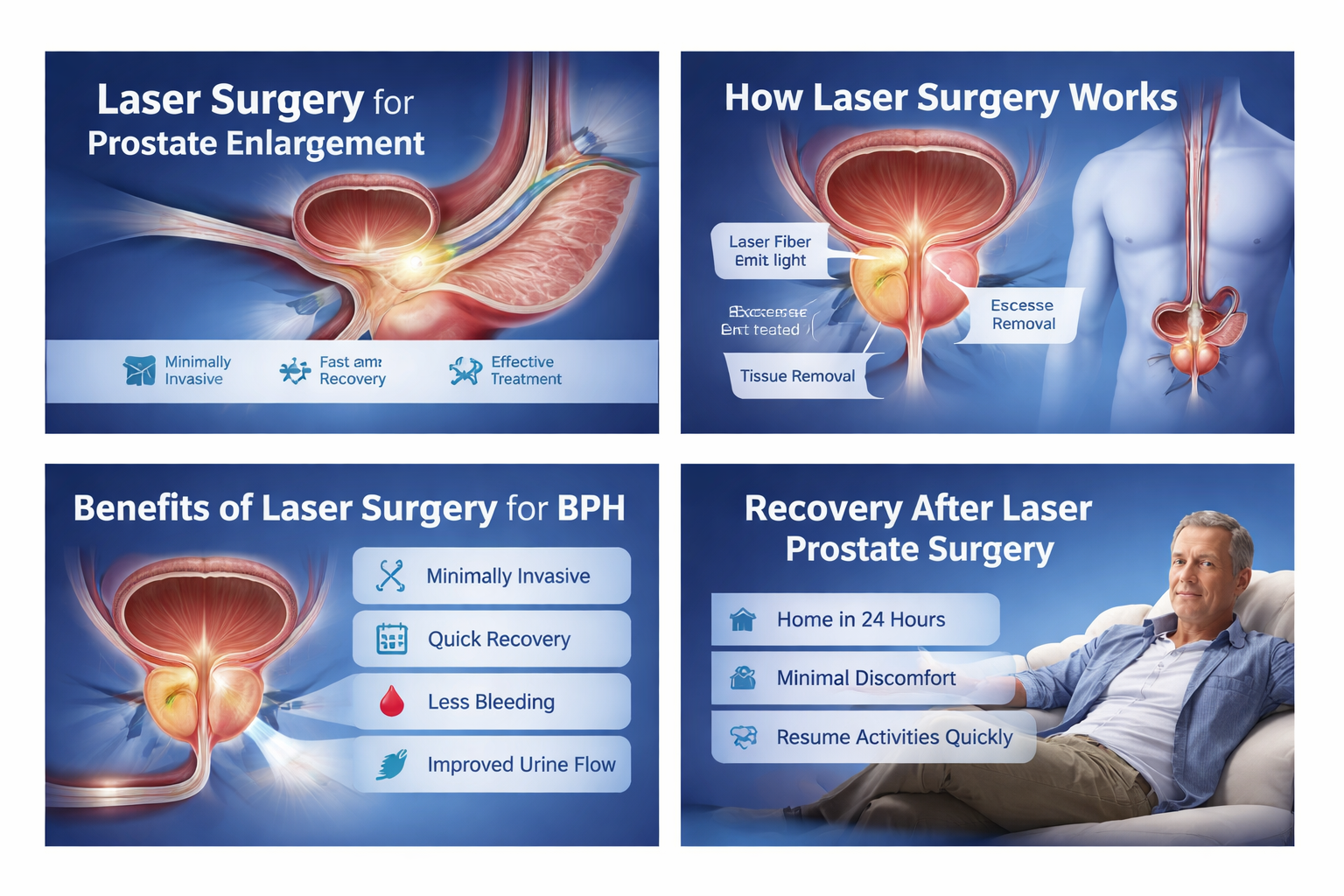
Laser surgery is a minimally invasive procedure designed to remove or reduce the excess prostate tissue that causes blockage. Instead of making external cuts, doctors use a thin instrument inserted through the urethra. A high-energy laser is then used to precisely target and eliminate the obstructive tissue, restoring normal urine flow.
The procedure works by focusing laser energy on the enlarged portions of the prostate. The laser either removes or vaporizes the tissue that is pressing against the urethra. At the same time, it seals blood vessels, which significantly reduces bleeding during the procedure. This precision allows doctors to treat the problem effectively while minimizing damage to surrounding tissues. As a result, patients often experience noticeable improvement in urinary function soon after the procedure.
One of the biggest advantages of laser surgery is that it is far less invasive compared to traditional surgical methods. Patients usually experience less pain, shorter hospital stays, and a quicker return to normal activities. The risk of complications is also lower, and the results are long-lasting. Because the procedure is precise, it is especially beneficial for patients who may not be ideal candidates for conventional surgery.
Recovery after laser surgery is generally smooth. Most patients are able to go home within a day and resume light activities shortly afterward. Some temporary discomfort or mild urinary irritation may occur, but these symptoms usually improve within a short period. Following the doctor’s advice, staying hydrated, and avoiding heavy physical activity for a few days can help ensure a faster recovery.
Laser surgery is often recommended for individuals who have moderate to severe symptoms of prostate enlargement or who have not found relief through medication. It is also a suitable option for those seeking a safer and less invasive treatment. However, the decision depends on individual health conditions and should always be made after consulting a qualified urologist.
Laser surgery has transformed the way prostate enlargement is treated. By combining precision with minimal invasiveness, it provides an effective solution for relieving urinary symptoms and improving quality of life. For many patients, it offers a reliable path to long-term relief without the challenges associated with traditional surgery.