


Affordable Gynecology Treatment in Mohali | Expert Women's Healthcare
- July 10,2026
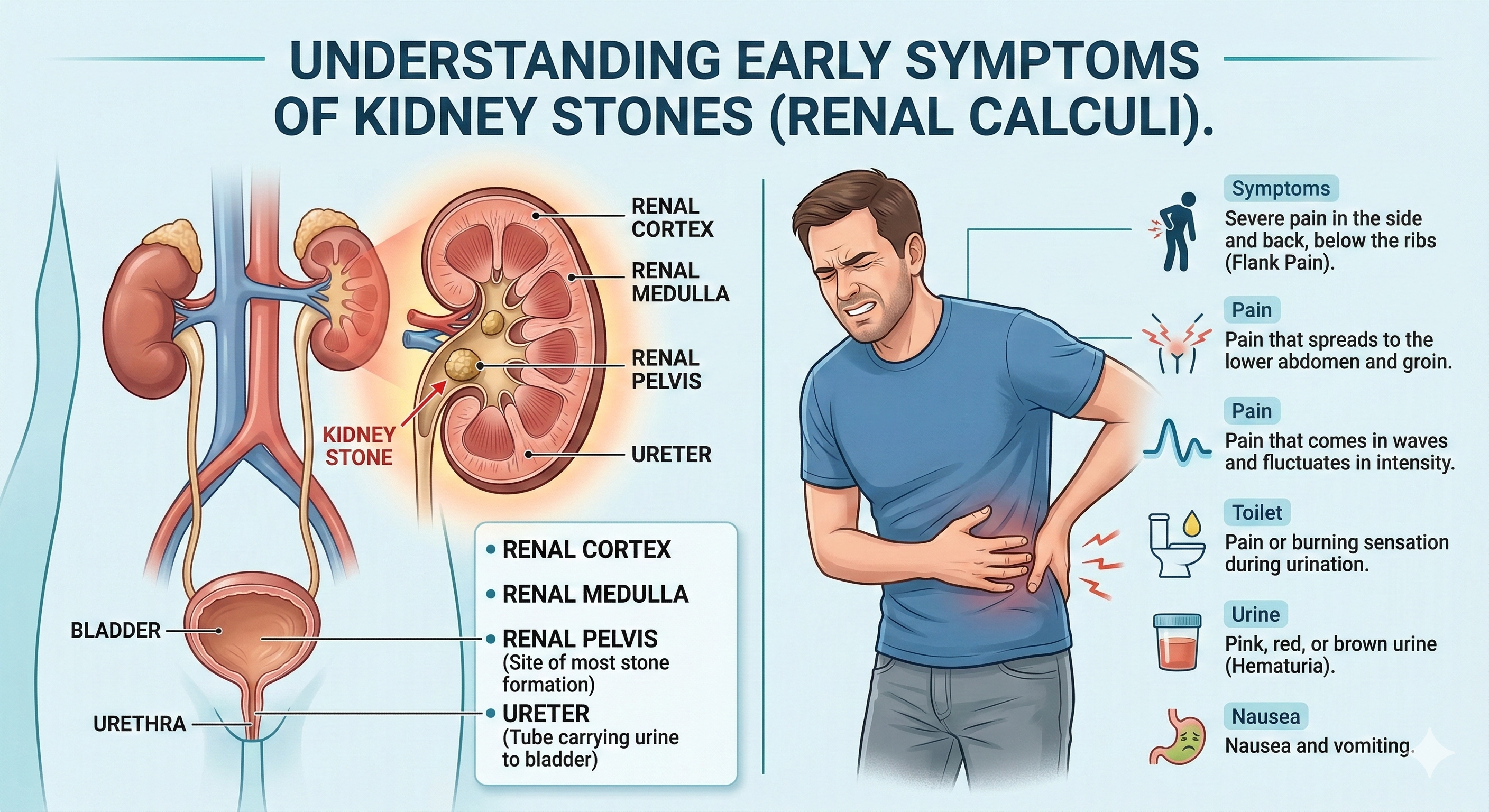
Kidney stones are a common urological condition that can cause intense pain and discomfort. They form when minerals and salts build up inside the kidneys and crystallize into hard deposits. While some kidney stones are small and pass naturally, others can grow larger and require medical treatment.
Recognizing the early signs of kidney stones is very important because early diagnosis can prevent complications and help patients receive timely treatment. Many people ignore the early symptoms, thinking they are minor health issues, which often leads to severe pain later.
Kidney stones are hard mineral deposits that develop in the kidneys due to the accumulation of substances such as calcium, oxalate, and uric acid. These stones may remain in the kidney or move into the urinary tract, causing significant discomfort.
Kidney stones can affect people of any age, but they are more common in adults who have dehydration, poor dietary habits, or a family history of kidney stones.
Identifying the early symptoms of kidney stones can help prevent the condition from worsening. Some common early signs include:
One of the earliest signs of kidney stones is pain in the lower back, side, or abdomen. This pain usually occurs when the stone begins moving inside the kidney or urinary tract. The pain may come and go and gradually increase in intensity.
A burning feeling while urinating can also indicate the presence of kidney stones. When the stone moves closer to the bladder, it can irritate the urinary tract and cause discomfort during urination.
People with kidney stones may feel the need to urinate more often than usual. This happens when the stone irritates the bladder or blocks the urinary tract.
Another early warning sign is blood in the urine. The urine may appear pink, red, or brown due to irritation caused by the stone as it moves through the urinary tract.
Kidney stones can also cause nausea and vomiting. This occurs because the kidneys and digestive system share nerve connections, which can trigger stomach-related symptoms when a stone causes pain.
If kidney stones are accompanied by an infection, the urine may appear cloudy and have a strong odor. This can be a sign that medical attention is required.
Several factors can increase the risk of developing kidney stones. Some of the most common causes include dehydration, high salt intake, excessive consumption of protein, obesity, and certain medical conditions.
Drinking insufficient water is one of the leading causes of kidney stones. When the body lacks enough fluids, urine becomes concentrated, allowing minerals to crystallize and form stones.
While some small kidney stones may pass naturally, certain symptoms require immediate medical attention. You should consult a doctor if you experience severe pain in the back or abdomen, persistent vomiting, fever, chills, or difficulty urinating.
Early diagnosis allows doctors to recommend appropriate treatment before the condition becomes more serious.
Treatment for kidney stones depends on the size and location of the stone. Small stones may pass naturally with increased water intake and medication to relieve pain.
For larger stones, advanced procedures such as laser treatment or minimally invasive techniques may be required. Modern treatments are highly effective and help patients recover quickly.
Preventing kidney stones is possible by making simple lifestyle changes. Drinking plenty of water throughout the day helps flush out minerals before they form stones. Reducing salt intake and maintaining a balanced diet can also lower the risk.
Regular medical checkups and early diagnosis can help detect kidney problems before they become severe.
Kidney stones can cause significant discomfort, but recognizing the early signs can help patients seek treatment before the condition worsens. Symptoms such as lower back pain, burning urination, frequent urination, and blood in the urine should never be ignored.
If you experience any of these symptoms, consulting a urology specialist can help ensure proper diagnosis and treatment. Early care can prevent complications and protect your kidney health.