


Affordable Gynecology Treatment in Mohali | Expert Women's Healthcare
- July 10,2026
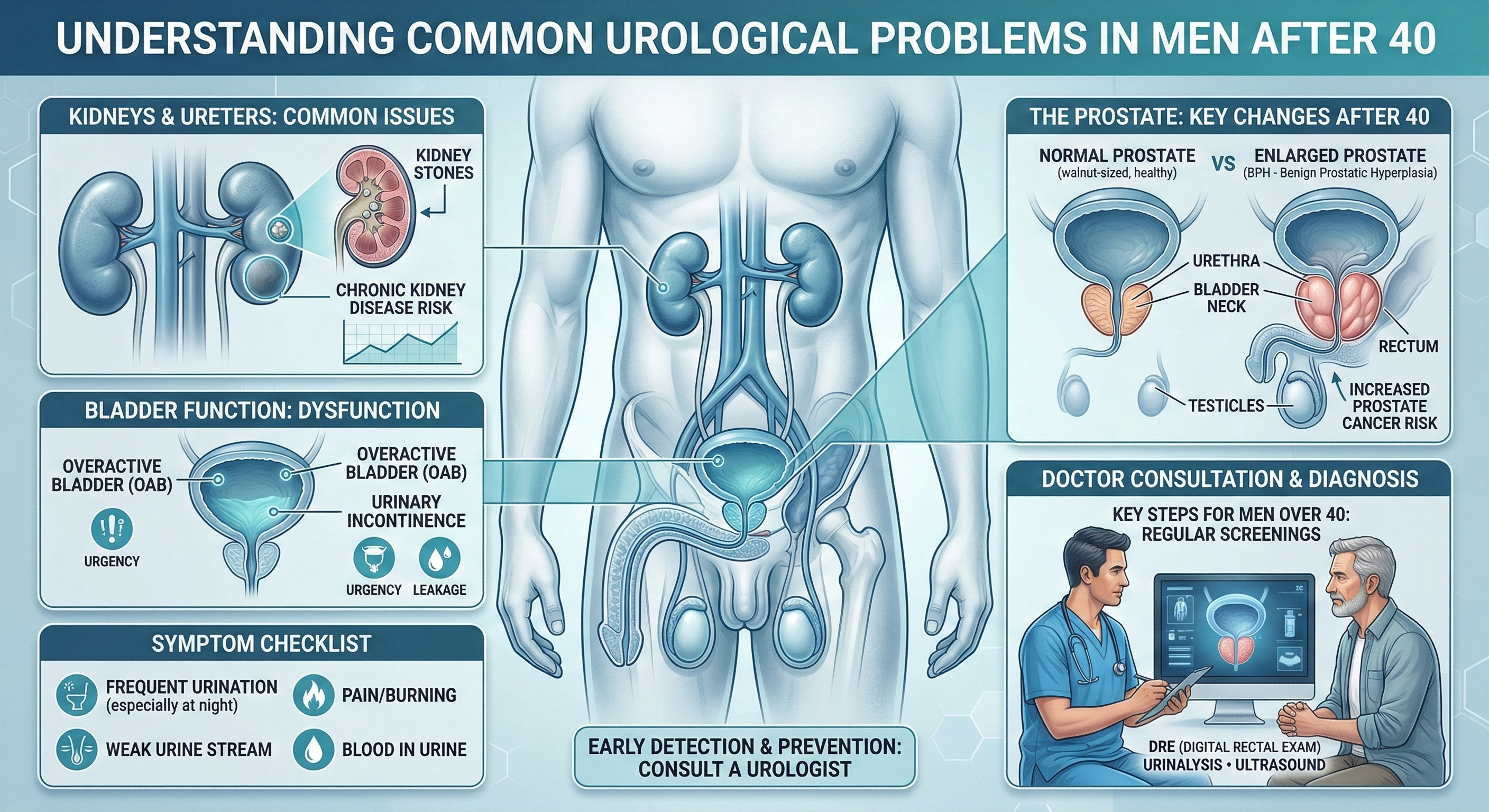
As men grow older, the risk of developing urological problems increases. After the age of 40, many men begin to experience issues related to the urinary system and reproductive organs. These problems may start with mild symptoms but can become serious if left untreated.
Understanding common urological problems in men after 40 is important because early detection and treatment can help prevent complications and maintain overall health.
The urinary system includes the kidneys, bladder, ureters, and urethra. In men, the prostate gland also plays a significant role in urinary and reproductive health. As men age, hormonal changes and lifestyle factors can affect these organs, leading to various urological conditions.
Regular health checkups and awareness of symptoms can help men manage these issues effectively.
One of the most common urological problems in men over 40 is an enlarged prostate, also known as benign prostatic hyperplasia (BPH). The prostate gland gradually increases in size with age and may press against the urethra.
Men with BPH may experience frequent urination, difficulty starting urination, weak urine flow, and the feeling that the bladder is not completely empty.
Treatment depends on the severity of symptoms. Mild cases may be managed with lifestyle changes and medication. In more severe cases, minimally invasive procedures or surgery may be recommended to relieve pressure on the urinary tract.
Kidney stones are another common issue that affects men after the age of 40. These hard mineral deposits form inside the kidneys and can cause severe pain when they move through the urinary tract.
Common symptoms include sharp pain in the lower back or side, nausea, vomiting, blood in the urine, and frequent urination.
Small kidney stones may pass naturally with increased fluid intake and medication for pain relief. Larger stones may require advanced treatments such as laser procedures or minimally invasive surgery to remove or break the stones.
Although urinary tract infections are more common in women, men over 40 can also develop UTIs. These infections occur when bacteria enter the urinary tract and multiply.
Symptoms may include burning during urination, cloudy urine, pelvic pain, frequent urination, and fever in severe cases.
UTIs are usually treated with antibiotics prescribed by a doctor. Drinking plenty of water and maintaining proper hygiene can also help prevent infections.
Erectile dysfunction (ED) is another condition that many men experience after 40. It refers to the inability to achieve or maintain an erection suitable for sexual activity.
ED may be caused by several factors including stress, hormonal imbalance, diabetes, heart disease, and poor blood circulation.
Treatment may include lifestyle changes, medications, hormone therapy, or other medical procedures depending on the underlying cause.
Men should consult a urologist if they experience symptoms such as frequent urination, pain during urination, blood in the urine, difficulty emptying the bladder, or persistent lower back pain.
Early consultation helps in diagnosing the condition accurately and starting treatment before the problem becomes severe.
Maintaining a healthy lifestyle can significantly reduce the risk of urological problems. Drinking enough water, eating a balanced diet, exercising regularly, and avoiding excessive alcohol and smoking can support urinary health.
Regular medical checkups are also important for detecting potential problems early.
Urological problems in men after 40 are common but manageable with proper medical care. Conditions such as enlarged prostate, kidney stones, urinary tract infections, and erectile dysfunction can affect daily life if ignored.
By understanding the symptoms and seeking timely treatment, men can protect their urinary and reproductive health and maintain a better quality of life.