Affordable Gynecology Treatment in Mohali | Expert Women's Healthcare
- July 10,2026
One of the most common questions I hear from patients in my clinic is:
"Doctor, I have PCOS. Will I ever be able to get pregnant?"
The concern is completely understandable. Being diagnosed with Polycystic Ovary Syndrome (PCOS) can feel overwhelming, especially when you are planning a family or trying to conceive.
The good news is that while PCOS is one of the leading causes of female infertility, it does not mean pregnancy is impossible. In fact, many women with PCOS successfully become mothers naturally or with appropriate medical support.
As a gynecologist, I always tell my patients that early diagnosis, lifestyle improvements, and proper treatment can significantly improve fertility outcomes in women with PCOS.
In this comprehensive guide, we will discuss how PCOS affects fertility, signs to watch for, available treatment options, and practical steps that can help improve your chances of conception.
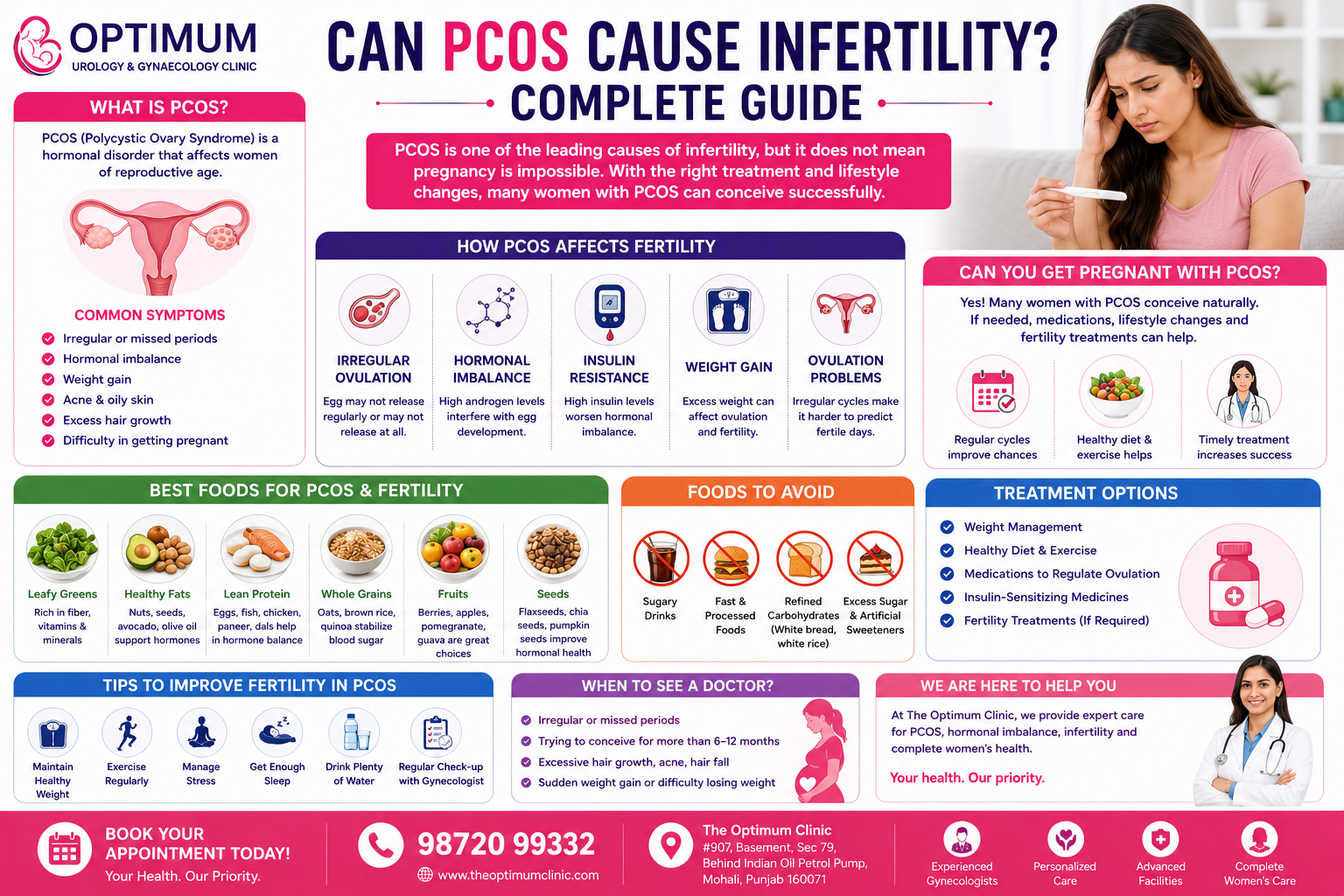
Polycystic Ovary Syndrome (PCOS) is a hormonal disorder that affects women during their reproductive years.
Women with PCOS often experience hormonal imbalances that interfere with normal ovulation and menstrual cycles.
Common symptoms include:
PCOS affects not only reproductive health but also metabolism, insulin levels, and long-term hormonal balance.
Yes, PCOS can make it more difficult to become pregnant.
However, it is important to understand that PCOS usually causes subfertility rather than permanent infertility.
This means pregnancy may take longer or require treatment, but many women with PCOS can still conceive successfully.
The main reason PCOS affects fertility is because it disrupts normal ovulation.
To understand how PCOS affects fertility, it helps to understand how pregnancy occurs naturally.
When ovulation does not occur regularly, pregnancy becomes more difficult.
In women with PCOS, hormone levels become imbalanced.
As a result:
Without regular ovulation, there is no egg available for fertilization, which directly affects fertility.
Women with PCOS often have higher levels of androgens (male hormones).
These hormonal changes interfere with:
The longer hormonal imbalance remains untreated, the more fertility challenges may arise.
Many women with PCOS also have insulin resistance.
This means the body does not use insulin effectively, causing insulin levels to rise.
Higher insulin levels can:
This is one reason lifestyle changes play such an important role in PCOS treatment.
You should consult a gynecologist if you experience:
These symptoms often indicate ovulation problems.
Absolutely.
Many women with PCOS conceive naturally, especially after making lifestyle improvements.
Natural pregnancy chances improve when:
Every patient is different, which is why personalized evaluation is important.
Your doctor will review:
Blood tests help evaluate:
Ultrasound may reveal multiple small follicles within the ovaries, which is a common feature of PCOS.
Women with PCOS may have a slightly higher risk of miscarriage compared to women without PCOS.
Contributing factors include:
The good news is that proper treatment significantly reduces these risks.
One of the most effective treatments for PCOS is healthy weight loss.
Even a 5–10% reduction in body weight may:
A balanced diet helps improve insulin sensitivity and hormonal health.
Recommended foods include:
Learn more about women's healthcare services here:
Exercise helps:
For women who do not ovulate regularly, doctors may prescribe medications to stimulate ovulation.
Many women successfully conceive using this approach.
Some women may require fertility assistance depending on age, fertility status, and other health factors.
You should seek medical evaluation if:
As a gynecologist, my advice to women with PCOS is simple:
Do not lose hope.
PCOS is one of the most treatable causes of infertility. With proper diagnosis, healthy lifestyle changes, regular monitoring, and personalized treatment, many women successfully achieve pregnancy and deliver healthy babies.
The earlier you seek help, the better your chances of achieving your fertility goals.
PCOS can affect fertility by disrupting ovulation and hormonal balance, but it does not mean motherhood is out of reach. Most women with PCOS can conceive naturally or with medical support when the condition is managed properly.
Healthy eating, regular exercise, weight management, and expert gynecological care remain the cornerstones of successful PCOS treatment and fertility improvement.
Looking for expert PCOS and fertility treatment in Mohali?
The Optimum Clinic
#907 Basement, Sec 79, Behind Indian Oil Petrol Pump, Mohali
???? Call: 9872099332