


Affordable Gynecology Treatment in Mohali | Expert Women's Healthcare
- July 10,2026
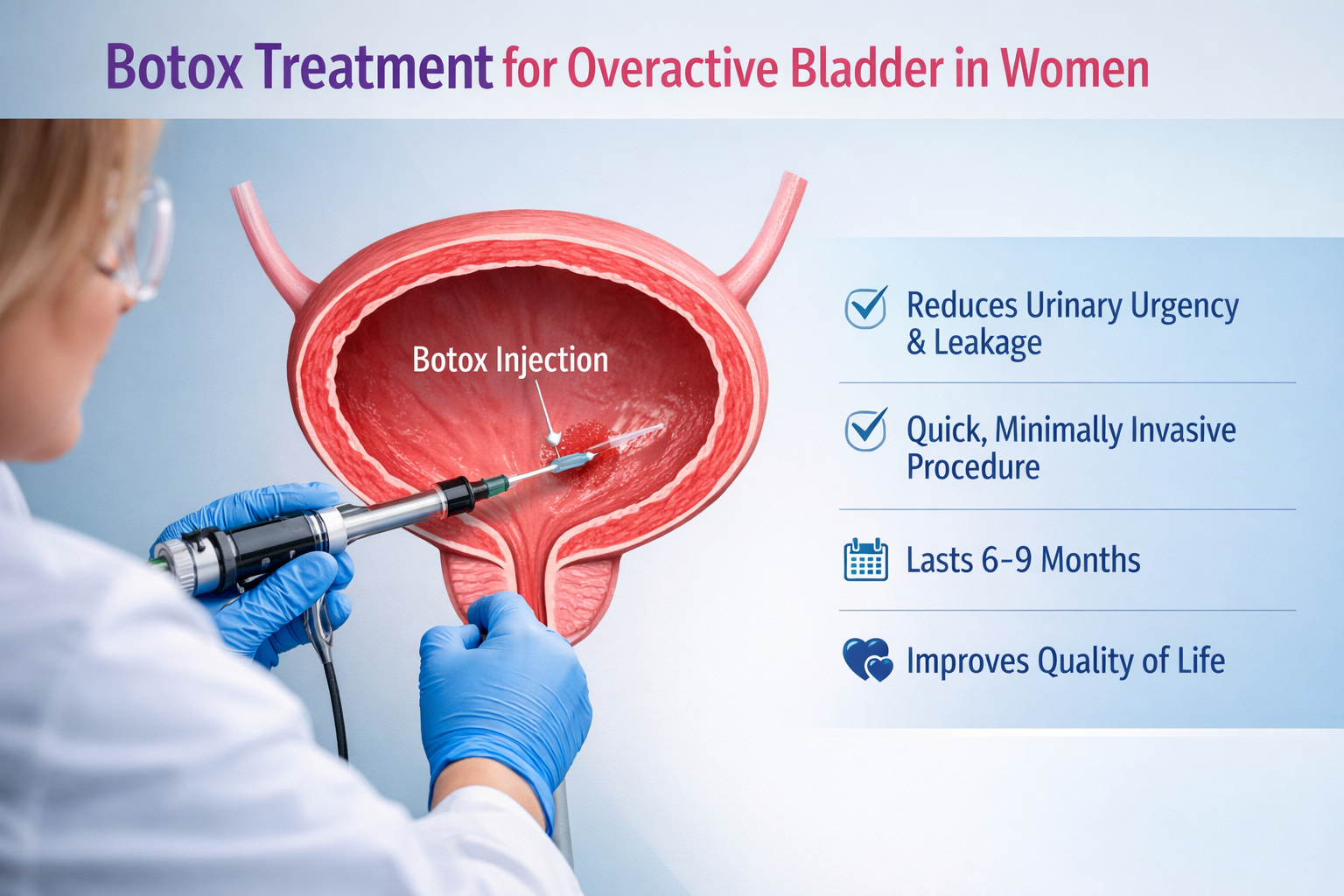
Overactive bladder (OAB) is a common condition that affects many women, leading to frequent urination, sudden urges to urinate, and even involuntary leakage. These symptoms can disrupt daily life, affect sleep, and reduce confidence. Fortunately, modern medical advancements like Botox therapy have provided an effective solution for managing this condition.
Overactive bladder occurs when the bladder muscles contract involuntarily, even when the bladder is not full. This results in:
Women are more likely to experience OAB due to factors such as pregnancy, childbirth, menopause, and pelvic floor weakness.
Botox (Botulinum toxin) is a purified protein that temporarily relaxes muscles. When used in the bladder, it helps reduce abnormal contractions, allowing the bladder to store urine more effectively.
This treatment is recommended for women who do not get sufficient relief from medications or lifestyle changes.
Botox is injected directly into the bladder muscle using a minimally invasive procedure. It works by:
The procedure is usually performed under local anesthesia and takes about 15–30 minutes.
Botox therapy offers several advantages for women suffering from OAB:
Many patients notice improvement within a few days to weeks after the procedure.
Botox treatment is suitable for women who:
A thorough evaluation by a specialist is necessary before proceeding with the treatment.
Botox is generally safe when performed by an experienced urologist. However, some possible side effects include:
These effects are usually temporary and manageable with proper care.
Recovery from Botox treatment is quick, and most women can return to normal activities within a day. Patients are advised to:
Regular follow-ups help ensure the effectiveness of the treatment and determine when repeat injections may be needed.
Botox treatment has emerged as a highly effective and minimally invasive option for managing overactive bladder in women. It offers relief from distressing symptoms and significantly improves daily comfort and quality of life. If you are struggling with frequent urges or urinary leakage, consulting a specialist can help determine whether Botox therapy is the right solution for you.