Affordable Gynecology Treatment in Mohali | Expert Women's Healthcare
- July 10,2026
Dialysis treatment depends heavily on stable and efficient vascular access. Without it, even the best dialysis care cannot deliver the desired results. While arteriovenous fistulas are often the first choice, they are not always suitable for every patient. In such situations, vein transposition surgery provides a dependable and long-lasting alternative.
India has become a preferred destination for this procedure due to its combination of skilled vascular surgeons, advanced medical technology, and cost-effective treatment options.
In many cases, patients are unable to develop a successful fistula because their veins may be too small, too deep, or previously damaged. Instead of immediately opting for synthetic grafts, doctors often recommend vein transposition as a more natural and durable solution.
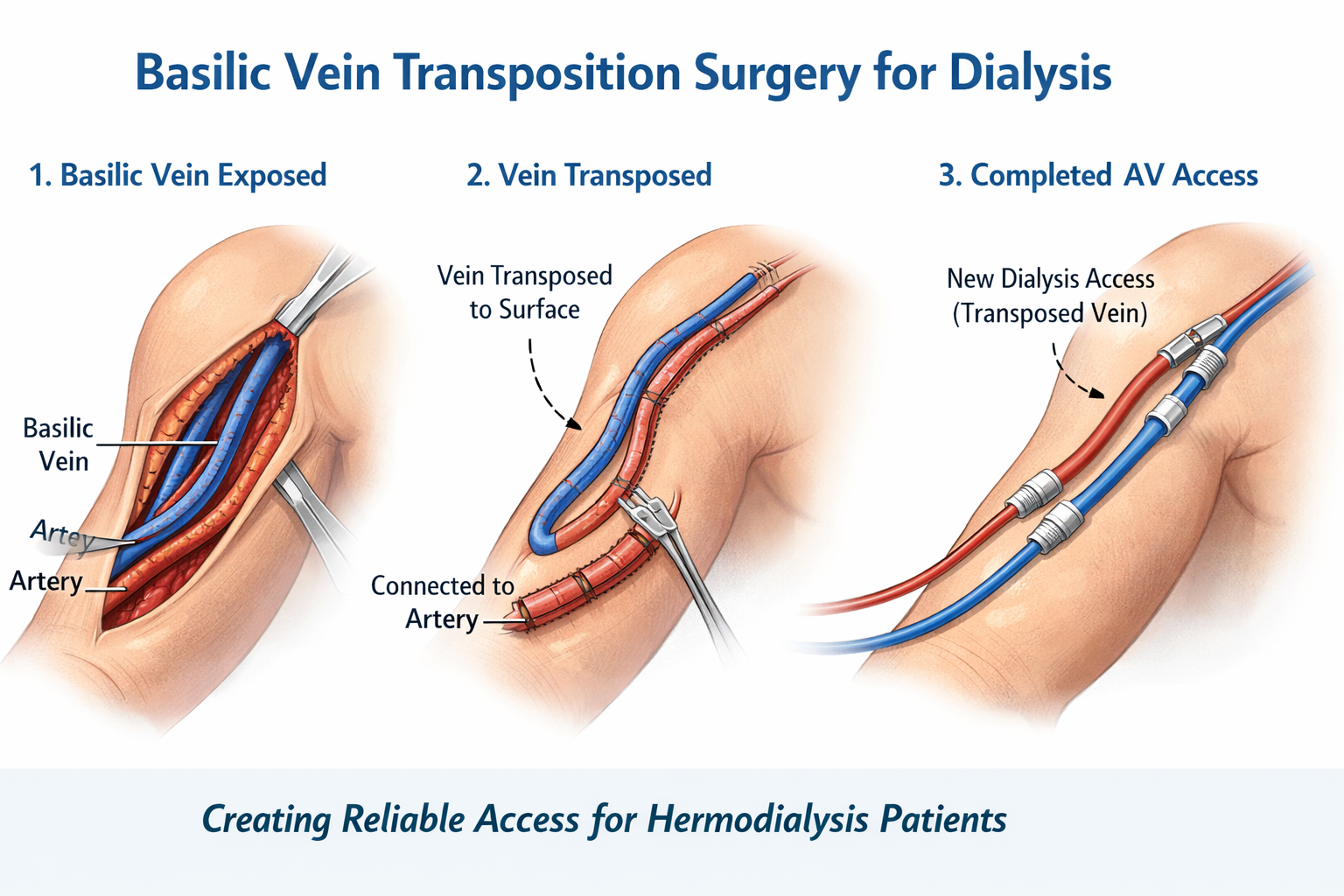
This procedure involves repositioning a deep vein, most commonly the basilic vein, closer to the skin surface. This adjustment allows easier access during dialysis while maintaining strong and consistent blood flow.
One of the biggest advantages of this procedure is that it uses the patient’s own vein. This significantly lowers the risk of infection and improves long-term success compared to artificial grafts.
In addition, the quality of dialysis improves due to better blood circulation. Patients often experience smoother sessions with fewer complications, making their overall treatment more manageable.
Vein transposition surgery is typically performed under local or regional anesthesia. The surgeon carefully isolates the selected vein, repositions it, and connects it to an artery to create a functional access point.
Although the surgery itself is completed within a few hours, the vein requires time to mature before it becomes suitable for regular dialysis use. Proper monitoring during this phase is essential for achieving optimal results.
Recovery is generally straightforward when patients follow medical advice. Mild swelling or discomfort may occur initially, but these symptoms usually resolve quickly.
Patients are advised to protect the operated arm, avoid excessive strain, and attend regular follow-up visits. Consistent monitoring helps ensure that the access remains healthy and functional.
Over time, vein transposition proves to be a reliable solution for patients who require ongoing dialysis. The chances of infection and clotting are lower, and the access tends to last longer than synthetic alternatives.
This durability reduces the need for repeated procedures and helps patients maintain a better quality of life.
India offers a strong combination of medical expertise and affordability. Hospitals are equipped with modern diagnostic tools, and surgeons are experienced in handling complex dialysis access cases.
Patients benefit not only from advanced treatment but also from personalized care and long-term support, which are crucial for successful outcomes.
Vein transposition surgery is a highly effective option for patients who cannot rely on standard fistula access. Its ability to provide stable, long-lasting, and safe dialysis access makes it an important solution in modern vascular care.