Affordable Gynecology Treatment in Mohali | Expert Women's Healthcare
- July 10,2026
Kidney stones are a common urological condition that can cause severe pain and discomfort. These hard mineral deposits form in the kidneys and may travel through the urinary tract, leading to complications if not treated properly. Modern urology offers several effective treatment options depending on the size, type, and location of the stone.
Kidney stones develop when minerals like calcium, oxalate, or uric acid crystallize in the kidneys. Dehydration, poor dietary habits, and certain medical conditions increase the risk. Common symptoms include sharp pain in the lower back or abdomen, blood in urine, nausea, and frequent urination.
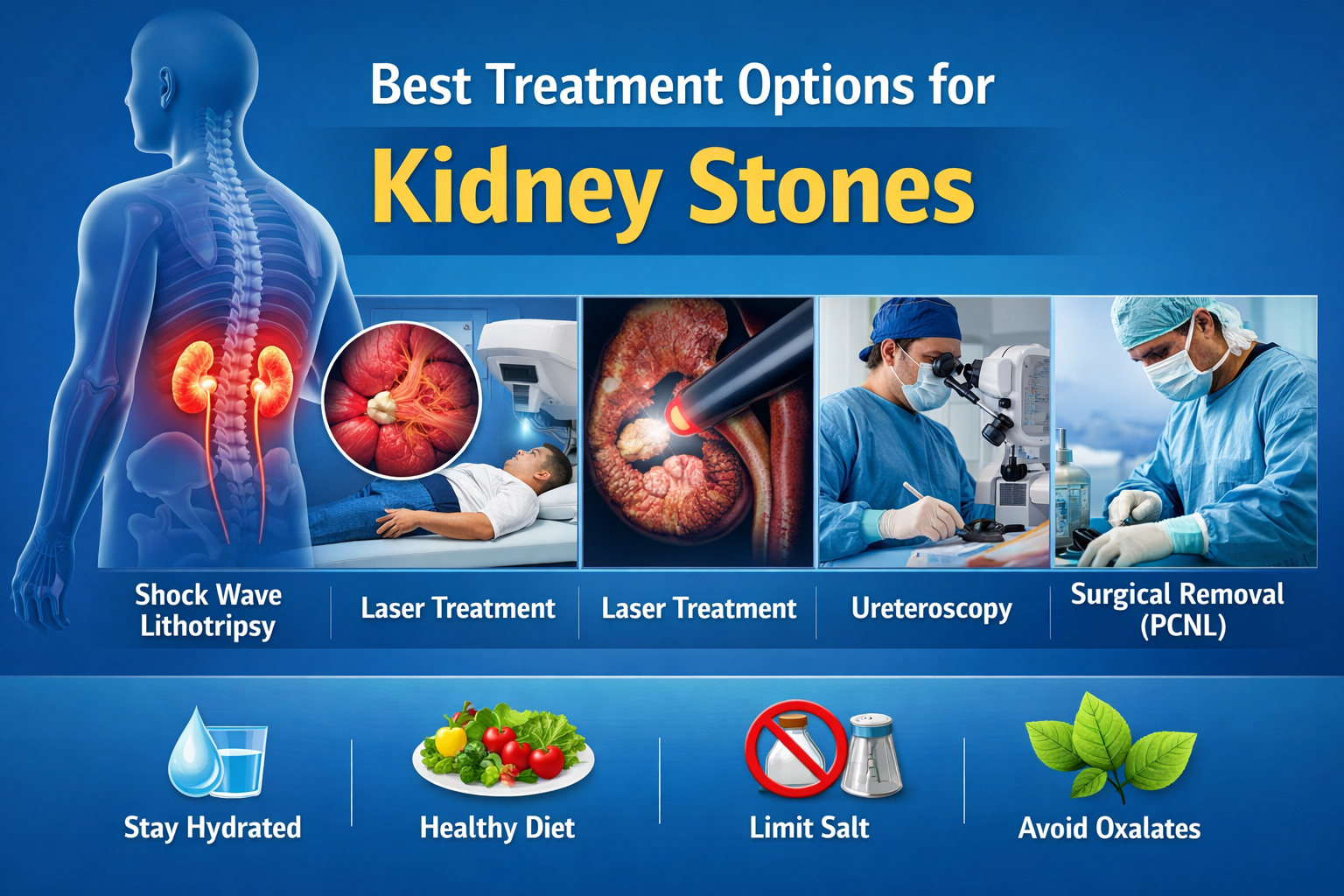
For small kidney stones, non-invasive methods are usually effective. Drinking plenty of water helps flush out small stones naturally. Doctors may also prescribe medications to reduce pain and relax the urinary tract, making it easier for the stone to pass. Medical Expulsive Therapy uses specific medicines to help stones pass faster by relaxing the ureter muscles.
When stones are larger or do not pass naturally, advanced procedures are recommended. Extracorporeal Shock Wave Lithotripsy uses sound waves to break stones into smaller fragments so they can pass through urine. Ureteroscopy involves inserting a thin scope through the urinary tract to locate and remove or break the stone using laser technology. Laser Lithotripsy is commonly used with ureteroscopy to break stones into tiny pieces for easier removal.
For large or complex kidney stones, surgical procedures may be required. Percutaneous Nephrolithotomy involves removing stones through a small incision in the back and is highly effective for large stones. Micro Perc is a more advanced and less invasive option that uses smaller instruments, resulting in faster recovery and minimal discomfort.
The selection of treatment depends on the size, location, and severity of the stone along with the patient’s overall health. A urologist recommends the most suitable option to ensure safe and effective removal.
Preventing kidney stones is important for long-term health. Drinking enough watering kidney stones is important for long-term health. Drinking enough water, maintaining a balanced diet, reducing salt intake, and avoiding excessive consumption of oxalate-rich foods can help lower the risk.
Kidney stones can be painful, but modern treatment options make management easier and more effective. Early diagnosis and proper care help in quick recovery and reduce the chances of recurrence. Consulting a qualified urologist ensures the best treatment and long-term kidney health.