Affordable Gynecology Treatment in Mohali | Expert Women's Healthcare
- July 10,2026
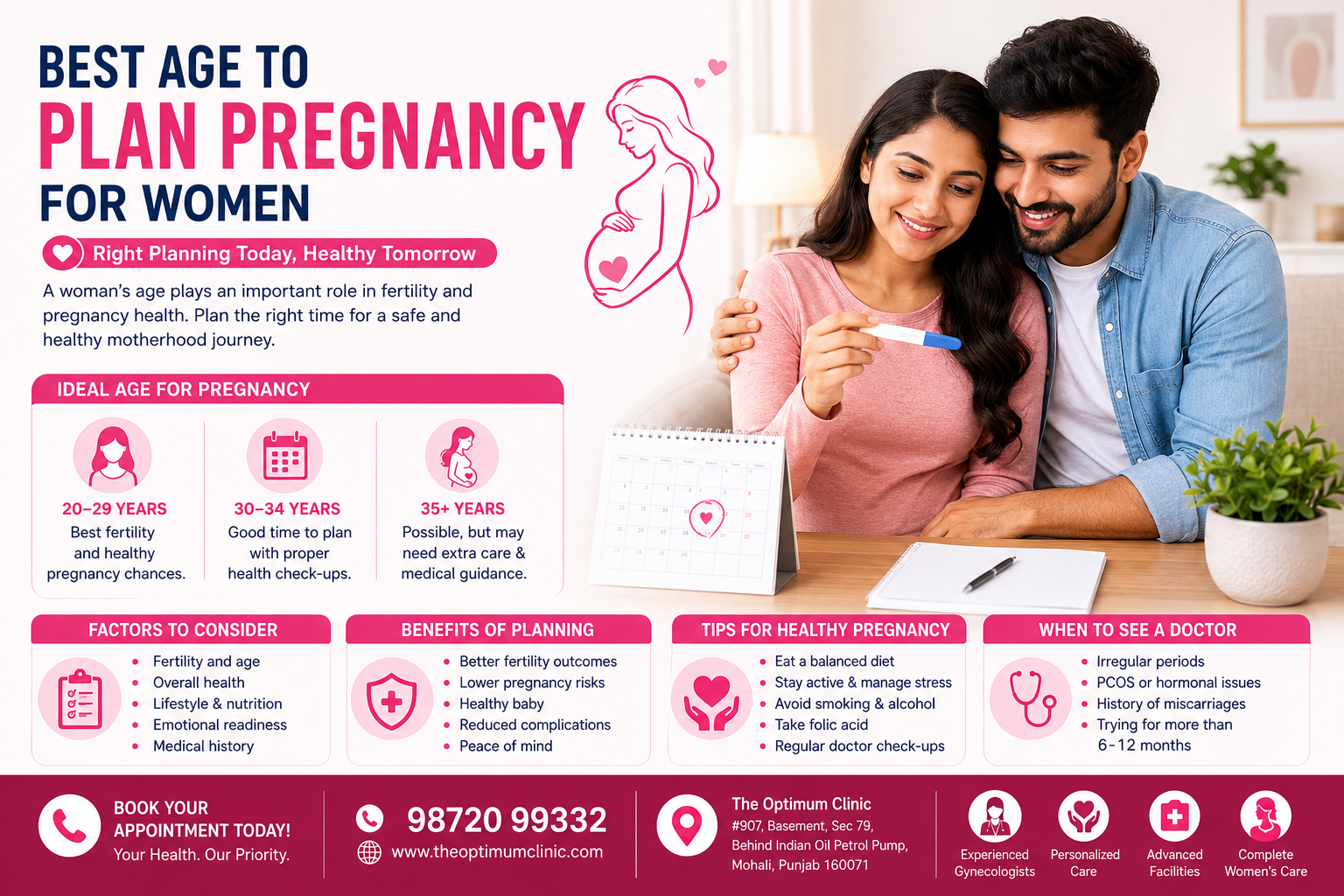
Pregnancy is one of the most important and life-changing journeys in a woman’s life. While many women dream of becoming mothers, one of the most common questions today is: What is the best age to plan pregnancy?
Modern lifestyle changes, career goals, stress, delayed marriages, and health conditions such as PCOS and hormonal imbalance have changed the way women approach pregnancy planning. Many women now choose to start families later in life, while others may face fertility concerns at younger ages.
Although every woman’s body is different, age plays a major role in fertility, pregnancy health, and conception chances. Understanding how fertility changes with age can help women make informed decisions about family planning and reproductive health.
If you are searching for expert guidance regarding pregnancy planning in Mohali, this detailed guide explains the ideal age for pregnancy, fertility changes over time, risks associated with delayed pregnancy, healthy planning tips, and when to consult a trusted gynecologist in Mohali.
A woman is born with a fixed number of eggs, and both egg quality and quantity naturally decline with age.
This means:
However, many women still experience healthy pregnancies in their 30s and even 40s with proper medical care and healthy lifestyle habits.
Medical experts generally consider the late 20s to early 30s as the most favorable reproductive years for women.
This is because:
However, the “best” age also depends on:
A woman’s fertility is generally highest during her 20s.
Advantages include:
Despite biological advantages, some women may feel emotionally or financially unprepared for motherhood during this stage.
Today, many women prefer pregnancy during their early 30s because of:
Fertility begins declining gradually after age 30, but many women still conceive naturally without complications.
Healthy lifestyle habits and regular gynecology checkups become increasingly important during this stage.
Pregnancy after 35 is medically considered “advanced maternal age.”
This does not mean pregnancy is unsafe, but additional monitoring may be recommended.
After age 35:
However, many women successfully experience healthy pregnancies after 35 with proper medical care.
Women can still conceive after 40, though fertility naturally declines significantly.
Pregnancy after 40 may require:
Healthy lifestyle habits and early pregnancy planning become extremely important during this stage.
| Age Group | Fertility Status |
|---|---|
| 20–29 | Highest fertility and egg quality |
| 30–34 | Gradual fertility decline begins |
| 35–39 | Moderate fertility decline |
| 40+ | Significant fertility decline |
Yes, lifestyle habits greatly affect reproductive health and conception chances.
Healthy habits support better hormonal balance and reproductive wellness.
Consulting a gynecologist before conception helps identify:
Healthy body weight supports:
A balanced diet supports fertility and pregnancy health.
Regular physical activity improves:
Chronic stress may affect ovulation and hormone balance.
Helpful stress management techniques include:
Smoking and alcohol may negatively affect fertility and pregnancy health.
PCOS (Polycystic Ovary Syndrome) is one of the leading causes of fertility issues in women.
Women with PCOS may experience:
Early diagnosis and proper treatment help improve pregnancy chances significantly.
Routine gynecology checkups help women monitor:
Preventive healthcare helps identify problems early before they become severe.
Women should seek medical guidance if:
Early fertility evaluation improves treatment outcomes.
Pregnancy planning is not only physical but also emotional.
Women should prioritize:
Emotional health strongly affects pregnancy experience and overall wellness.
Many women naturally conceive and deliver healthy babies after 35.
Fertility issues can affect women of all age groups.
Healthy lifestyle habits significantly improve reproductive health.
Women in Mohali are increasingly becoming aware of preventive healthcare and reproductive wellness.
Modern healthcare facilities now provide:
Access to quality women’s healthcare helps improve pregnancy outcomes and long-term wellness.
At The Optimum Clinic, we provide compassionate and advanced women’s healthcare services focused on pregnancy planning, fertility health, PCOS treatment, and gynecological wellness.
Our services include:
Women across Mohali trust our clinic for personalized and supportive healthcare services.
Explore our gynecology services:
https://theoptimumclinic.com/gynecology
Learn more about expert women’s healthcare:
Best Gynecology Clinic in Mohali for Expert Women Care
Consult experienced gynecologists here:
Best Gynecologist in Mohali – PCOS, Pregnancy & Infertility Treatment
Medically, the late 20s to early 30s are considered the most favorable years for pregnancy.
Yes, many women successfully conceive naturally after 35 with proper healthcare support.
PCOS may affect ovulation and fertility, but proper treatment improves conception chances.
While fertility is generally higher before 30, healthy pregnancies are possible at many ages.
The best age to plan pregnancy varies for every woman depending on physical health, emotional readiness, lifestyle, and reproductive health. While fertility is naturally higher during the late 20s and early 30s, many women experience healthy pregnancies later in life with proper medical care and healthy habits.
Understanding fertility changes, maintaining healthy lifestyle habits, and attending regular gynecology checkups help improve pregnancy outcomes and overall reproductive wellness.
Women planning pregnancy should consult an experienced gynecologist in Mohali for personalized guidance and preventive healthcare support.
Looking for expert pregnancy planning and women’s healthcare in Mohali?
Visit The Optimum Clinic for advanced gynecological care, fertility guidance, and compassionate women’s wellness services.
Book your appointment today and begin your motherhood journey with confidence.