


Affordable Gynecology Treatment in Mohali | Expert Women's Healthcare
- July 10,2026
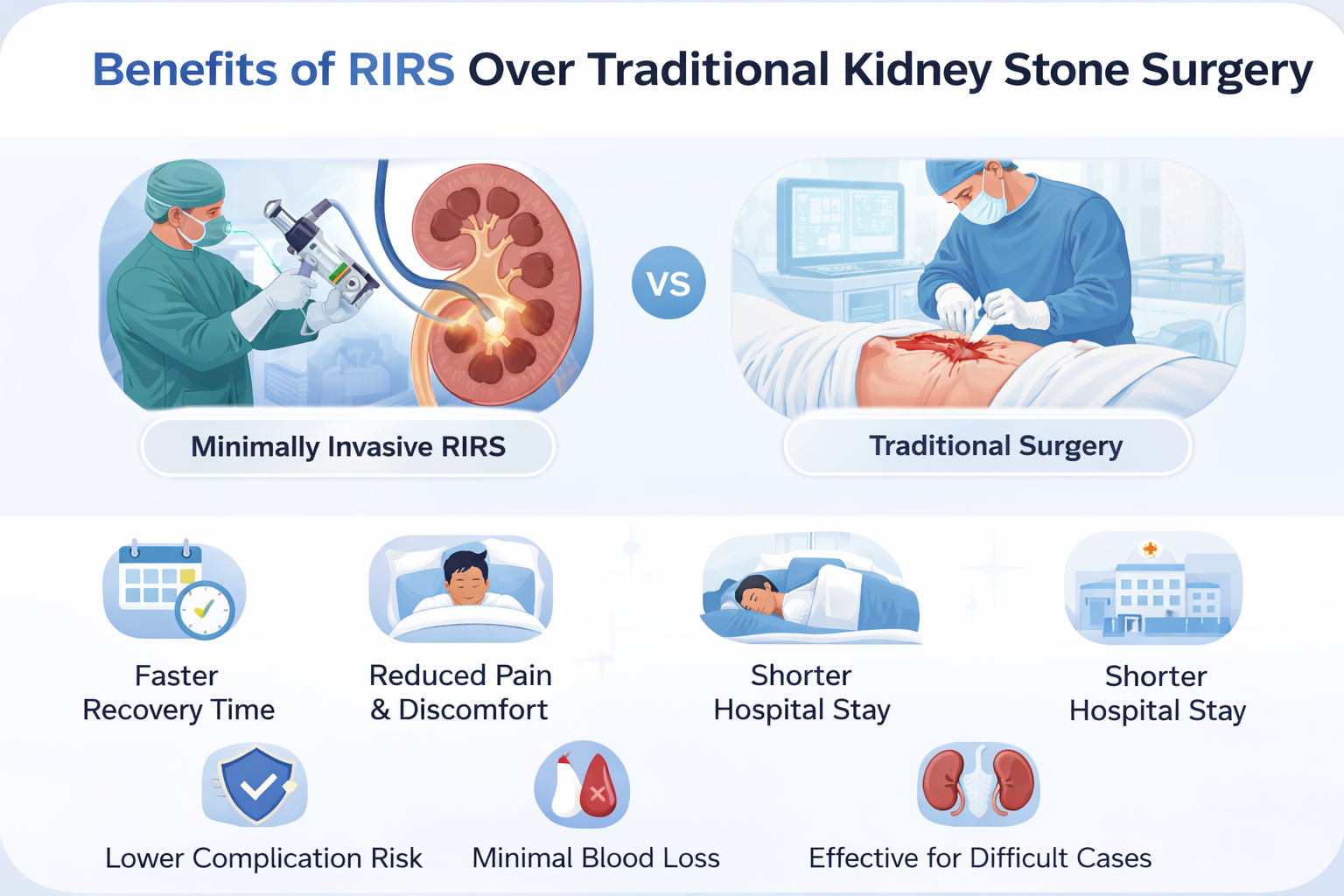
Kidney stones can cause severe pain and discomfort, often requiring medical intervention when they do not pass naturally. With advancements in urology, Retrograde Intrarenal Surgery (RIRS) has become a preferred option over traditional open or invasive kidney stone surgeries. This modern technique offers several advantages in terms of safety, recovery, and effectiveness.
RIRS is a minimally invasive procedure used to remove kidney stones using a flexible ureteroscope passed through the natural urinary pathway. A laser is used to break the stones into smaller fragments, which are then removed or passed naturally. Unlike traditional surgery, it does not require any cuts or incisions.
One of the biggest advantages of RIRS is that it is completely incision-free. Traditional kidney stone surgeries often involve cuts, leading to more pain and visible scars. RIRS eliminates these concerns by accessing the kidney through natural pathways, making the procedure much less traumatic for the patient.
Patients undergoing RIRS typically experience a much quicker recovery compared to traditional surgery. Most individuals can return to their normal routine within a few days. In contrast, open or more invasive procedures may require weeks of rest and recovery.
Since there are no surgical cuts, the level of pain after RIRS is significantly lower. Patients usually require less pain medication and experience minimal post-operative discomfort compared to traditional methods.
RIRS is often performed as a day-care or short-stay procedure. Many patients are discharged within 24 hours, whereas traditional kidney stone surgeries may require longer hospitalization for monitoring and recovery.
The risk of complications such as infection, bleeding, or damage to surrounding tissues is lower with RIRS. The precision of modern instruments and laser technology ensures targeted treatment with minimal impact on healthy tissues.
RIRS is especially useful for treating stones located in hard-to-reach areas of the kidney. It is also suitable for patients who may not be ideal candidates for more invasive procedures due to existing health conditions.
Traditional surgeries often involve a higher risk of bleeding. RIRS, on the other hand, involves minimal blood loss, making it a safer option, especially for elderly patients or those with medical concerns.
RIRS has a high success rate in completely removing or breaking down kidney stones. With advanced laser technology, even relatively large stones can be treated effectively in a precise manner.
Since there are no external incisions, RIRS leaves no visible scars. This is an added advantage for patients who are concerned about cosmetic outcomes after surgery.
RIRS has transformed the treatment of kidney stones by offering a safer, less painful, and more efficient alternative to traditional surgery. Its minimally invasive nature, faster recovery, and lower risk of complications make it an ideal choice for many patients. Consulting a qualified specialist can help determine whether RIRS is the right treatment option based on individual needs.