


Affordable Gynecology Treatment in Mohali | Expert Women's Healthcare
- July 10,2026
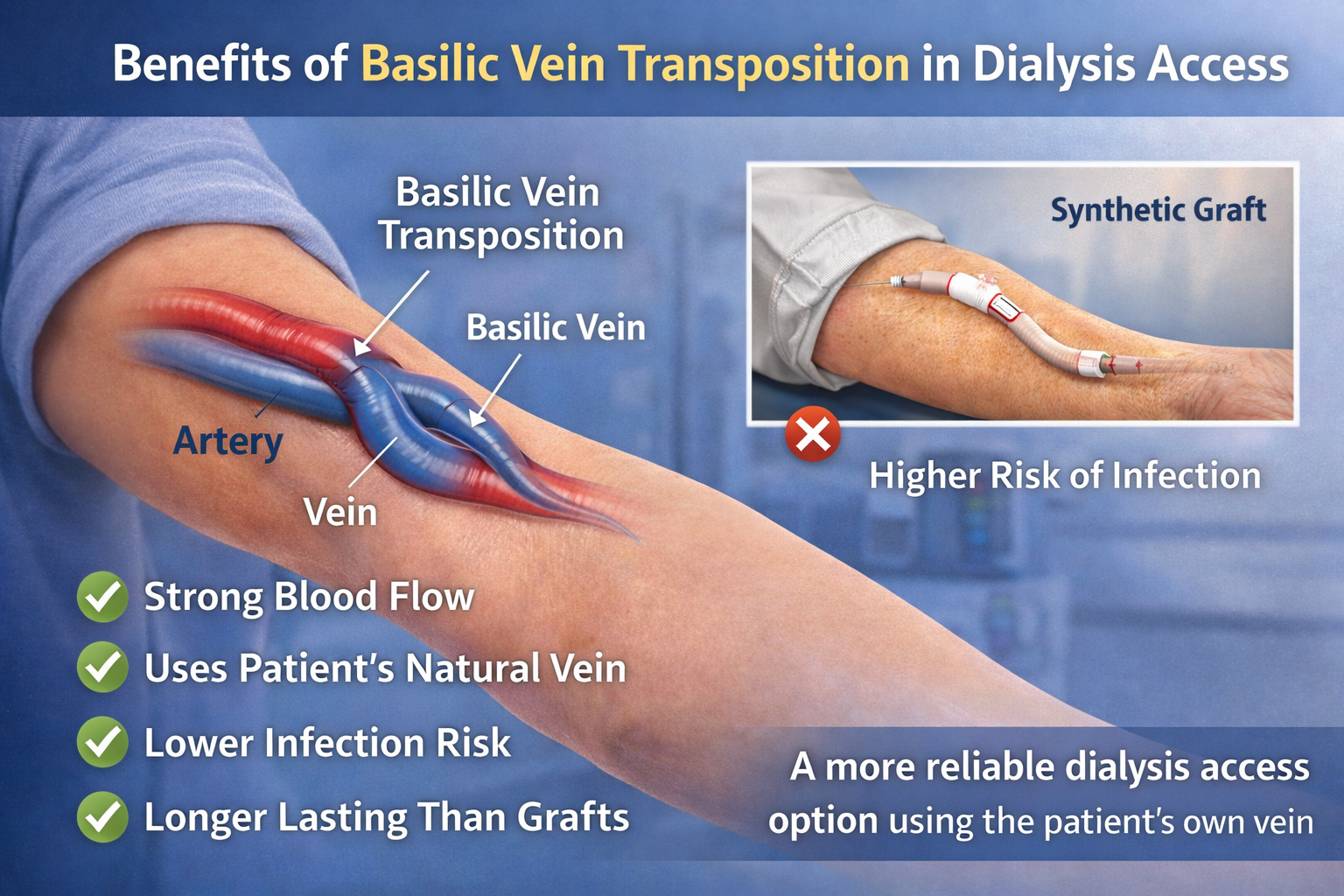
Patients with advanced kidney disease who require hemodialysis need a reliable and long-lasting vascular access. While arteriovenous (AV) fistula is usually the first choice, some patients may not have suitable veins for a standard fistula. In such cases, Basilic Vein Transposition (BVT) becomes an effective alternative for creating a strong dialysis access.
Basilic vein transposition is a surgical procedure in which the basilic vein, located deeper in the arm, is moved closer to the surface of the skin and connected to an artery. This allows the vein to be used for dialysis needle access while maintaining good blood flow.
One of the most important benefits of basilic vein transposition is the improved blood flow for dialysis treatments. Because the basilic vein is a large vein, it can carry a higher volume of blood when connected to an artery. This helps dialysis machines work efficiently by allowing proper circulation during treatment.
Better blood flow also supports effective removal of waste and toxins from the body, which is essential for patients undergoing regular dialysis.
Unlike synthetic grafts that use artificial materials, basilic vein transposition uses the patient’s own vein. Using natural blood vessels reduces the risk of complications and helps the access site function more naturally.
Natural vein access is generally preferred by surgeons because it tends to perform better and lasts longer than synthetic options.
Dialysis access created with synthetic grafts or catheters can sometimes lead to infections. Basilic vein transposition reduces this risk because it uses the patient’s own vein and is placed under the skin.
Since there are no artificial tubes involved, the chances of bacteria entering the bloodstream are significantly lower, making it a safer option for long-term dialysis.
Another major advantage of basilic vein transposition is its long durability. When properly maintained, this type of dialysis access can last for many years. Synthetic grafts may wear out or become blocked over time, often requiring replacement or additional procedures.
Because basilic vein transposition relies on natural vessels, it usually provides a more stable and long-lasting access for dialysis patients.
Some patients may not have veins suitable for creating a traditional AV fistula in the wrist or forearm. In such situations, basilic vein transposition offers an alternative solution.
By relocating the deeper basilic vein to a more accessible position, surgeons can create a functional dialysis access even when other options are limited.
A well-functioning basilic vein transposition allows dialysis needles to be inserted easily and safely. This helps dialysis sessions run smoothly and improves the overall effectiveness of treatment.
Better access means fewer interruptions during dialysis and reduced need for repeated procedures.
Basilic vein transposition is an important surgical option for dialysis patients who cannot undergo standard AV fistula creation. By using the patient’s natural vein and repositioning it for easier access, this procedure provides a reliable and long-lasting dialysis access.
With benefits such as strong blood flow, lower infection risk, and improved durability, basilic vein transposition plays a key role in supporting effective hemodialysis and improving the quality of life for patients with kidney failure.