Affordable Gynecology Treatment in Mohali | Expert Women's Healthcare
- July 10,2026
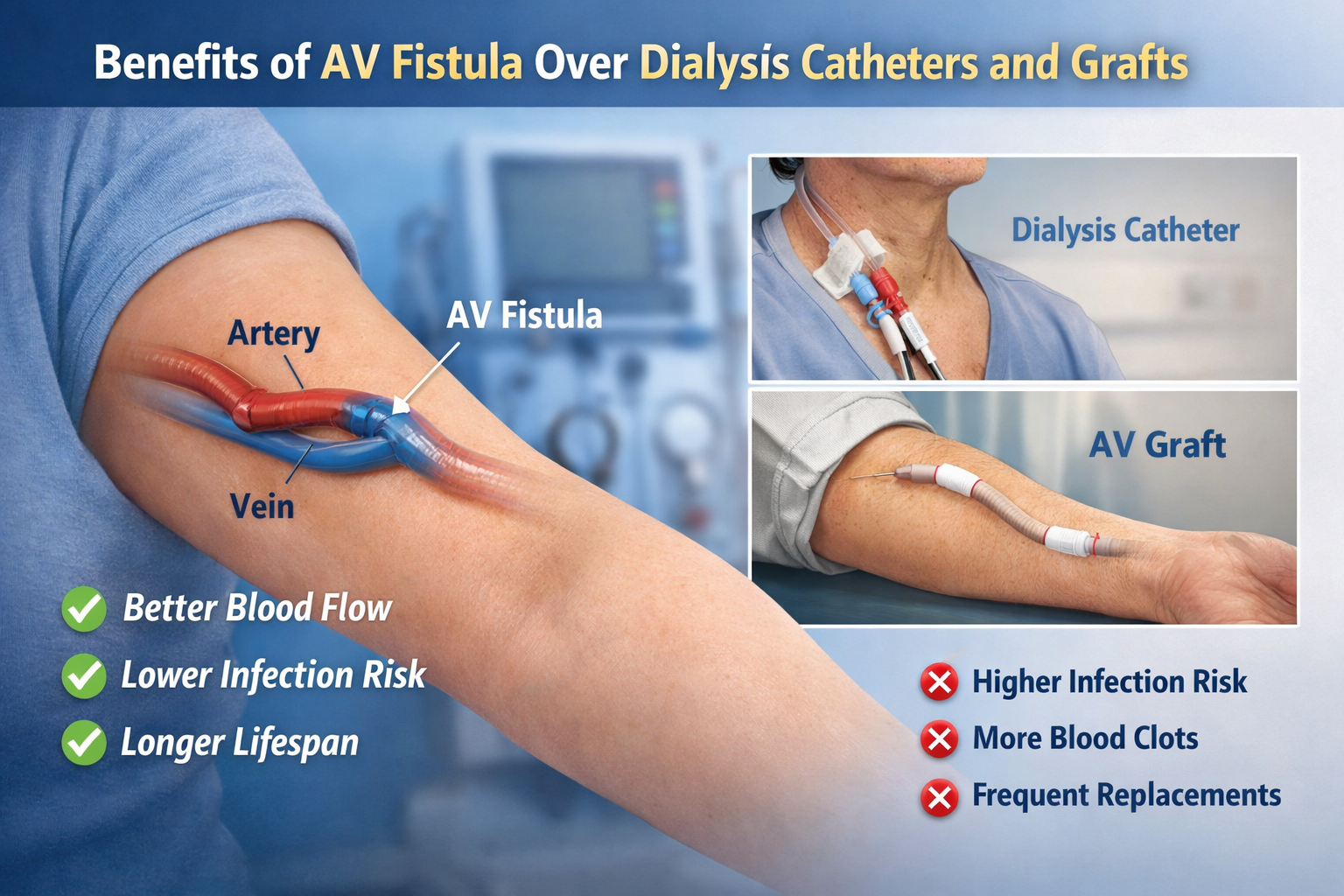
Patients with advanced kidney disease often require hemodialysis to remove waste and excess fluid from the body. For dialysis to work effectively, a reliable vascular access point is needed. The three most common types of dialysis access are Arteriovenous (AV) Fistula, AV Graft, and Dialysis Catheter. Among these options, an AV fistula is widely considered the best and safest choice for long-term dialysis treatment.
An AV fistula is created through a minor surgical procedure where a surgeon connects an artery directly to a vein, usually in the arm. This connection increases blood flow and strengthens the vein, allowing it to handle the repeated needle insertions required during dialysis sessions.
One of the main advantages of an AV fistula is that it provides strong and consistent blood flow. When an artery is connected to a vein, the vein becomes larger and stronger over time. This improved blood flow allows dialysis machines to clean the blood more efficiently.
Compared to catheters and grafts, AV fistulas allow better circulation, which helps dialysis treatments work more effectively. Patients often experience improved dialysis outcomes because the access point can handle high blood flow without complications.
Infection is a common concern for dialysis patients, especially those using catheters. Dialysis catheters are inserted into large veins in the neck or chest, and because they remain outside the body, they create a higher risk of bacteria entering the bloodstream.
An AV fistula is created using the patient’s own blood vessels and remains under the skin, which significantly reduces the risk of infection. This makes it a safer and more reliable option for patients who require dialysis for a long period of time.
Another major benefit of an AV fistula is its durability. AV fistulas can last many years when properly cared for. In many cases, they function much longer than AV grafts or dialysis catheters.
AV grafts use synthetic tubing to connect an artery and a vein. Although they are helpful for patients whose veins are not suitable for fistula creation, grafts tend to wear out faster and may require replacement over time. Catheters are generally used only for short-term dialysis because they have a higher chance of complications.
Blood clotting can block dialysis access and interrupt treatment. AV grafts and catheters have a higher risk of clot formation because of artificial materials or direct vein placement.
Since an AV fistula uses natural blood vessels, the risk of clotting is much lower. This reduces the chances of treatment interruption and minimizes the need for additional medical procedures.
Patients using dialysis catheters or grafts often require frequent medical interventions due to infection, blockage, or mechanical problems. These issues may lead to repeated hospital visits and additional procedures.
AV fistulas generally require fewer maintenance procedures once they are fully developed. With proper monitoring and care, they can provide reliable access for dialysis with minimal complications.
Doctors often recommend AV fistulas as the first choice for dialysis access because they offer better long-term outcomes. Patients with AV fistulas usually experience fewer complications, improved dialysis efficiency, and a lower risk of hospitalization compared to those using catheters or grafts.
Although AV fistulas require some time to mature after surgery, their long-term benefits make them the preferred option for many dialysis patients.
Choosing the right dialysis access is an important decision for individuals with kidney failure. While dialysis catheters and grafts may be necessary in certain situations, an AV fistula remains the most reliable and effective option for long-term dialysis.
With better blood flow, lower infection risk, longer lifespan, and fewer complications, AV fistulas provide a safer and more efficient way to support dialysis treatment. Patients who are suitable candidates for AV fistula surgery often benefit from improved dialysis results and better overall health outcomes.