Affordable Gynecology Treatment in Mohali | Expert Women's Healthcare
- July 10,2026
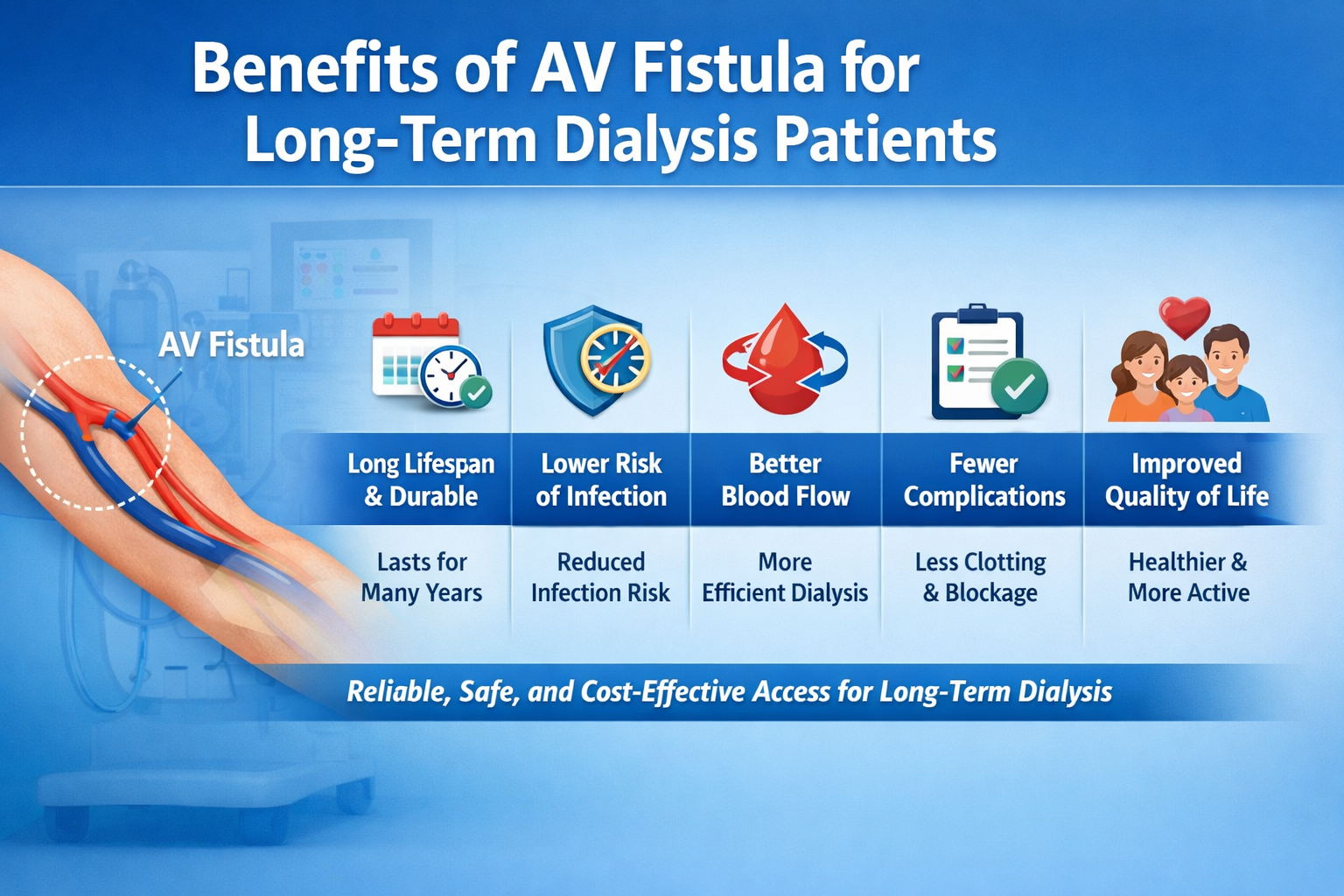
For patients with chronic kidney disease, dialysis is a life-saving treatment that requires reliable vascular access. An arteriovenous (AV) fistula is widely regarded as the best option for long-term dialysis because of its safety, durability, and effectiveness. It is created by connecting an artery to a vein, usually in the arm, allowing strong blood flow for efficient dialysis.
An AV fistula is a surgical connection between an artery and a vein. Over time, the vein becomes larger and stronger due to increased blood flow, making it suitable for repeated needle insertions during dialysis. This natural adaptation makes AV fistulas more reliable than other access options.
One of the biggest advantages of an AV fistula is its long lifespan. It can last for many years with proper care, unlike catheters or grafts that may need frequent replacement. This reduces the need for repeated surgeries and ensures consistent dialysis access.
AV fistulas have a significantly lower risk of infection because they are created using the patient’s own blood vessels. There are no external tubes involved, which minimizes exposure to bacteria and reduces the chances of serious complications.
Strong and consistent blood flow is essential for successful dialysis. AV fistulas provide excellent blood circulation, allowing efficient removal of toxins and waste from the body. This improves overall treatment outcomes and helps patients feel better.
Compared to other access methods, AV fistulas are less likely to develop problems such as clotting or blockage. This means fewer interruptions during dialysis sessions and less need for medical interventions or hospital visits.
Although creating an AV fistula requires a surgical procedure, it is more economical in the long run. Reduced complications, fewer hospital visits, and minimal maintenance help lower overall healthcare costs for patients undergoing long-term dialysis.
With fewer complications and more effective dialysis sessions, patients often experience a better quality of life. They can manage their treatment more comfortably and maintain a stable health condition over time.
An AV fistula is the most reliable and beneficial vascular access for long-term dialysis patients. Its durability, lower risk of infection, and superior performance make it the preferred choice among healthcare professionals. Opting for an AV fistula ensures safer, more efficient dialysis and supports better long-term health outcomes.